Top 5 Daily Mindset Shifts to Stop Buying Happiness Habitually
Five daily mindset shifts with tiny habits to interrupt impulse buying, reduce habitual spending, and build lasting satisfaction without more things.
Why buying happiness feels automatic
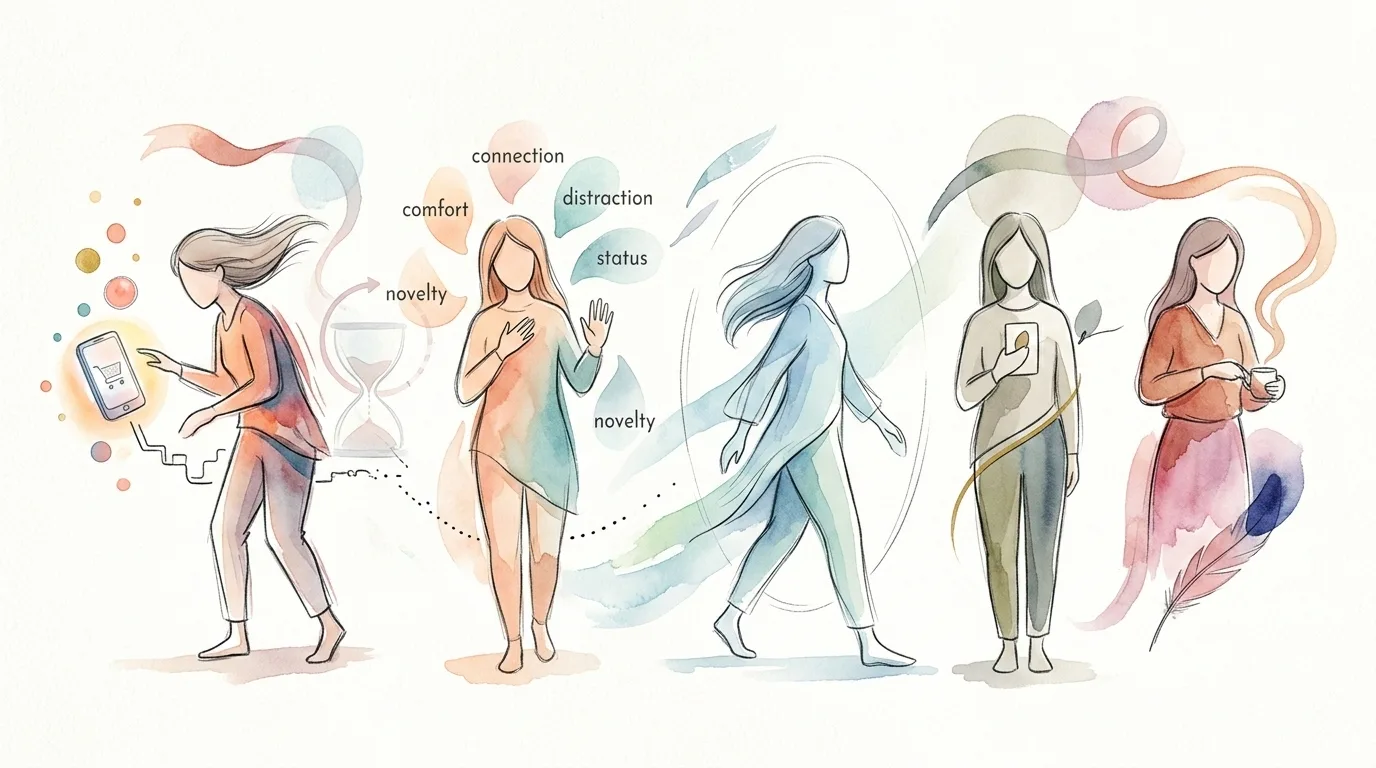
You open your phone to check the weather and three minutes later you’ve added something to your cart. That little rush—the novelty, the ‘treat’ feeling—creates a short circuit between emotion and spending. Over time these micro-decisions become a habit: not because the item changes your life, but because buying temporarily reduces unease.
Breaking that cycle doesn’t require willpower alone. It requires shifting the way you interpret urges, pleasure, and meaning throughout your day. Below are five daily mindset shifts you can practice immediately. Each one is small, repeatable, and designed to interrupt the autopilot that turns wants into purchases.
Top 5 daily mindset shifts (and how to practice them)
1) From “I deserve this” to “What need am I satisfying?”
The most common buying script is the self-reward: “I worked hard, I deserve this.” It’s a convincing and common narrative—but it’s often an emotional shortcut that sidesteps curiosity.
How to practice it daily:
- When you feel the urge to buy, ask: “Which need is this meeting—comfort, connection, distraction, status, or novelty?”
- Say the need out loud. Naming the need reduces its power.
- If the need is comfort or distraction, choose a non-spending alternative for 10 minutes (walk, call a friend, brew tea). If the urge fades, you just saved money and learned about your trigger.
Tiny habit: Every time you reach for your wallet or phone, pause and name the need in one sentence. Repeat this 3 times a day until it becomes automatic.
Why it works: Naming transforms a reactive purchase into an intentional choice. The moment of curiosity creates friction—enough to prevent reflexive spending.
2) From “More will make me happier” to “How long will this actually matter?”
Shopping promises future happiness. The missing question is duration: will this item feel good for a week, a month, or years?
How to practice it daily:
- Before any purchase over a minimal threshold (decide your threshold: $10, $20), ask: “Will I still care about this in six months?”
- Visualize using the item three times: the joy at purchase, the second time, and one month later.
Tiny habit: Add a 24-hour buffer for non-essential purchases. Use that time to test whether the item still looks important tomorrow.
Why it works: Imagining future use fights the novelty bias. The visualization helps you notice transient excitement and prevents habit purchases masquerading as long-term need.
3) From chasing “stuff” to investing in experiences of presence
We often look outward—more things, more activities—to fix inner restlessness. A small shift is to prioritize presence over acquisition.
How to practice it daily:
- Schedule one small “presence” activity every day: a 10-minute walk without your phone, a mindful cup of coffee, or 5 minutes of focused breathing.
- Notice how often the urge to buy appears during or immediately after low-presence moments. Record it once in a notebook.
Tiny habit: Stack a presence practice onto an existing routine (after brushing teeth, do 3 deep breaths; after lunch, take a 5-minute walk). These short anchors reduce the need to buy to fill quiet spaces.
Why it works: Presence satisfies the psychological hunger that shopping superficially fills. When you learn to be comfortable with stillness, impulse buying loses its appeal.
4) From “I’m defined by what I own” to “My choices reflect my values”
Consumer identity quietly shapes decisions: we buy to belong, to signal, to become. Flipping the script requires a concise values statement you can run purchases against.
How to practice it daily:
- Write a one-sentence values anchor (e.g., “I choose calm, clarity, and lasting joy over clutter and quick fixes.”) Keep it visible—phone lock screen, a sticky note on the mirror.
- Before buying, ask: “Does this align with my anchor?” If not, it’s likely a habit purchase.
Tiny habit: Each morning, read your one-sentence anchor out loud. It takes ten seconds and recalibrates daily decisions.
Why it works: An identity-focused question slows the drift from intention to impulse. Over time you’ll notice fewer purchases that clash with your stated values.
5) From “Buy more to feel better” to “Invest a small ritual for long-term satisfaction”
Happiness from purchases decays; rituals compound. Replace one small buying habit with a short ritual that builds meaning without a price tag.
How to practice it daily:
- Identify one purchase habit (e.g., buying a snack on the commute). Replace it with a ritual: a favorite tea, a five-minute podcast that uplifts you, or jotting a single sentence in a gratitude journal.
- Keep the replacement accessible and attractive—rituals need to feel rewarding.
Tiny habit: Use the 2-minute rule. If replacing a purchase, commit to a 2-minute ritual first. Often, the ritual is enough and the buy fades.
Why it works: Rituals recruit the brain’s reward system without the cost. They create repeatable, meaningful moments that compete with short-lived shopping highs.
Putting the shifts into an everyday routine
Changing mindset is easier when you attach the shifts to simple daily anchors. Here’s a short, repeatable routine that takes less than 10 minutes.
Morning (2 minutes)
- Read your one-sentence values anchor out loud. This primes your identity for the day.
- Quick visual check: list one thing you want to invest in this week (time, attention, a relationship).
Midday (3 minutes)
- Do a 5-minute presence practice after lunch (walk, breathing). Notice any urges to buy; name the need.
- If an urge appears, apply the 24-hour buffer or the 2-minute ritual before deciding.
Evening (3–5 minutes)
- Reflect on any purchases or urges. Use two quick questions: “Was this aligned?” and “Did it last?”
- If a recent buy felt regrettable, create a plan to prevent the next similar purchase (remove saved card from apps, unsubscribe from tempting newsletters).
Habit stacking tip: Pair these mini-checks with existing habits (after coffee, after lunch, before bed). Consistency beats intensity.
Tools that add helpful friction
Friction is your friend when you want to stop buying happiness habitually. Here are a few low-effort tools:
- A 24-hour pause rule for non-essentials. For a template you can adapt, see the 24-hour pause rule.
- A daily one-line reflection to clarify what matters. If you want structured prompts, try the daily reflection questions.
- Remove saved cards from shopping apps and unsubscribe from promotional emails to increase the steps between wanting and owning.
Small wins multiply
Habits don’t flip overnight. What changes faster is the story you tell yourself in the moment. Each time you name a need, imagine future use, practice presence, check alignment with values, or replace a buy with a ritual—you teach your brain a new script.
Those micro-decisions pile up. In three weeks you’ll have interrupted dozens of habitual purchases and learned which urges genuinely deserved attention. In months, the automatic reflex to buy will be noticeably quieter.
Final takeaway: Stop the autopilot by widening the space between impulse and action—just a breath, a question, or a 2-minute ritual. That space is where lasting satisfaction grows.