Minimalism
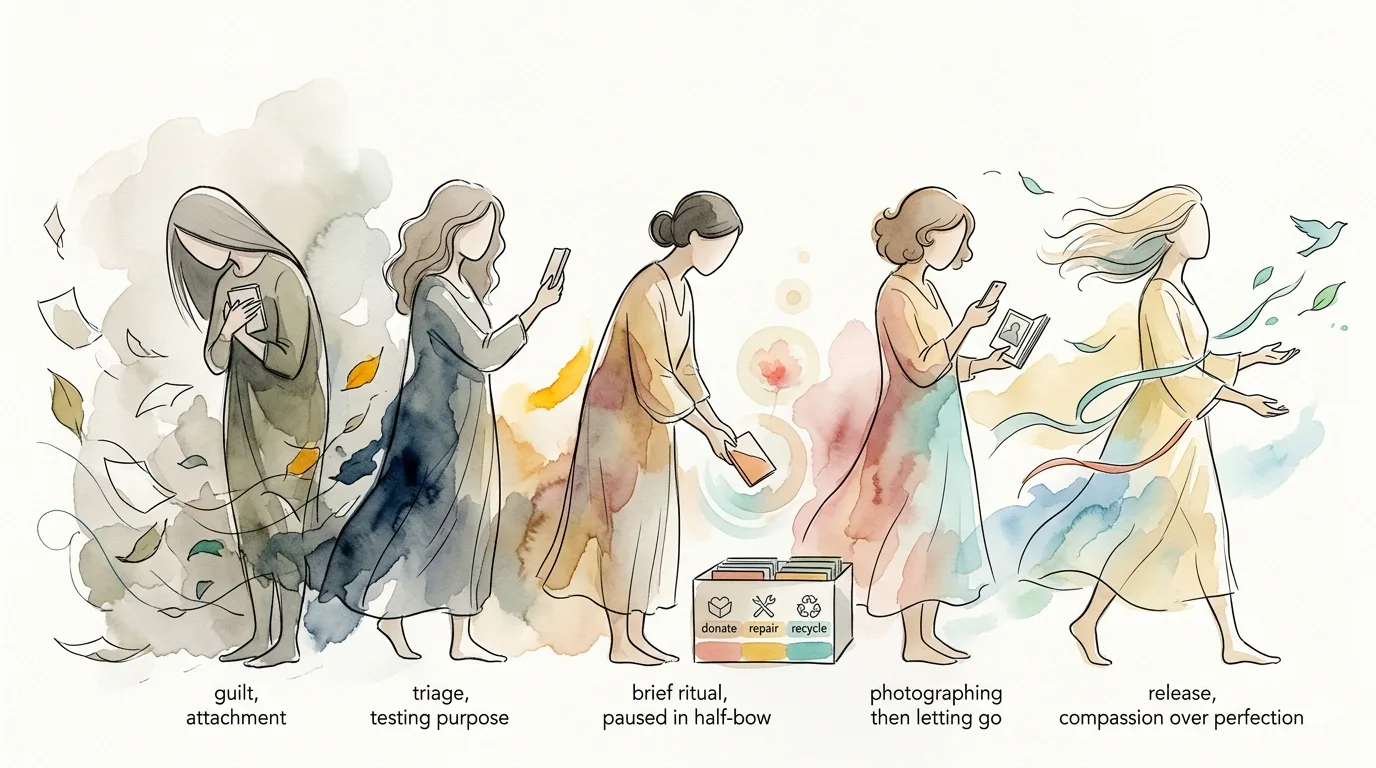
Ultimate Guide to Letting Go of Stuff Without Guilt or Waste
A step-by-step guide to release possessions without guilt and minimize waste, with mindset shifts, a five-step method, and small habits to keep progress.
Read more →Ideas on living with less, spending intentionally, and focusing on what matters.
21 articles A step-by-step guide to release possessions without guilt and minimize waste, with mindset shifts, a five-step method, and small habits to keep progress.
Read more →
A simple, repeatable spending routine for minimalists: automate essentials, add a 2-minute daily check, a weekly spending window, and a pause rule to stop impulse buys.
Read more →
Step-by-step guide to creating a capsule wardrobe that simplifies daily dressing, including capsule sizes, color palettes, outfit matrices, shopping rules, and maintenance habits.
Read more →
A habit-first guide to clearing digital noise—notifications, apps, email, subscriptions—so deep work becomes the default and focus lasts.
Read more →
A 30-day, day-by-day plan to transition into minimalism: set intentions, declutter by zones and categories, build tiny habits, and create systems that last.
Read more →
Practical framework for minimalist spending: align money with values, build a one-page plan, adopt tiny habits like pause rules, and set social spending boundaries.
Read more →
Use simple, repeatable minimalist systems—defaults, visible cues, one override—to cut decision fatigue and make daily choices effortless.
Read more →
A gentle, step-by-step guide to transitioning to minimalism without getting stuck in emotional attachment—mindset shifts, tiny habits, and a 30-day plan.
Read more →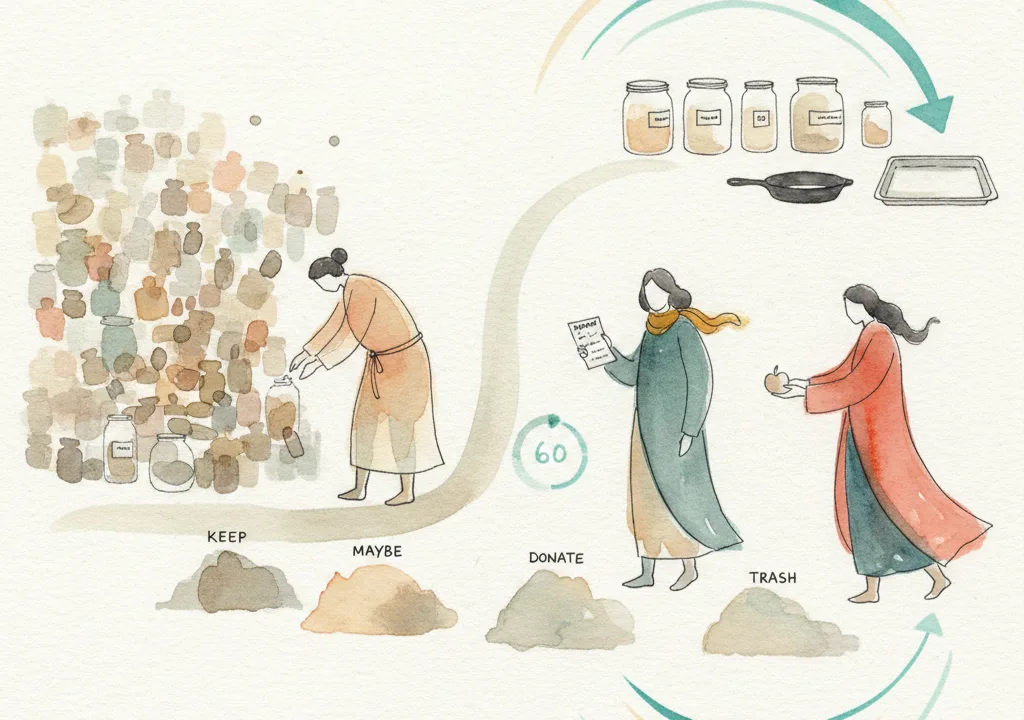
A step-by-step guide to creating a minimal kitchen inventory that cuts waste, reduces grocery spending, and keeps your kitchen functional and calm.
Read more →