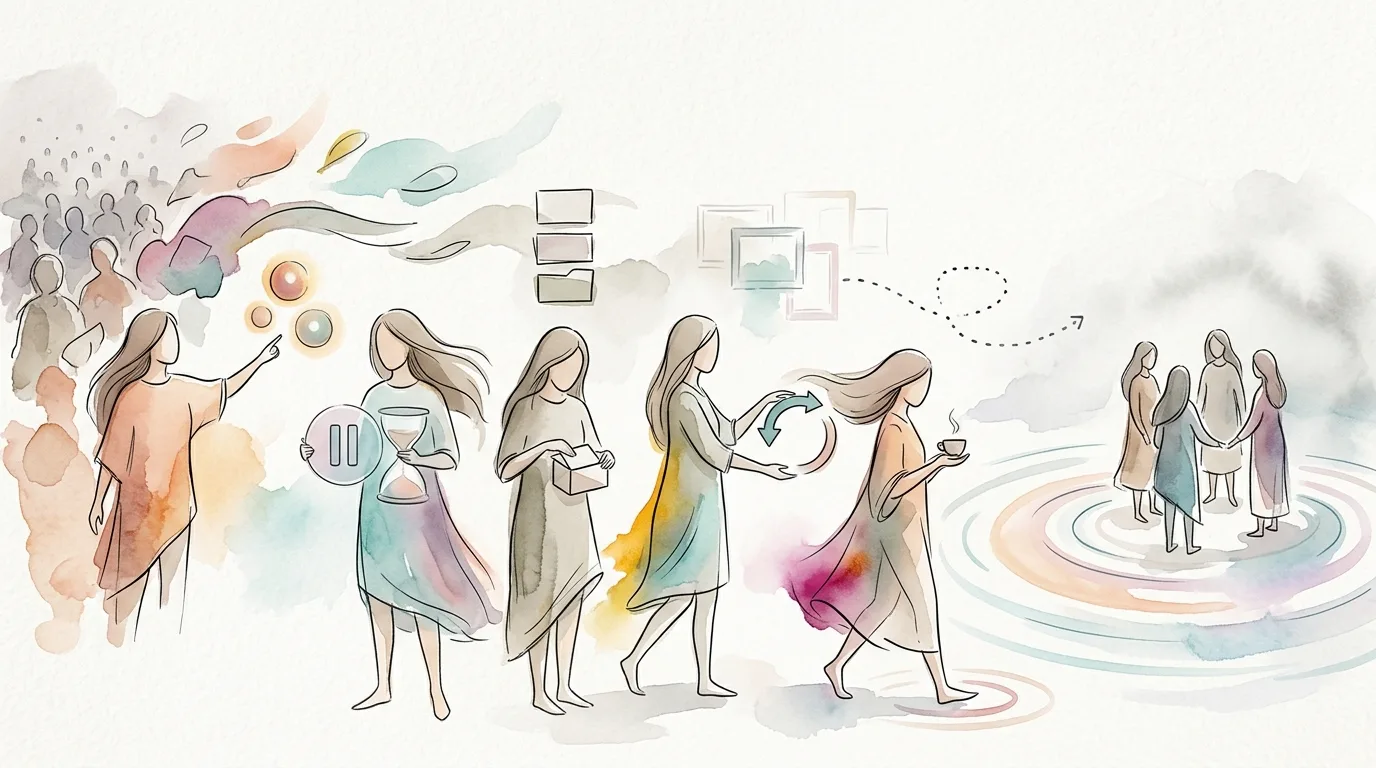
Top 5 Mental Practices to Shift From Scarcity to Enough
Five actionable mental practices—labeling scarcity, defining enough, reframing success, a slow-yes pause, and abundance rituals—to shift from scarcity to a sustainable sense of enough.

Why shifting from scarcity to enough matters
Scarcity steals attention. When you live from the assumption there’s not enough—time, money, attention, or approval—you make decisions that protect, hoard, and postpone living. The result is chronic worry, impulse spending, and a home full of things you never use.
Shifting to a mindset of enough doesn’t mean settling or giving up ambition. It means learning to recognize scarcity-driven choices and replacing them with choices aligned to what actually adds value. That shift frees mental energy, reduces decision fatigue, and makes daily life quieter and more deliberate.
This post walks through the top five mental practices that create that shift. Each one is actionable and designed to become a micro-habit you can use today.
How to use these practices
The practices below work best when paired with tiny, repeatable actions. Think of them as mental muscles: they grow with small, consistent reps rather than one dramatic sprint. After each practice you’ll find a quick habit to try immediately.
The top 5 mental practices to move from scarcity to enough
1. Notice scarcity cues and label them
Scarcity has a voice. It sounds like: “What if we run out?” “Quick—buy it now.” “I don’t have enough time.” The first move is simple: name the voice. Labeling thoughts as “scarcity” dampens their power and creates a moment of choice.
How to do it:
- When you feel urgent fear or compulsion, pause and say silently, “That’s scarcity talking.”
- Write down the exact thought once. Seeing it on paper separates you from the feeling.
- Ask: What would I do if I felt secure? That question often reveals a calmer, more rational option.
Tiny habit: Keep a one-line notebook or phone note titled Scarcity Log. Each time you catch the voice, jot one sentence. Over a week you’ll see patterns—triggers, times of day, or contexts.
Why it works: Labeling activates the prefrontal cortex, reducing emotional reactivity and increasing the space for wiser choices.
2. Define “enough” in clear, measurable terms
Enough is almost always vague: “I have enough clothes,” or “I have enough savings.” Vague goals allow the scarcity mind to move the goalposts. Defining enough precisely builds boundaries that scarcity can’t keep shifting.
How to do it:
- Pick one domain (wardrobe, finances, social time). Ask: What does enough look like for me? Example: “Twenty shirts I wear regularly.” “An emergency fund of three months’ essentials.” “Two evenings a week without social plans.”
- Set a measurable rule. Rules eliminate debate. If it’s clothing, the rule could be: No more than 25 items in my wardrobe excluding workout gear and accessories.
- Re-check monthly. Enough isn’t set-and-forget. Life changes; so does enough.
Tiny habit: Add a weekly 5-minute check-in. Open a note titled My Enough and list one sentence: “My wardrobe is at 20/25 items” or “Emergency fund = 2.5 months.” This short habit prevents creeping scarcity.
If you need help clarifying values to decide what qualifies as enough, try the daily reflection questions to clarify what truly matters.
3. Reframe status signals and the definition of success
We often chase more because society equates more with success. Reframing what success means in your life shifts the fuel from external validation to internal alignment.
How to do it:
- List the external signals you currently associate with success (brand-name items, a certain home size, frequent travel).
- For each signal, write an internal alternative: what feeling or outcome are you really chasing? Connection, competence, rest? Then design one non-material way to get that feeling.
- Replace one status purchase with a status experience experiment: trade an item purchase for a weekend where you intentionally pursue the internal outcome.
Tiny habit: Once a month, choose one small status signal and find a low-cost or no-cost way to get the same inner result.
If you want a guided approach to reshaping success without more stuff, read how to reframe success without more stuff. This helps make the abstract shift feel concrete and sustainable.
4. Use a ‘slow yes’ pause rule for requests and purchases
Scarcity loves urgency. A built-in pause—especially for money and commitments—stops scarcity before it becomes action.
How to do it:
- Create a personal pause rule: 24-hour rule for purchases under $200, one-week rule for commitments that take more than 2 hours, or 48-hour rule for online checkout.
- During the pause, ask two questions: (1) Does this move me toward my defined enough? (2) What am I avoiding by saying yes?
- If the item or commitment still fits after the pause, say yes confidently.
Tiny habit: Implement the pause rule as a default setting in your calendar and browser. Use a sticky note on your credit card or a phone wallpaper that reads Slow Yes.
For a template you can adapt to buying decisions, see the pause rule habit to avoid regret purchases at how to use a pause rule habit to avoid regret purchases.
5. Build abundance rituals: small, repeatable reminders of enough
Scarcity convinces you that nothing is ever sufficient. Abundance rituals are tiny, daily practices that retrain attention toward what is present and sufficient.
Examples of rituals:
- A one-minute gratitude pause each morning where you name three things that are working right now.
- A weekly “inventory of joy”: list three possessions or relationships you used this week and why they matter.
- A monthly zero-based review: look at one area (kitchen, subscription list, calendar) and ask if each item earns its place.
Tiny habit: End each day by writing one sentence: Today I had enough because… Over time this creates a bias toward noticing sufficiency instead of lack.
Why it works: Rituals create neural pathways. Repeating small actions trains attention to seek abundance cues until they become automatic.
Putting it into a 21-day micro-plan
You don’t need to overhaul everything at once. Try this simple 21-day micro-plan to embed these practices:
- Days 1–3: Start the Scarcity Log and the one-minute gratitude pause.
- Days 4–7: Define one domain’s enough (start with clothing or finances) and set a measurable rule.
- Days 8–12: Implement the Slow Yes pause rule for purchases and commitments.
- Days 13–17: Reframe one status signal and test a non-material substitute.
- Days 18–21: Do a monthly zero-based review and write a 21-day reflection: what changed, what felt easier.
Each day requires 5–10 minutes. The small, consistent reps are what turn mental practices into habits.
Quick wins and common traps
Quick wins:
- Use visual reminders: a sticky note, phone wallpaper, or a jar labeled Enough filled with a small object each time you practice gratitude.
- Pair these mental practices with existing routines (habit stacking). For example, do the one-minute gratitude during coffee.
Common traps:
- Expecting overnight transformation. Mindset shifts are cumulative and slow.
- Confusing minimalism with deprivation. The goal is clarity, not austerity.
- Letting rules become rigid rules of punishment. If a rule no longer fits, revisit it with curiosity.
Final notes: What “enough” actually gives you
Moving from scarcity to enough isn’t about losing motivation—it’s about channeling energy. When your baseline is enough, choices are clearer, consumption slows, and there’s more room for what you truly want to build: creativity, presence, deeper relationships, or financial freedom.
Start with one practice. Keep it tiny. The real power is not in the perfect execution but in the quiet accumulation of small, deliberate choices.