How to Reframe Success Without More Stuff: A Minimalist Mindset Shift
A clear framework to redefine success away from accumulation: change what you measure, build tiny rituals that support those metrics, and curate your environment to prove your new priorities. Includes a 30-day experiment and language templates to make the shift stick.
Rethinking What Winning Looks Like
Most of us measure success by accumulation: a bigger house, a newer car, more followers, more stuff. The problem isn’t ambition — it’s the measurement system. When your metric is “more,” you’ll always feel behind. Minimalism asks a different question: what does success feel like when you subtract things, not add them? This post walks through a mindset shift that reframes success without more stuff and gives simple, repeatable ways to live it.
The three lenses for reframing success
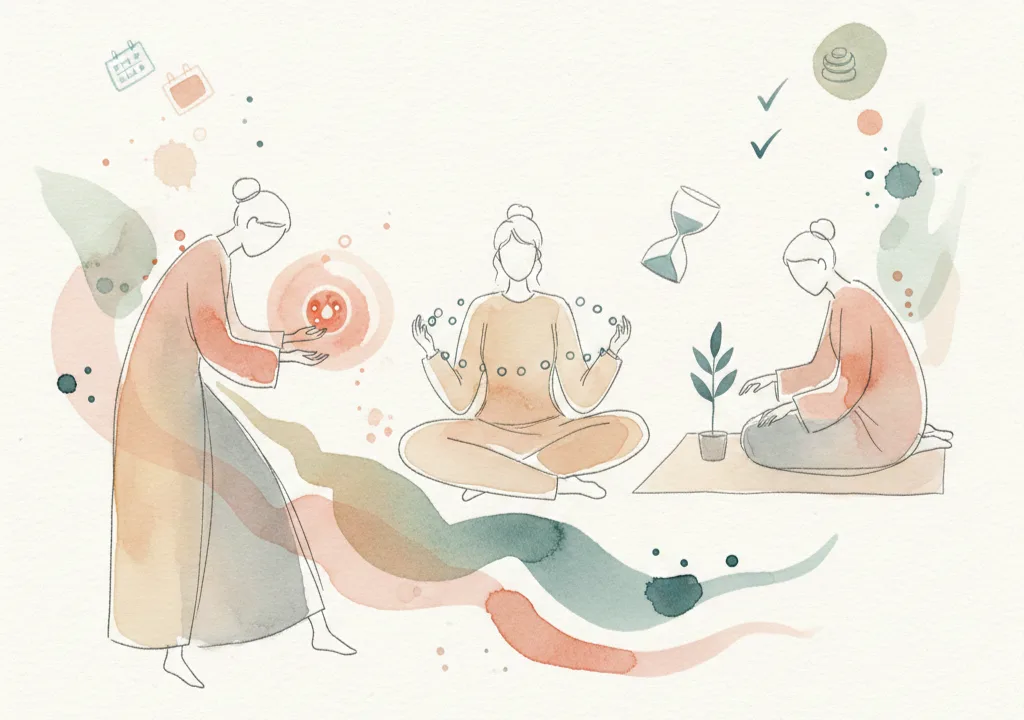
To change how you define success, use three lenses that are easy to test and integrate into daily life: metrics, rituals, and environment.
- Metrics — what you measure and celebrate.
- Rituals — the tiny habits that nudge you toward that definition.
- Environment — the physical and social cues that reinforce it.
Each lens answers a basic question: how will I know I’m successful? Change the answer, change the outcome.
Shift 1: Replace quantity metrics with quality metrics
Swap “more” metrics for quality metrics you can observe and feel. Examples:
- Instead of “more things,” measure “hours of uninterrupted time.”
- Instead of “bigger house,” measure “number of calm evenings per week.”
- Instead of “bigger paycheck equals success,” measure “financial choices that align with values.”
Try a one-week experiment: pick one new metric to track (time spent outside, devices-free meals, number of things donated). Use a single-line habit tracker or a calendar note. Small wins rebuild your sense of progress faster than perpetual accumulation.
Shift 2: Ritualize the invisible wins
Rituals make abstract metrics tangible. Tiny, consistent actions compound into a life that demonstrates your new definition of success.
- Morning clarity ritual: five minutes of priorities and a single must-do for the day.
- Evening reset: a five-minute tidy and a one-sentence reflection on what mattered today.
- Social ritual: a weekly call or walk with someone who shares your values.
These are the kinds of tiny habits that become identity markers. If you want to feel less cluttered, build a five-minute evening reset. If you want more time, start the day by protecting one hour for deep work or rest.
For readers who want daily micro-practices, the approach in How to Create a Minimalist Mindset pairs well with these rituals and offers daily practices to make wanting less feel easier.
Shift 3: Curate an environment that proves your new metric
Your surroundings are a running argument about what matters. Shift the argument by curating visible evidence of scarcity as a win:
- Make surfaces calm: clear a kitchen counter to signal ease, not lack.
- Keep one meaningful item in a focal spot — a plant, a photo, a tool — to reinforce intention.
- Reduce choice overload: build a small capsule wardrobe or a simplified menu for weeknights.
Physical changes affect decision fatigue and remind you — quietly and constantly — of the life you’re building.
Social calibration: talk like you mean it
Language shapes perception. Notice how you describe achievements: do you say “I bought” or “I chose time for”? Start framing wins in value language.
Replace “I got a new X” with statements like:
- “I chose to keep my evenings free.”
- “I invested in experiences that matter.”
- “I prioritized one high-quality item over ten low-quality ones.”
These small language shifts change how others perceive you and, more importantly, how you perceive yourself.
Money, time, and regret: align before you acquire
Reframing success includes a financial lens. Before a purchase, ask three quick alignment questions:
- Will this increase my time affluence or decrease it?
- Is it replacing something I already own or adding to it?
- Will it still feel valuable in six months?
If you want a set of reflection prompts to reduce overconsumption and clarify what matters, try Daily reflection questions to clarify what truly matters and stop overconsumption. Those prompts are simple to use and pair well with a purchase pause habit.
A 30-day experiment to reframe success
Change is easier when it’s concrete. Here’s a 30-day plan that touches each lens:
Week 1: Pick one quality metric (calm evenings, device-free meals, one weekly outing). Track it daily.
Week 2: Build one ritual to support that metric (five-minute evening reset, morning priority list). Anchor it to an existing cue like brushing your teeth.
Week 3: Edit your environment to support the metric (clear one counter, remove one category of clutter, set a “do not disturb” on evenings).
Week 4: Socialize the change — tell one person why this metric matters and celebrate the wins you recorded.
At the end of 30 days, look back at your tracker and the feelings attached to those wins. Keep what works, discard the rest.
Language templates you can use today
If you’re unsure how to express this new definition of success, borrow these lines:
- “Success for me is having predictable pockets of calm.”
- “I measure progress by the quality of my attention, not the size of my home.”
- “I spend to create time, not things.”
Repeat them aloud each morning until they feel plausible.
Why this works: identity and feedback loops
When you change what you measure, you change behavior. New metrics create clearer feedback loops and faster identity change. Tiny rituals make the feedback feel immediate. A curated environment reduces friction. Together they close the gap between intention and reality.
Minimalism isn’t about deprivation — it’s a reframing tool. Redefine success around experience, time, relationships, and values. Measure those things, ritualize them, and design a home and schedule that prove them true.
Takeaway: success without more stuff begins with a choice to value different things. Start with one metric, build one daily ritual, and edit one part of your environment. Those three moves will change what success feels like — and that feeling, more than any object, will keep you satisfied.