Top 8 Simple Living Routines to Reduce Weekend Overwhelm
Eight easy routines — from a Friday plan and five-minute resets to micro-chore blocks and a Sunday ritual — to cut weekend overwhelm and protect rest.
Break weekend overwhelm before it starts
Weekends are supposed to be places of rest and recalibration, but for many of us they become a scramble of errands, half-finished projects, and mental lists that grow faster than our time. The good news: a few simple, repeatable routines can turn a chaotic weekend into one that feels spacious and doable — without adding more to your to-do list.
Below are eight easy routines you can test this weekend. They’re designed to be small, consistent, and oriented toward less decision fatigue, fewer unfinished tasks, and more actual rest.
Why small routines matter more than big plans
Big, inspiring plans are tempting but fragile. Routines win because they reduce decisions and build momentum. When you create a handful of predictable rituals around planning, resetting, and intentional rest, weekends stop being reactionary.
If you need a framework for carving out time and priorities, start with a short, focused planning session you can consistently do: try a 30-minute planning routine to align your weekend with what matters most — and prevent the “catch-up” spiral on Sunday night.
The Top 8 Simple Living Routines
Each routine below includes why it helps, how to start in under 10 minutes, and a tiny habit you can adopt this week.
1) The Friday 30-Minute Reset and Plan
Why it helps: Ending the workweek with a short planning session takes the pressure off the weekend and sets boundaries for what you’ll actually do.
How to start: On Friday evening, spend 30 minutes to: close out work items, list two non-negotiable rest activities, and schedule one small chore (15–30 minutes) for the weekend.
Tiny habit: Set a 30-minute calendar block labeled “Weekend Plan” and treat it like an appointment. This small commitment changes how the weekend begins.
2) The Five-Minute Evening Reset
Why it helps: Taking minutes to return things to their places prevents small messes from turning into large mornings of catch-up.
How to start: Each night, do a 5-minute sweep — clear counters, stack dishes in the dishwasher, and place shoes/coats where they belong. It’s a mini investment that compounds.
Tiny habit: Keep a 5-minute timer by your kitchen and start the sweep right after dinner. If you want guidance on forming short, high-impact rituals, this 5-minute habit can be a great model.
3) Clear One Shared Surface (Morning or Evening)
Why it helps: Clutter on a table, countertop, or entryway creates a visual stressor. Clearing one shared surface each day gives your home a calmer focal point.
How to start: Pick one surface — kitchen table, entry console, or coffee table — and spend 2–5 minutes returning objects to their homes.
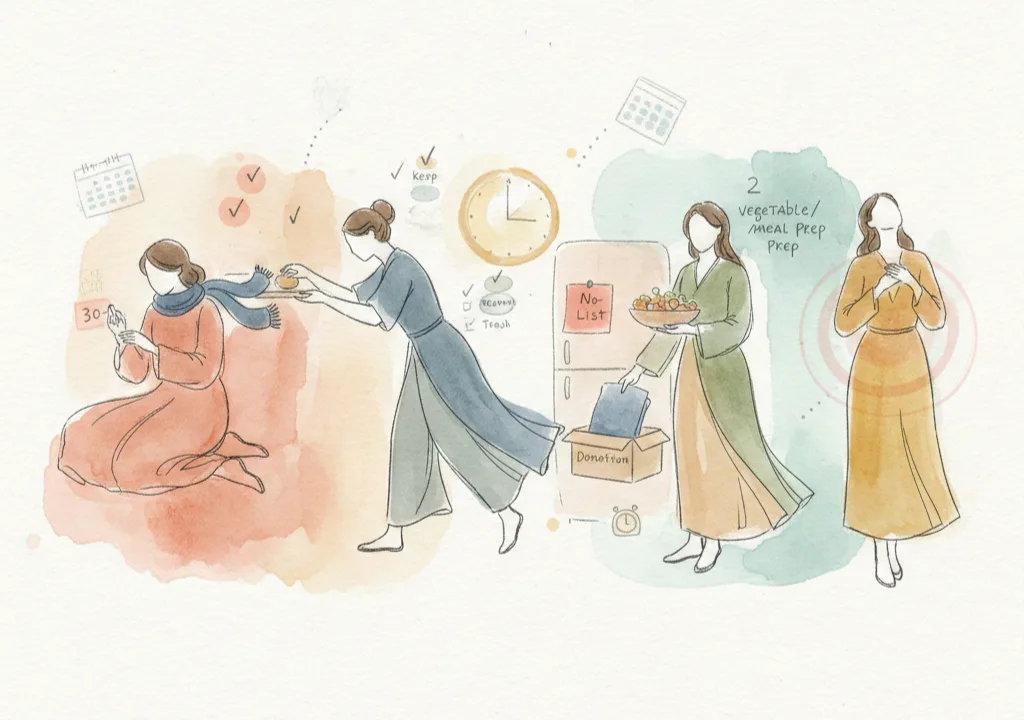
Tiny habit: Stack items into three piles: Keep, Return, Trash. Make the habit automatic by doing it after a morning coffee or before your last evening chore.
4) Simple Weekend Meal Prep (No Recipes Required)
Why it helps: Meal decisions drain energy. A lightweight meal-prep routine keeps both weekends and weekdays easier.
How to start: On Friday or Saturday, chop a vegetable, roast a tray of protein or beans, and prepare a grain (rice, quinoa) — enough for two meals. Combine simple staples for quick lunches and low-effort dinners.
Tiny habit: Label one container “Weekend Fuel” and place it where you’ll see it first thing in the morning.
5) The Weekend No-List
Why it helps: A No-List clarifies what you will not do, which protects time and reduces guilt. Saying no to low-value activities creates space for rest and meaningful plans.
How to start: Write 3 things you will avoid this weekend (for example: no errands after 4 p.m., no social media scrolling before noon, no impulse purchases).
Tiny habit: Tape the No-List on the fridge or set it as your phone lock-screen note to make it visible when decisions arise.
6) Time-Block Micro-Chores (15–30 Minutes)
Why it helps: Small, focused windows beat all-day “catch-up.” Micro-chore blocks keep the home functional without consuming free time.
How to start: Schedule one 20-minute block each day of the weekend for chores. Choose one focus: laundry, a 20-minute declutter, or a quick bathroom tidy.
Tiny habit: Use a kitchen timer and treat the block like a short sprint — start with one focused task and stop when the timer ends.
7) One-In-One-Out Weekend Rule
Why it helps: Weekend trips, events, or deliveries can bring new items into the home. The one-in-one-out rule keeps accumulation in check and makes decision-making around purchases simpler.
How to start: If you buy or bring in something new, immediately remove one similar item. If it’s a gift or seasonal, choose something it naturally replaces.
Tiny habit: Keep a small “donate” box in a closet and drop one item into it whenever something new enters the home.
8) A Sunday Evening Ritual to Close the Weekend
Why it helps: A short ritual signals closure, reduces Sunday-night anxiety, and primes you for a calmer Monday.
How to start: Spend 15 minutes Sunday evening to review Monday’s calendar, lay out clothes, prepare lunch, and set a gentle alarm. If you already keep small nightly resets, elevate Sunday’s into a slightly longer wrap.
Tiny habit: Finish the ritual with a simple 2-minute breathing exercise to mark the transition from weekend to week.
If you want a shorter nightly reset habit that prevents clutter and decision fatigue, explore this five-minute evening reset for extra structure.
A simple weekend template to try this weekend
- Friday evening (30 minutes): Close work, choose two rest priorities, set one micro-chore.
- Saturday morning (20–45 minutes): Micro-chore block (laundry or a 20-minute declutter). Then 2–3 hours reserved for an outing or hobby.
- Saturday evening: One shared-surface sweep + simple meal from prepped staples.
- Sunday morning: Rest block (reading, walk), plus 15-minute No-List check to keep choices intentional.
- Sunday afternoon: Flexible family or personal time; handle one small errand if needed.
- Sunday evening (15 minutes): Sunday ritual — plan Monday, lay out clothes, do a 2-minute breathing exercise.
This template is intentionally lightweight — the goal is to create pockets of peace, not a longer to-do list.
How to make these routines stick
- Start tiny. Each routine includes a micro-habit you can do in under five minutes. Momentum is built from repetition, not intensity.
- Stack habits. Attach a new routine to an existing cue: after dinner, after your morning coffee, or right after you finish work on Friday.
- Be flexible. If a routine feels rigid or adds stress, shrink it. The point is to reduce overwhelm, not create new obligations.
- Track compassionately. Mark the days you completed the routine with a checkmark. A visual streak beats vague intentions.
- Iterate. After two weekends, adjust which routines you keep. Drop what doesn’t serve you and tighten what helps.
The more these rhythms are part of your weekend, the fewer surprises will hijack your rest. For many people, simply committing to small, repeatable acts — like a short planning session or a five-minute evening sweep — is enough to break the cycle of overwhelm.
Final takeaway
Weekend overwhelm isn’t a failure of willpower; it’s a predictable result of too many open decisions and unfinished tasks. The antidote is not more to-do lists but simple routines that reduce decisions, restore calm, and protect rest. Try one or two of the routines above this weekend, keep them tiny, and notice how much lighter the weekend feels when you give it structure that serves rest.
If one small ritual changes everything for you, consider expanding slowly — habit by habit — rather than all at once. Consistency with small actions creates lasting freedom.