How to Build a Five-Minute Evening Reset Habit That Prevents Clutter
A step-by-step guide to creating a five-minute evening reset habit that stops clutter before it starts—includes a clear checklist, habit blueprint, troubleshooting tips, and scripts to make the routine automatic.
Why five minutes matters more than you think
Clutter doesn’t arrive all at once; it accumulates in tiny, daily decisions: the book left on the couch, the mug on the counter, the jacket dropped on a chair. A five-minute evening reset isn’t about grand decluttering sessions. It’s a compact, repeatable habit that interrupts accumulation before it becomes a problem. Done consistently, it preserves calm, reduces weekend chores, and makes your home feel intentional each morning.
This post shows how to design a five-minute evening reset that actually sticks: the cue, the exact actions, how to handle resistance, and simple rules that prevent clutter without adding stress.
The habit blueprint: cue → routine → reward
Every habit has three parts: a cue, a routine, and a reward. If you design these clearly, five minutes becomes automatic.
- Cue: Anchor the reset to an existing nightly moment—after dinner dishes, when you change into pajamas, or right after your toothbrush. Anchoring to a predictable signal makes the reset less likely to be skipped.
- Routine: A tightly scoped set of actions that you can complete in five minutes (see checklist below). The key is specificity—vague goals like “tidy up” fail; exact tasks succeed.
- Reward: End with a small, immediate payoff—dim the lights and light a candle, play a two-minute favorite track, or savor a single sip of herbal tea. The reward reinforces the habit loop and makes the reset feel worth the time.
If you want a broader view of how short routines compound into big results, see this guide to a five-minute habit that gives long-term results.
A five-minute evening reset checklist (do these, in order)
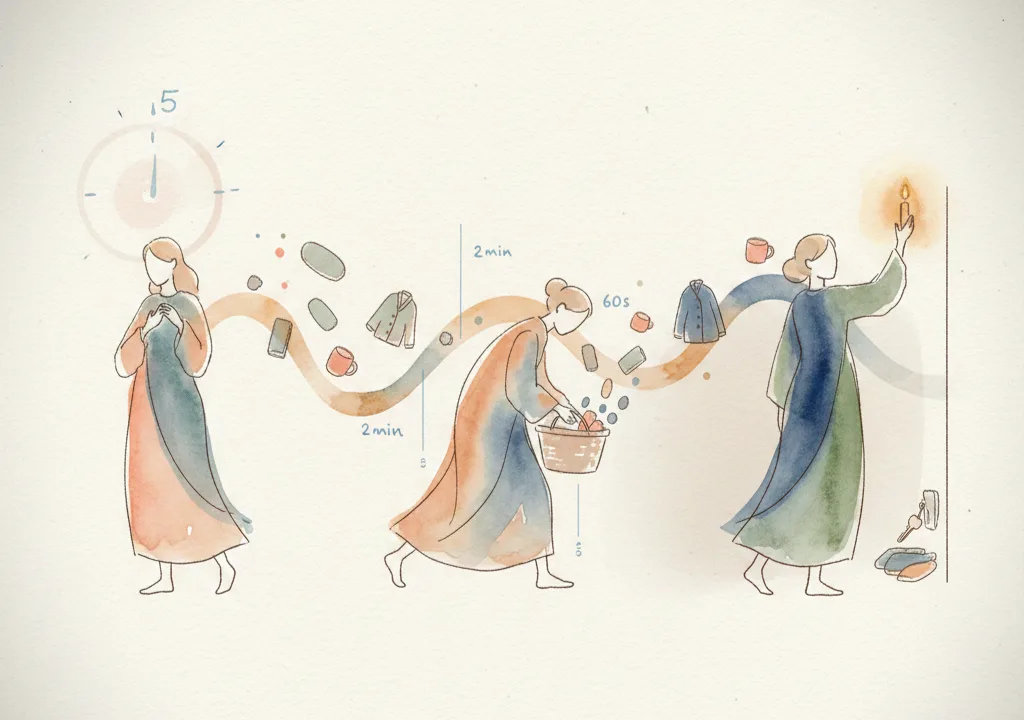
- Set a two-minute timer and collect stray items. Walk the main living area with a basket and gather any items that don’t belong—dishes, books, mail, chargers. This keeps the process momentum-focused: collect first, sort later.
- Put away what you can in 60 seconds. Return anything that belongs in the same room (blanket on couch, remote in holder). For items that belong elsewhere, drop them in the basket to be returned in the brief sorting step.
- Quick clean surfaces (60 seconds). Wipe kitchen counters, clear the table, and corral mail into a “to sort” folder. A wet wipe or a fast swipe with a cloth is enough.
- Zero-sink rule (30 seconds). Load dishes into the dishwasher or rinse and stack in the sink. Seeing a clear sink is a deceptively powerful signal of order.
- Prep for tomorrow (30–60 seconds). Lay out keys, wallet, and outfit, or put your bag by the door. This reduces morning friction and rewards the evening reset with an easier start.
- Trash/recycle sweep (10–20 seconds). Toss obvious garbage and empty food bins if full—small trash quickly becomes big smells.
Total: 3–5 minutes if you stay focused. Use an upbeat song or a timer app to keep energy high and avoid diluting the five minutes into twenty.
Tiny rules that prevent backsliding
- One-in-one-out for surfaces: if you bring something new onto a table or counter, remove something else that night.
- The basket rule: never sleep with the “basket of return” in the living room. Spend one minute dropping its contents where they belong before bed.
- The 2-minute finish: if an item will take less than two minutes to return or fix, do it immediately rather than adding it to the basket.
These micro-rules keep decisions minimal and reduce mental friction—so the reset remains a short, pleasant ritual instead of another chore.
Troubleshooting common roadblocks
- “I’m too tired.” Anchor the reset to a low-energy cue (e.g., after brushing teeth) and reduce the routine to two or three non-negotiables on rough nights: clear dishes, quick surface wipe, and clothes in hamper. Consistency matters more than completeness.
- “It became a long purge.” If the basket grows large, schedule a 10–15 minute quick-sorting session once a week. For ideas on short, effective decluttering sessions, this post on simple home organization hacks that actually stick offers rules that scale faster than large purges.
- “I forget.” Use an external trigger: a nightly alarm, a sticky note on the bathroom mirror, or the same song as your cue. The first two weeks are the most important—repeat the loop until it’s automatic.
How to make it stick for months (and years)
- Start with one specific anchor. It’s better to do the reset after your evening tea every night for a month than to attempt it after five different cues across the week.
- Track streaks visually. A small calendar or habit app that shows 7–14 day streaks leverages momentum. Missing one night isn’t failure—don’t break the chain over guilt.
- Gradually expand when it’s easy. After a consistent month, add one more tiny action (e.g., straighten the entryway shoes) rather than trying to do a full overhaul.
- Make the reward meaningful. The brain repeats what it enjoys. Closing the loop with a pleasant sensory cue—soft lighting, a favorite two-minute song, or a breathing exercise—cements the habit.
Scripts you can start with (pick one)
- After-dinner anchor: “After I load the last plate into the dishwasher, I will set a 2-minute timer, collect stray items into the basket, wipe the table, and put my keys by the door.”
- Pajama anchor: “After I change into pajamas, I will do a 3-minute reset: clear the sink, put clothes in the hamper, and lay out tomorrow’s outfit.”
- Toothbrush anchor (low-energy nights): “After I brush my teeth, I will spend 2 minutes putting dishes in the dishwasher and plopping the basket items in their rooms.”
Use whichever script matches your evening flow. The more specific the language, the easier your brain can follow it automatically.
Why this beats occasional deep cleans
Deep declutters are satisfying but rare; the unseen daily pile-up undoes them. A five-minute reset is a maintenance habit—small, frequent investments that keep your home usable and calm. Over time, the minutes compound into an environment that supports rest, clarity, and the freedom to do more meaningful projects.
A short reset tonight is a calmer morning tomorrow. Keep it tiny, make it certain, and protect the reward. Those five minutes are a small practice with outsized returns: less clutter, fewer decisions, and a house that feels like a home.