How to Build a Capsule Wardrobe for Simplified Daily Dressing
Step-by-step guide to creating a capsule wardrobe that simplifies daily dressing, including capsule sizes, color palettes, outfit matrices, shopping rules, and maintenance habits.

Why a capsule wardrobe changes your mornings
Decision fatigue is real. The more choices you face before coffee, the more mental energy you burn. A capsule wardrobe isn’t about wearing the same outfit forever — it’s about intentionally choosing fewer, better-fitting pieces that mix and match so you can get dressed fast and feel confident. This post walks you through building a capsule wardrobe that simplifies daily dressing, saves time, and aligns with a minimalist lifestyle.
What a capsule wardrobe actually is (and isn’t)
A capsule wardrobe is a small, curated collection of clothing that covers your daily needs and reflects your personal style. It’s:
- Deliberate: each item earns its place.
- Versatile: pieces mix and match to create many outfits.
- Quality-focused: you prioritize fit and durability over quantity.
It isn’t a rigid rule set. The number of items will vary by lifestyle, season, and taste — the point is to reduce noise and make dressing easier.
Step 1 — Clarify your needs and lifestyle
Start with an inventory of how you actually spend your days. Answer these aloud or jot them down:
- How many days per week do you need business or business-casual outfits?
- How often do you exercise or need activewear?
- Do you attend regular formal events or mostly casual gatherings?
- What’s your climate and seasonal variation?
From there, decide on a workable capsule size. Common targets:
- 20–30 items: minimal, for mostly casual lifestyles.
- 30–40 items: balanced, for mixed work and casual needs.
- 40–50 items: a larger capsule for varied wardrobes including formal wear.
(Items counted: tops, bottoms, dresses, outerwear, shoes; exclude underwear, socks, accessories if you prefer.)
Step 2 — Build a core color palette
A strong capsule depends on a simple palette. Pick:
- 2–3 neutrals for anchors (e.g., navy, black, gray, beige).
- 1–2 complementary colors that pair well with neutrals.
- 1 accent color for personality (optional).
Keeping colors consistent makes mixing effortless and increases outfit possibilities with fewer pieces.
Step 3 — Choose your core pieces
Every capsule needs a skeleton of essentials that work across situations. Aim for pieces that layer and transition easily:
- Tops: 6–10 (t-shirts, blouses, button-ups, light sweater)
- Bottoms: 3–6 (jeans, trousers, skirt)
- Dresses/Jumpsuits: 1–3 (one versatile dress can replace many outfits)
- Outerwear: 2–3 (light jacket, structured coat)
- Shoes: 3–5 (comfortable sneakers, dress shoes, boots)
- Specialty: 1–3 (work blazer, activewear set)
If you want a ready checklist, start with the essentials in this guide to minimalist wardrobe essentials.
Example 30-item capsule for a mixed work/casual life
- 7 tops (3 tees, 2 blouses, 2 sweaters)
- 5 bottoms (1 dark jeans, 1 light jeans, 1 black trouser, 1 casual pant, 1 skirt)
- 3 dresses
- 2 jackets (denim, tailored blazer)
- 4 pairs shoes (sneakers, ankle boots, loafers, sandals)
- 3 scarves/accessories
- 6 seasonal/fitness pieces (activewear, rain jacket)
This gives dozens of combinations without overwhelming your closet.
Step 4 — Use an outfit matrix to maximize combinations
An outfit matrix is a simple grid: list your tops across the top and bottoms down the side. The intersections represent outfits. With 5 tops and 4 bottoms you already have 20 outfits. Add layers and shoes and that number multiplies quickly.
Practical tip: photograph 10–15 favorite outfits and save them on your phone for days when you don’t want to think. The visual cue speeds decisions and reinforces which combinations work best.
Step 5 — Shopping rules that keep your capsule honest
Adopt a short set of rules to prevent creeping accumulation:
- The 30-day test: if you’re considering a purchase, wait 30 days and reassess (you’ll rarely still need it).
- One-in-one-out: when you add a new non-essential item, remove an old one.
- Ask: does this match my palette and lifestyle? If not, pass.
- Prioritize fit and fabric over trends. A well-fitting basic outperforms a trendy piece you rarely wear.
These guardrails keep your collection intentional and wearable.
Step 6 — Maintain your capsule with simple habits
Building the capsule is the work; maintaining it is habit. Small, consistent habits make the wardrobe sustainable:
- Weekly: do a five-minute check to set out tomorrow’s outfit and mend any loose threads.
- Monthly: quick visual sweep — anything unworn for 30+ days? Reassess.
- Seasonally: rotate out-of-season pieces into storage and reassess pieces that no longer fit or suit your life.
If you struggle to maintain habits, consider habit stacking: attach wardrobe maintenance to an existing routine like laundry day. Learn how to use habit stacking specifically for clothing in this guide to habit stacking for a minimal wardrobe.
Styling shortcuts that make fewer items feel abundant
- Layering: a sweater over a dress or a blazer over a tee changes the look instantly.
- Accessories: a belt, necklace, or scarf can transform the same base outfit.
- Shoe swaps: sneakers vs. loafers vs. heels with the same outfit create different vibes.
- Texture and proportion: mixing slim and oversized pieces keeps outfits interesting without more garments.
These small moves boost outfit variety without growing your closet.
Common mistakes and how to avoid them
- Buying for “someday”: avoid items meant for vague future events. If it doesn’t fit current life, it doesn’t belong.
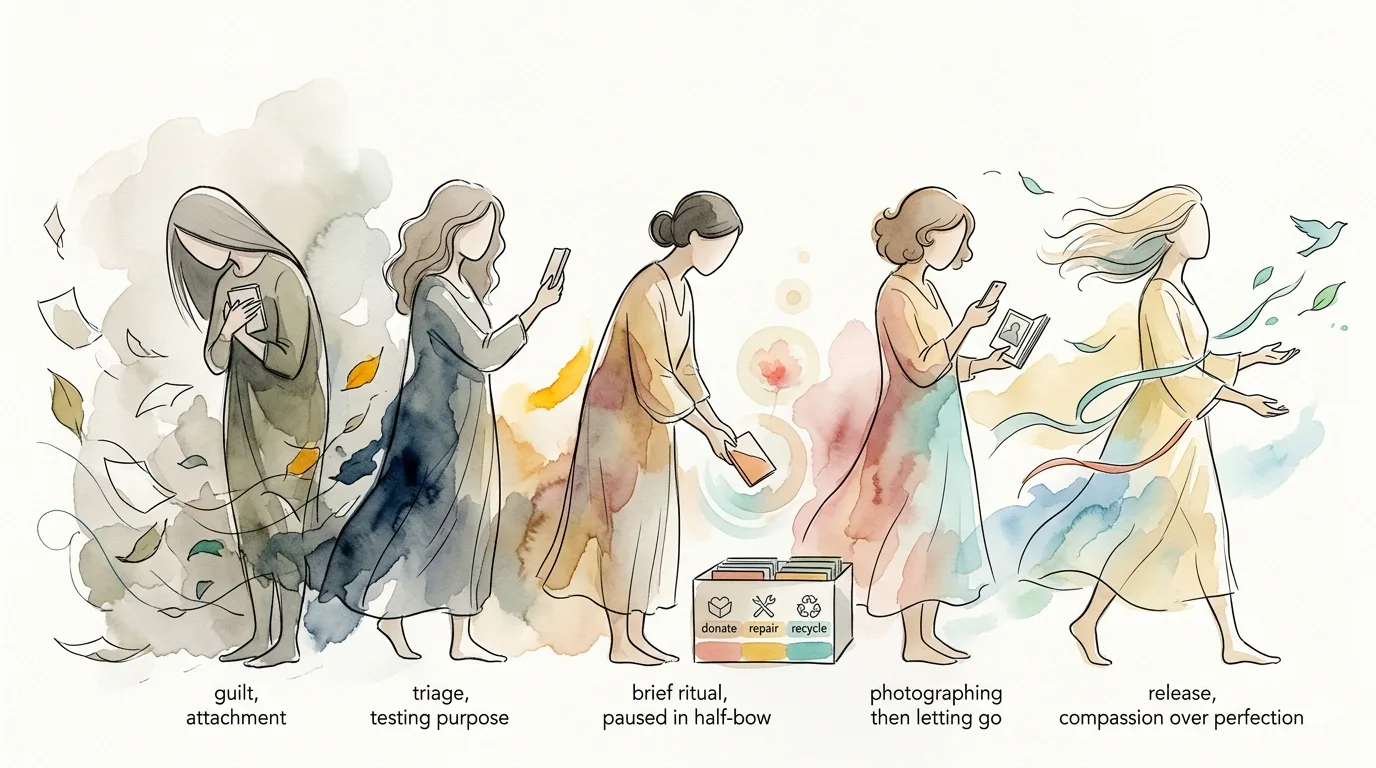
- Keeping ill-fitting clothes out of guilt: clothes shouldn’t be guilt anchors. Donate or sell them.
- Ignoring seasonal realities: a capsule that ignores winter in a cold climate won’t get used. Build for actual weather and routine.
If letting go feels hard, remember that releasing excess creates decision freedom — a central idea in minimalism.
The emotional payoff: less friction, more presence
A capsule wardrobe does more than tidy your closet. It reduces morning friction, frees mental space, and helps you spend intentionally. When you no longer waste time hunting for clothes, you reclaim minutes and reduce stress — tiny changes that compound into a calmer day.
Quick checklist to start today
- Declutter: pull everything out and sort into keep, maybe, donate.
- Define your palette and capsule size (pick one of the ranges above).
- Choose your core pieces and photograph 10 favorite outfits.
- Set one maintenance habit (weekly outfit prep or monthly purge).
- Apply shopping rules (30-day wait, one-in-one-out).
Start small. Even removing five underused items creates clarity and momentum.
Final thought
A capsule wardrobe is a tool: a simple system that protects your time and attention. It’s not about deprivation — it’s about creating a closet that serves you so you can spend your energy on things that matter. Try a 30-item capsule for one month and notice how much easier mornings become.