Ultimate Guide to Letting Go of Stuff Without Guilt or Waste
A step-by-step guide to release possessions without guilt and minimize waste, with mindset shifts, a five-step method, and small habits to keep progress.
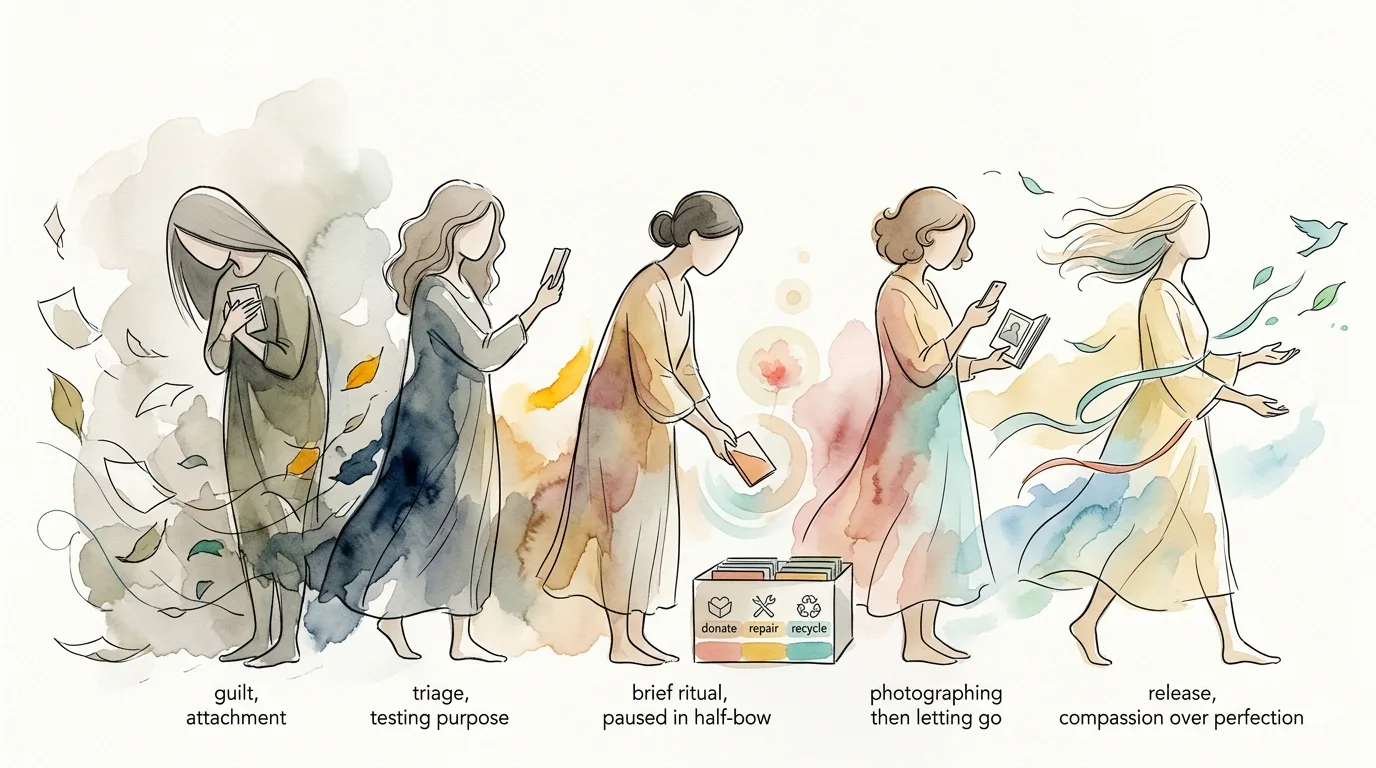
Why letting go often feels impossible—and why that’s okay
Letting go of belongings can feel like losing a piece of your story, and that sting is real. Guilt, worry about waste, and the fear of needing something later are the three most common blockers I see. The good news: those feelings are natural, and they don’t have to stop you from creating a calmer home. This guide gives a gentle, actionable system to release things without guilt and with as little waste as possible.
Start with the right mindset: permission over perfection
Most of us approach decluttering with a harsh internal critic: “What if I need it?” or “I paid good money for this.” Instead, try these shifts:
- Replace “waste” with responsibility. You’re deciding how to steward resources well—not discarding them carelessly.
- Accept progress over perfection. A home with fewer distractions is a better long-term use of those resources than a closet full of unused items.
- Treat emotions as data, not directives. Feeling guilty means the item has meaning. That’s useful information for what to do next, not a veto on letting go.
If the emotional cost feels large, it helps to remember that letting go is also a form of care—for your future self, your family, and the planet.
For deeper emotional barriers, see this piece on letting go feels like starting over.
A five-step method to let go without regret or waste
Use this as a repeatable ritual. It turns big, vague anxiety into a clear, humane decision process.
1. Quick triage (60–90 seconds per item)
Ask three fast questions:
- Do I use or wear this in the last 12 months?
- Does it support a role I actively choose (work, hobby, caregiving)?
- Is it damaged beyond reasonable repair?
If you answer “no” to the first two and “yes” to the third, it goes to recycle/repair. If the item passes the questions, keep it. If not, move to step 2.
2. Apply the purpose test
Give each item one clear purpose. If you can’t name a single useful, joyful, or meaningful purpose in one sentence, it’s probably a candidate to release.
Example scripts:
- “This mug’s purpose is a daily coffee cup.”
- “These brochures have no ongoing purpose and are outdated.”
This reframes decisions from identity (“I own this because it shows I’m X”) to function.
3. Two-minute emotional timeout
If guilt or sentiment stalls you, use a brief ritual:
- Hold the item for 30 seconds.
- Say aloud one memory it represents.
- Place it in the “ready to release” box.
This ritual gives respectful closure and reduces the urge to keep items out of obligation.
If an item is deeply sentimental—photos, heirlooms—see the dedicated section below and refer to declutter sentimental items for strategies.
4. Choose the least-waste disposal route
Before anything hits the trash, ask: Can someone else use this? Can it be repaired, repurposed, or recycled? Options ranked by environmental and social value:
- Gift or donate: Thrift stores, shelters, or neighbors via local groups.
- Sell: Use apps or consignment for higher-value items.
- Swap: Community swaps and “Buy Nothing” groups move items quickly without money.
- Repair: A small repair can extend life by years.
- Recycle or proper disposal: Follow local guidelines for electronics, textiles, and hazardous materials.
Make a labeled staging area: “donate,” “sell,” “repair,” “recycle.” Commit to moving items out within two weeks; this prevents clutter from lingering.
5. Create a tiny habit to prevent re-accumulation
Pick one small, repeatable action you can do daily or weekly—10 minutes a day or a 5-item Friday purge. Small, consistent steps beat one dramatic weekend purge and reduce decision fatigue.
Practical tactics to avoid waste
- Photograph then let go: Take a picture of an item and store it in a “memory” album. For many people, the photo keeps the memory while the physical item can leave.
- Upcycle what you can: Old linens become cleaning rags; drawers become planters. Creativity turns potential waste into value.
- Use targeted selling channels: Books to book buyback, high-end clothes to consignment, electronics to certified recyclers.
- Schedule regular pickups: Many donation centers offer pickup so you don’t keep items waiting at home.
- Connect with repair cafes and community menders for textiles and small electronics.
Handling sentimental items without paralysis
Sentimental belongings are where most decisions stall. Use a gentle framework:
- Limit the keepers: Choose a small, defined number of physical mementos per category (e.g., three childhood items). That boundary makes decisions easier.
- Honor memory with a ritual: Keep a small box of meaningful items and create a simple storage ritual (label, date, short note about the memory).
- Consider alternatives: Scan letters, photograph children’s art, and store digital versions. If you keep the object, pair it with a why note—one sentence about its significance.
If sentimental releases feel like too much, see more strategies to declutter sentimental items.
Scripts to say when guilt shows up
Simple verbal scripts can break the loop:
- “Keeping this hasn’t made my life better in years.”
- “I can honor the memory without keeping the object.”
- “Making room allows me to use space for what I actually need.”
Repeat your favorite script aloud before you move an item to the donate/sell/repair box.
Small systems that make big differences
- The 30-day test: Put something in a visible box. If you haven’t used it in 30 days, it’s likely safe to let go.
- The one-bag rule: Each month, remove one bag of things you don’t need. It’s manageable and builds momentum.
- The staging zones: Keep labeled bins for “to sell,” “to donate,” and “to repair.” Check them weekly.
- The one-in-one-out alternative: If you bring something new in, decide immediately what will leave to keep balance.
These systems turn emotional decisions into routine actions.
A seven-day mini-plan to get started
Day 1: Triage 30 items using the three-question test. Day 2: Sort them into keep/donate/sell/repair/recycle boxes. Day 3: Photograph sentimental items you’re unsure about and write one-sentence reasons for keeping or releasing. Day 4: List 5 higher-value items to sell online. Day 5: Drop off donations and schedule any pickups. Day 6: Repair or arrange pickups for recyclables and electronics. Day 7: Create a 5-minute daily or 10-minute evening habit to maintain progress.
Repeat this week whenever clutter spikes.
Final takeaway: choose compassion over perfection
Letting go is rarely a single heroic act. It’s a series of small, thoughtfully chosen moves that free your time, attention, and space. Use the five-step method, pick disposal routes that minimize waste, and build tiny, consistent habits to keep momentum. Above all, treat yourself with kindness—every item you release is a step toward a life that makes room for what matters.