How to Use Habit Stacking to Maintain a Minimal Wardrobe
Step-by-step guide to using habit stacking to keep a minimal wardrobe, with ready-made habit scripts, troubleshooting tips, and a seven-day experiment to make wardrobe maintenance automatic.
Why habit stacking is the missing link for a minimal wardrobe
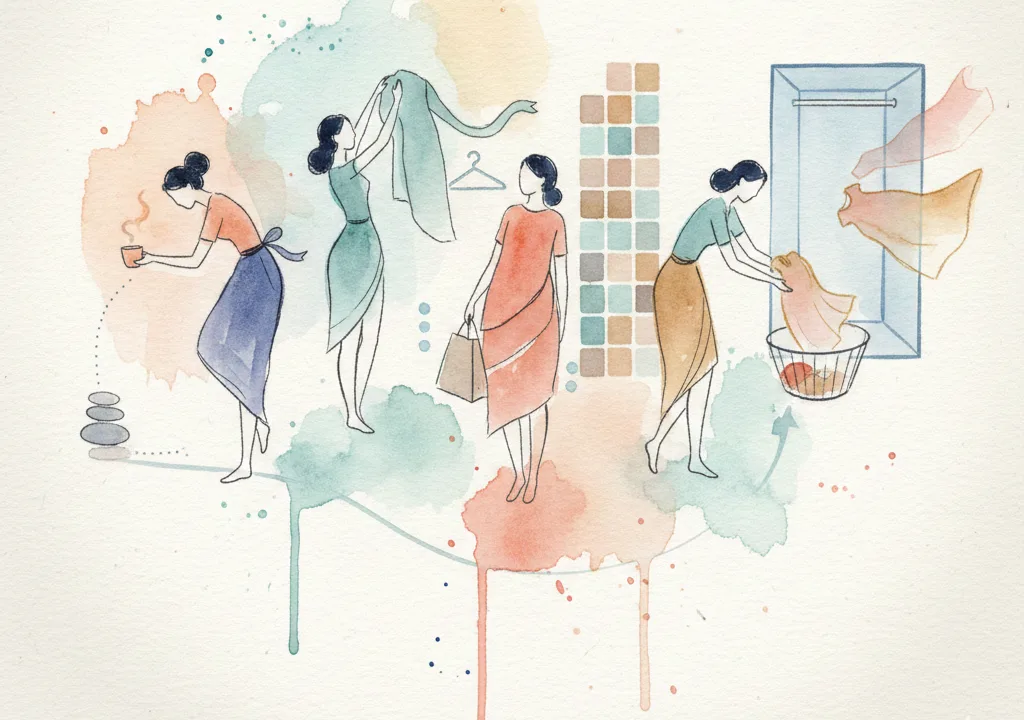
Minimal wardrobes don’t appear by accident; they’re maintained by small, repeatable choices that resist impulse and decision fatigue. Habit stacking — linking a new, tiny behavior to an existing routine — turns intentions (I want fewer clothes) into consistent action (I actually keep fewer clothes). Instead of a single, dramatic declutter, you build systems that prevent accumulation and make dressing simple.
Habit stacking is especially powerful for wardrobes because clothing decisions happen daily. Each morning, every laundry load and every shopping impulse is an opportunity to reinforce minimalism. Stack the right micro-habits onto those moments and you’ll find maintenance takes less willpower and more automation.
The habit-stacking formula for a minimalist wardrobe
Keep this formula in mind: Anchor + Tiny Action + Immediate Cue/Reward.
- Anchor: an existing habit you already do without thinking (e.g., making coffee, taking off shoes, switching on the bedroom light).
- Tiny Action: a micro-behavior that supports your minimal wardrobe (30 seconds to 5 minutes).
- Cue/Reward: something that signals completion (a visible closet update, a checkmark in your phone) or a small reward (a moment of calm, reduced choice the next morning).
Write your stack as an if/then statement: “If I [anchor], then I will [tiny action].” That simple script reduces decision friction and primes the brain to act.
10 ready-made habit stacks you can use today
-
Morning outfit stack
- If I make my morning coffee, then I will pull my outfit for the next day and hang it up.
- Benefit: reduces morning decision fatigue and highlights items that aren’t used.
-
End-of-day reset stack
- If I brush my teeth at night, then I will spend 60 seconds returning clothes to their spot or the laundry bin.
- Benefit: prevents clothes from piling on chairs and makes the closet feel calm.
-
Laundry triage stack
- If I move laundry to the dryer, then I will immediately fold one garment and put it away.
- Benefit: stops the “I’ll fold later” loop and keeps wardrobe size visible.
-
Try-on clarity stack
- If I try something on and it doesn’t feel right, then I will place it in a “decide” basket instead of returning it to the closet.
- Benefit: creates a separate decision zone so unwanted items don’t resurface.
-
Shopping pause stack
- If I put an item in my online cart or take it into a dressing room, then I will wait 48 hours before buying.
- Benefit: reduces impulse buys and increases alignment with your capsule wardrobe.
-
One-in-one-out stack
- If I buy something new, then I will remove one similar item from my wardrobe immediately.
- Benefit: enforces a constant balance and prevents accumulation.
-
Monthly closet check stack
- If it’s the first Saturday of the month, then I will spend 10 minutes removing one item per season I haven’t worn.
- Benefit: small monthly nudges prevent major clutter events. (Pair this with a monthly purge habit if you need a framework.)
-
Outfit remix stack
- If I hang up a garment after washing, then I will think of one different way to style it for future wear.
- Benefit: increases outfit variety without new purchases.
-
Closet streamlining stack
- If I notice three similar items in a row, then I will choose the two I prefer and place the other in a donate bin.
- Benefit: reduces duplication and clarifies favorites.
-
Seasonal edit stack
- If I switch my closet for the season, then I will test 5 items I haven’t worn and donate any that don’t spark confidence.
- Benefit: keeps the wardrobe aligned with current taste and body changes.
How to design your own habit stacks (3-step method)
-
Pick a reliable anchor
- Choose something you already do daily or weekly. Anchors are most effective when they’re tied to strong, established cues (e.g., coffee, bedtime, laundry day).
-
Make the action tiny and specific
- Under 2 minutes is ideal for daily stacks. For weekly or monthly stacks, cap at 10 minutes. Specific beats vague: “put one item in donate box” is better than “declutter.” Use an if/then script.
-
Attach an immediate signal
- Visibility is a great reward. A fuller donate box, a cleared chair, or a checked checkbox signals that the habit worked and primes repetition.
Common obstacles and how to fix them
- “I forget.” Use context-based anchors (not alarms). If the anchor itself moves, pick a new one. Put visual reminders near the anchor (sticky note on the mirror, donate box by the door).
- “It takes too long.” Shrink the action. Fold one sock. Decide about a single shirt. Build consistency before increasing scope.
- “I feel guilty donating.” Reframe: donating gives the piece purpose. If sentiment is the problem, store one sentimental box and limit it.
- “I don’t know what to keep.” Use criteria: fit, condition, frequency of wear, and whether it matches your preferred palette. If in doubt, follow the 12-month rule: if you haven’t worn it in a year, it’s a candidate to go.
Keep decisions simple so the habit lasts
Minimal wardrobes thrive on constraints. Limit hangers for each category, use a consistent color palette, and curate a short list of outfit formulas (e.g., jeans + white tee; midi skirt + knit). Habit stacks reduce friction by simplifying when and where you decide. The less you deliberate, the more consistent your wardrobe will be.
If you’re unsure what a minimal wardrobe looks like, this quick guide to the Top 7 Minimalist Wardrobe Essentials can help you choose anchors and tiny actions that match your style.
A seven-day experiment to get started
Choose one anchor from the list above. Write your if/then script on a sticky note and put it at the anchor point. For seven days, execute the tiny action no matter what. At the end of the week, assess: did you remove one item? Did mornings feel easier? If yes, scale slowly. If no, shrink the action further and try again.
Habit stacking turns wardrobe upkeep into a handful of effortless choices rather than a never-ending fight. Over weeks and months these micro-actions compound: fewer impulse buys, clearer closets, and outfits that actually reflect who you are. Minimalism isn’t about having less for the sake of less — it’s about making space for what works. Habit stacks make that space durable.