How to Declutter for Decision Freedom: A Room-by-Room Method
A room-by-room decluttering method that reduces decision fatigue with clear rules, quick sessions, and small maintenance habits for lasting freedom.
Why room-by-room decluttering frees you from small decisions
Decision freedom isn’t about having fewer options for the sake of it. It’s about removing the small, repetitive choices that drain your energy so you can use your willpower where it matters. A room-by-room decluttering method gives you a clear structure: one controlled environment at a time, one decision style that becomes automatic, and a maintenance routine that prevents things from circling back.
This post gives a simple, repeatable system you can use today: a preparation phase, a set of decision rules, and a room-by-room action plan with tiny habits for long-term results.
Prepare: mindset, tools, and rules that speed choices
Start with the right mindset: curiosity, not shame. Decluttering is editing your life, not punishing your past. Set a single clear goal for each room (for example: “My kitchen surfaces are clear at the end of every day”).
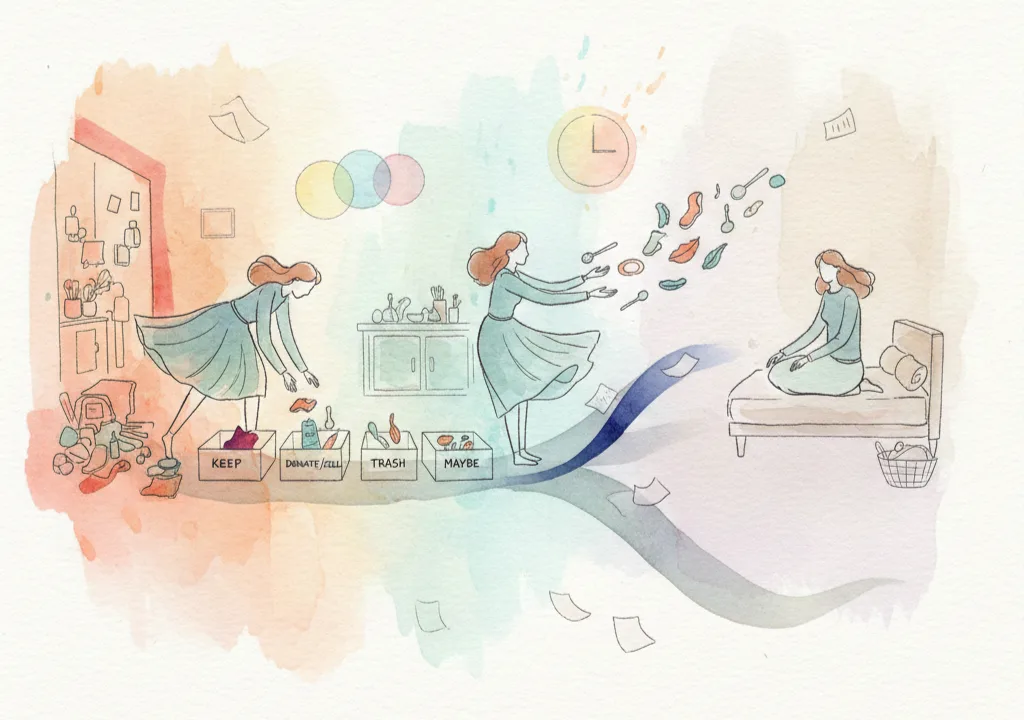
Gather 4 boxes or bins: Keep, Donate/Sell, Trash/Recycle, Maybe. Use a timer and cap sessions to avoid decision fatigue—20–30 minutes per session is ideal. Here are three decision rules to use throughout:
- The Use Rule: Have I used it in the last 12 months? If yes, it stays (unless it fails the next checks). If no, consider moving it out.
- The Purpose Rule: Does it serve a current role that matters to me (function, joy, or identity)? If not, it’s a candidate to go.
- The Replaceability Rule: If it were gone, could I replace it easily and affordably? If yes, it’s easier to let it go.
If your heart argues, place the item in Maybe and set a 30-day review date. This reduces heated decisions now and prevents re-cluttering later.
Room-by-room method (work top to bottom)
General instructions for each room: clear flat surfaces first, then drawers/shelves, then hidden storage. Use the same decision rules and keep sessions short. Below are quick, actionable focuses for common rooms.
Entryway
- Clear the visual front line: shoes, keys, mail. Keep only daily shoes in a small rack; store seasonal footwear elsewhere.
- Create a single landing spot for keys and essentials. Fewer choices here saves morning decision time.
- Purge duplicate umbrellas, unused bags, and old mail immediately.
Kitchen
- Countertops are your decision battleground—limit items to two or three daily tools.
- Group duplicates (measuring cups, spatulas). Keep one or the best two; donate the rest.
- Clear the junk drawer by removing anything without a home. If it needs a home, make one.
Pantry and Fridge
- Remove expired items and consolidate similar foods into clear containers.
- Use “first in, first out” labeling so decisions about leftovers shrink.
Living Room
- Keep surfaces clear for intended activities (reading, conversation, relaxation).
- Limit decor to meaningful pieces. Store or sell decor that’s been out of rotation.
- Tame tech clutter: a single charging station and a basket for remotes.
Bedroom
- Aim for a calm sleeping zone—remove visual “to-dos.” If an item isn’t related to rest or daily dressing, relocate it.
- Use a three-outfit rule: pick 3 go-to outfits for low-decision days and store seasonal extras out of sight.
Closet (a conscious edit)
- Edit clothes by frequency-of-use, not guilt. Try the hanger-flip trick or the 12-month rule.
- Build a small capsule of favorites and rotate the rest into storage or donation.
- Consider the “one-in-one-out” rule to keep your closet lean and decision-friendly. Use it as a living guideline for new purchases and replacements: one-in-one-out rule.
Home Office
- Keep only active projects on your desk. Archive completed work into labeled folders (physical or digital).
- Use a simple incoming tray and schedule a weekly 20-minute inbox clear-out.
- Remove reference books you rarely consult; digitize what you can.
Bathrooms
- Group toiletries into daily and occasional piles; store occasional items out of sight.
- Toss old cosmetics and duplicates. If you can’t remember the last time you used it, let it go.
Garage/Basement/Storage
- These spaces accumulate “maybe useful” items fast. Start with large items you haven’t used in years and ask: would I buy this again?
- Photograph sentimental items and store the photo instead of the object if space is the constraint.
Kids and Pets Areas
- Rotate toys: keep a curated selection out and store the rest. A rotation schedule reduces decision friction and keeps play fresh.
- Use clear bins with labels so kids (and you) know where things belong.
Tiny habits and maintenance for lasting decision freedom
Small daily rituals prevent decluttering from becoming a massive occasional chore. Build tiny habits you can stack onto routines you already have.
- Morning 2-minute sweep: clear one surface (kitchen counter or entry) while the kettle boils.
- Evening 5-minute reset: spend five minutes returning items to their homes. This habit prevents overnight clutter and preserves your decisions. If you want a short routine to anchor this habit, see the five-minute evening reset habit.
- Monthly micro-purge: set a calendar reminder for a 30-minute walk-through. Take one box for donation and one for trash.
- Quarterly deep reset: once a quarter, use a focused weekend session to tackle a bigger space. If you prefer a guided plan for that reset, this weekend decluttering checklist makes the process faster.
Staying consistent without perfection
Decision freedom emerges from consistency, not perfection. Use time limits, the Maybe box, and simple rules to keep choices small and fast. Celebrate clear surfaces—they’re a visible sign of fewer daily decisions.
When you finish a room, notice the small wins: fewer wardrobe choices in the morning, a clear surface that invites reading, or a kitchen where you can actually cook. Those small wins add up into the real benefit of decluttering: more space in your day and mind to decide what truly matters.
Start with one 20-minute session in the room that bugs you most. Use the rules and tiny habits above, and watch decision freedom grow shelf by shelf.