How to Use One-In-One-Out to Keep a Minimal Home
A clear, step-by-step guide to using the one-in-one-out rule to maintain a minimal home, including habit cues, exceptions for gifts and kids, and variations you can adapt.
What the one-in-one-out rule really is
You bring something new into your home, and one thing leaves. Simple on the surface, but the one-in-one-out rule is more than a decluttering hack — it’s a behavior-shaping system that prevents slow, invisible accumulation. Used consistently, it keeps surfaces clear, storage meaningful, and decision fatigue low.
This post breaks down how to use one-in-one-out in real life, the small habit changes that make it stick, and smart exceptions so the rule supports the life you want rather than becoming a rigid tyranny.
Why one-in-one-out works (and why many attempts fail)
At its core the rule matches inflow with outflow. Psychologically, it reduces the friction of saying goodbye: rather than confronting an entire closet or storage room at once, you only make one choice when you add something new. That tiny choice, repeated over time, creates a large net change.
Where people fail is in the follow-through. They promise themselves one-in-one-out at a moment of inspiration, but when the time comes to remove the item there’s no system: no donation bag, no sell list, no trash decision. Or the rule is applied inconsistently — to clothes but not to kitchen gadgets — which allows clutter to creep back in.
How to implement one-in-one-out in 7 clear steps
-
Define the scope. Decide which categories the rule applies to first: clothes? Books? Kitchen tools? Start with one or two categories so you build the habit before expanding.
-
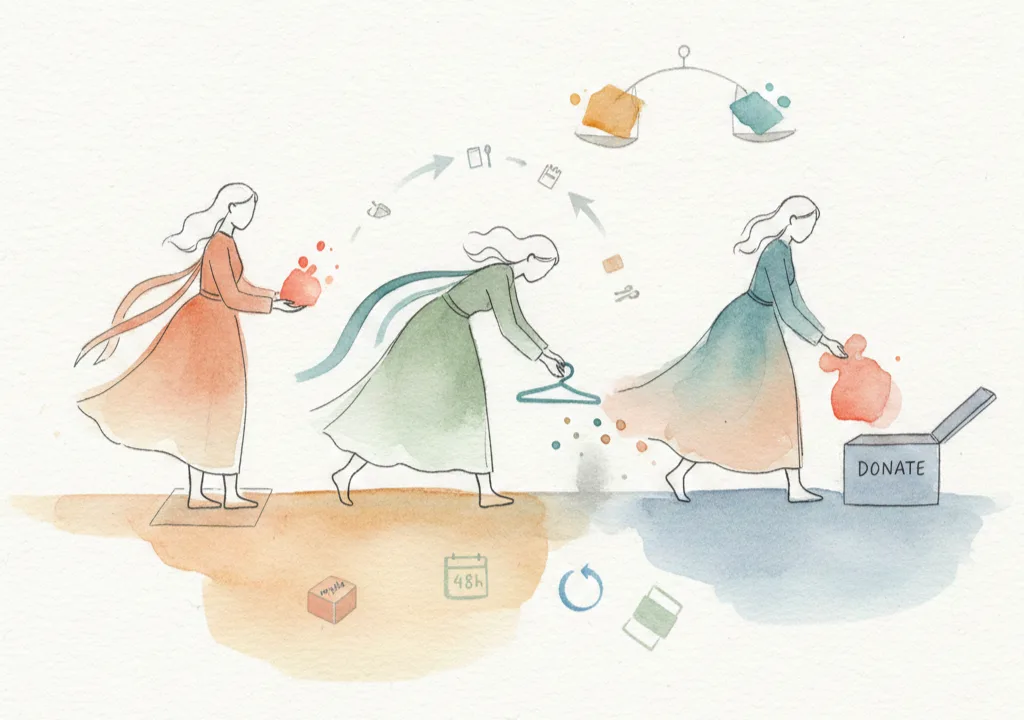
Create an outflow path. Keep a labeled donation box, a sell pile, and a recycling/trash bin accessible. If you need to drive donations somewhere, set a recurring calendar reminder so the box doesn’t sit forever.
-
Use the entry trigger. Make every new item pass through a control point — a landing spot where you decide whether a match must leave. Buying clothes? Put the new garment on a hanger and slide a hanger from your closet into the donation box. Receiving a gift? Decide within 48 hours which item will leave to make space.
-
Match equals value, not size. If the new item is larger or more expensive, you don’t need to remove an identical replacement — remove items whose combined value or volume roughly equals the new entry. For example, a bulky kitchen appliance might mean getting rid of two rarely-used utensils.
-
Use temporary exceptions carefully. Short-term replacements or seasonal swaps are okay (one-in-one-out for winter coats vs summer). Track exceptions in a simple list so they don’t become permanent leaks.
-
Make quick decisions the default. If you’re unsure whether to keep something, use a 30-day or 90-day rule: place the item in a ‘maybe’ box with a calendar note to reassess. If it didn’t get used in that time, it goes out.
-
Celebrate the friction removed. Notice the benefits — clearer counters, faster morning routines — so you reinforce the habit loop: trigger (new item), action (remove one), reward (calm space).
Tiny habits that make one-in-one-out automatic
- The landing spot: designate a single drawer, shelf, or box where new items are placed for decision. This creates a consistent physical prompt.
- The 2-minute purge: each time you empty your bag or unpack groceries, spend two minutes taking one item to the donation box if you added anything new that week. Small anchors beat big intentions.
- The monthly sweep: set a 30-minute calendar block once a month to move items from the donation box to your car or donation center. This removes bottlenecks.
These are similar, in spirit, to other low-friction habits that transform homes over time. If you want more small, reliable adjustments that stick around the house, check out simple home organization hacks.
Handling special cases: gifts, kids, and sentimental things
Gifts: Treat intentional gifting as an opportunity to practice boundaries. If you’re keeping the gift, decide which similar item will make space. For sentimental gifts, keep a memory box limited to one small container. That constraint forces selective curation.
Kids and pets: For young children, apply one-in-one-out to toys as they receive new ones. Make donating part of birthday routines: pick three toys to give away before opening new ones. For items that must multiply (e.g., pet beds), match on function rather than count.
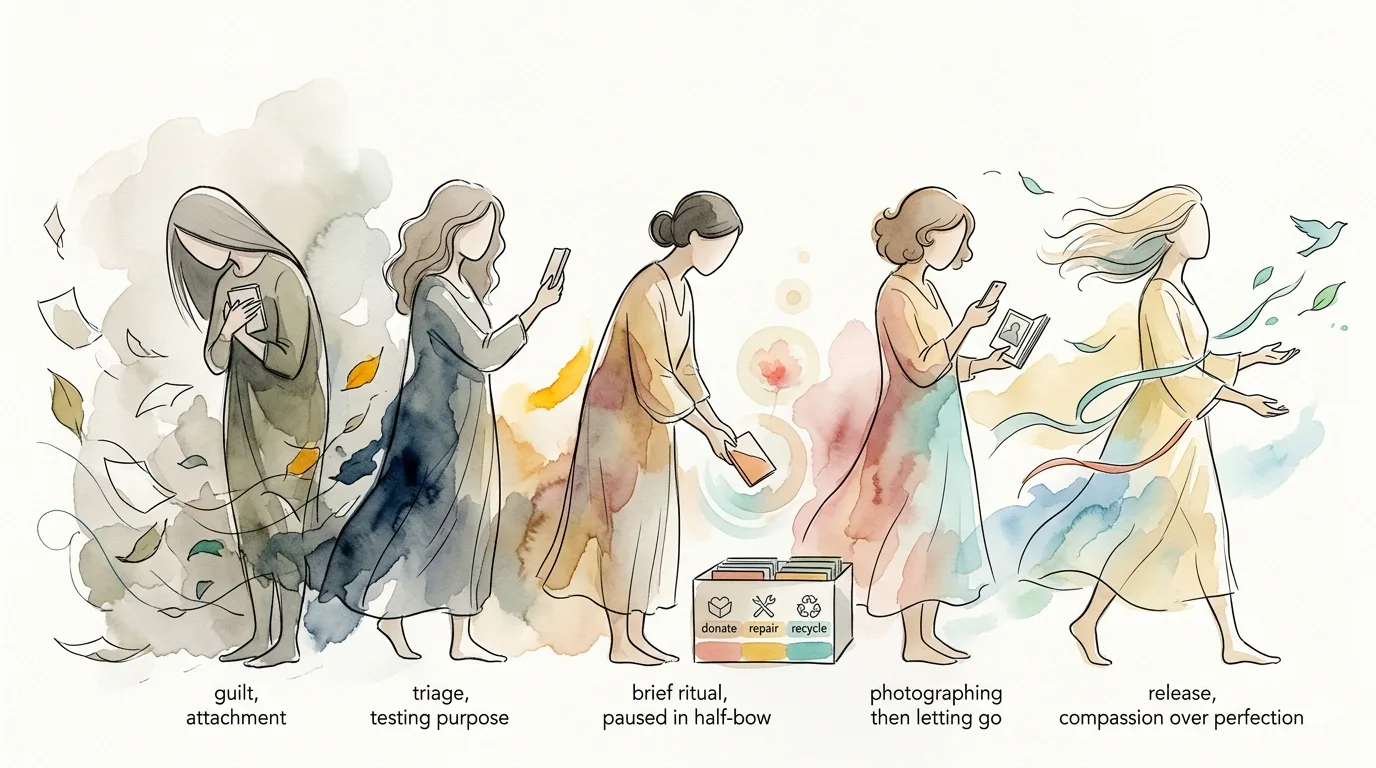
Sentimentality: When an item survives your first decision, test its daily usefulness. If it’s only kept because of guilt, create a digital photo and let the physical object go. This honors memory while freeing space.
Variations that keep the rule flexible and fair
- One-in-two-out: Use when you’re doing a more aggressive reset or when new items are large.
- One-in-one-out by category: Apply separately to clothes, books, and gadgets. This prevents a new kitchen tool from being justified by purging a shirt.
- Value-based matching: If you buy a high-ticket item, match its value rather than its physical presence.
Flexibility keeps the rule humane. The aim is not austerity for its own sake but creating a home that supports your daily life.
How to measure progress without obsessing
Track two simple numbers: how many items enter and how many leave each month. A basic spreadsheet or a note app is enough. If outflow equals inflow, you’re stable. If outflow exceeds inflow, you’re simplifying. Don’t aim for zero inflow; focus on alignment — fewer impulse buys, more intentional choices.
If you’re starting from a cluttered space, combine one-in-one-out with a quick, focused declutter session — the weekend reset — then use one-in-one-out to prevent relapse. For a step-by-step approach to transitioning without giving up favorites, see this transition to minimalism step-by-step plan.
The small payoff that compounds
One-in-one-out is habit engineering. It turns an intimidating task — managing everything you own — into a single, consistent choice at the moment of acquisition. Over months and years that choice compounds into a calmer home, fewer anxious mornings, and more attention on the things that actually add value.
Start small. Choose one category, set an outflow path, and make your next new item the one that teaches the rule. The rest follows.