How to Create a Minimalist Mindset: Daily Practices to Want Less and Enjoy More
Practical daily practices to shift your preferences from accumulation to clarity. This post gives small, repeatable habits, environment tweaks, and a 30-day experiment that help you want less and enjoy more.

Why wanting less becomes the work of wanting more
Minimalism is often presented as “get rid of stuff.” That’s part of it, but the heart of minimalism is a mindset: choosing what deserves your attention, money, and time so you can enjoy life more. Practically speaking, this means replacing the reflex to accumulate with a daily practice that quietly shifts your wants. Over weeks, those small practices rewire preferences — you want less because less gives you more clarity, calm, and space for what matters.
Core principles that shape a minimalist mindset
- Intention over impulse: every choice starts by asking, “Does this move me toward what I want?”
- Less friction, more joy: remove small daily annoyances so the important things shine.
- Consistency beats extremes: tiny repeatable habits create long-lasting change.
- Environment influences desire: adjust what you see and touch to reduce craving.
These principles guide the daily practices below. Think of them as a toolbox — you don’t need every tool, just the right ones for your life.
Daily practices (simple, repeatable, effective)
1. Start with a one-question morning ritual (2 minutes)
Before reaching for your phone, ask: “What one thing, if accomplished today, would make this a good day?” Write it down. This tiny act sets priorities and reduces the urge to fill your day with low-impact tasks. It’s a micro-habit you can build in under a week and keep for life.
2. Adopt a 24–72 hour pause rule for non-essential purchases
Impulse buying is where clutter and regret begin. Try a simple cooling-off rule: if it’s not essential, wait 24–72 hours before buying. Often the urge passes. For a practical template, use the pause rule habit to decide what’s worth spending on.
3. Use “one-in, one-out” with a twist
If you bring something new into your home, remove one similar item the same day. This keeps your possessions stable and forces you to evaluate the value of newcomers. Over time, the rule shifts your buying criteria — you choose higher-quality, more meaningful things.
4. Reduce decision fatigue with small routines
Design two to three nonnegotiable routines: a morning, a pre-work, and an evening routine. When small decisions are automated, you have more willpower left for important choices. If you struggle to start, try a tiny anchor habit (like making your bed) and build from there. If you want a fast win, the 5-minute habit shows how tiny efforts compound into big results.
5. Practice a 5-minute tidy at day’s end
Set a 5-minute timer each evening to clear surfaces, empty the sink, and set out tomorrow’s essentials. This small ritual prevents clutter from migrating into stressful territory and creates a peaceful morning.
Environment hacks that rewire desire
- Reclaim sightlines: keep countertops and tabletops mostly clear. Clutter visible at eye level drives more desire and stress than what’s tucked away.
- Store extras out of immediate reach: accessibility breeds use. If something is out of sight, the urge to buy a new one is less frequent.
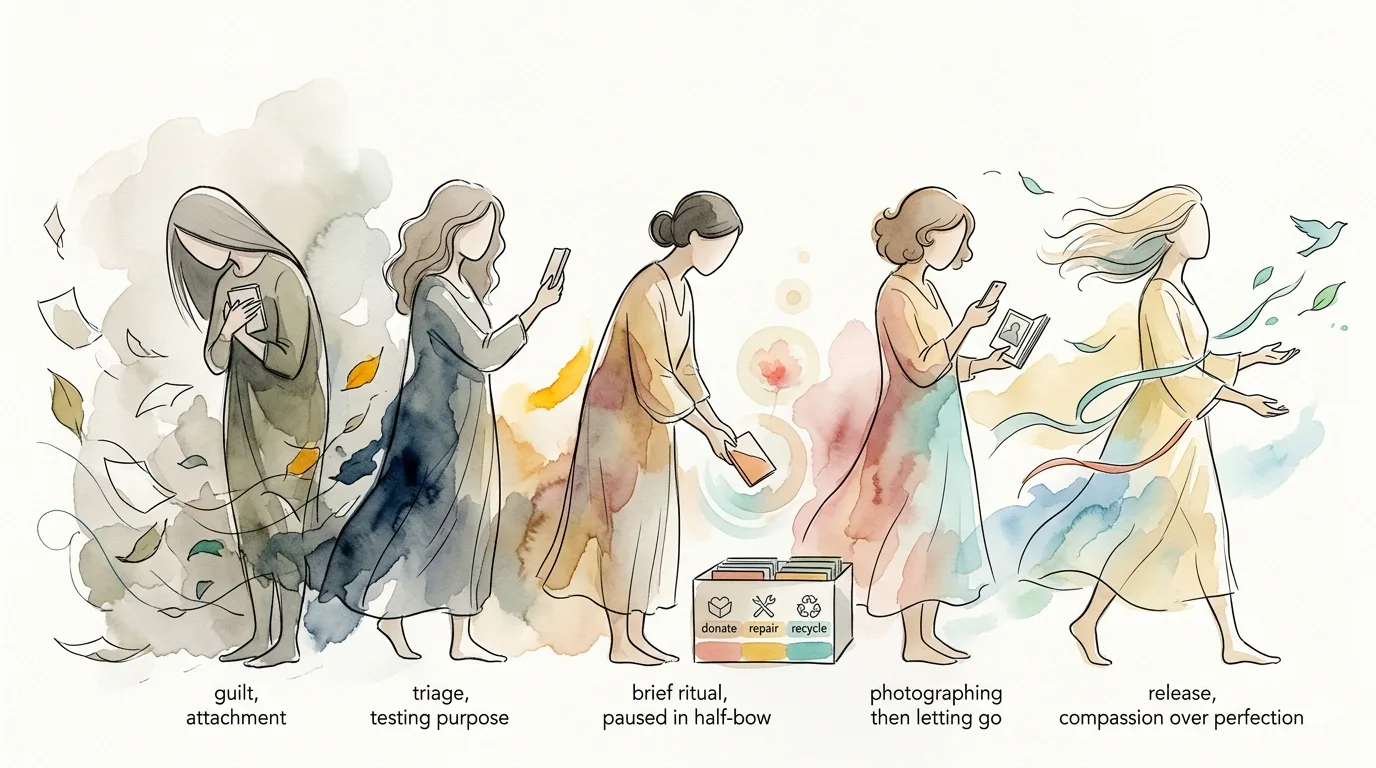
- Create a “donate” box: put one box in a closet. When it fills, drop it at a donation center. This makes letting go easy.
These tweaks change the cues your brain uses to form wants. When your environment signals simplicity, your decisions naturally align.
Weekly rituals that reinforce the mindset
- Sunday review (15–30 minutes): review the week, check the 1–3 priorities you set each morning, and plan one meaningful activity. The review keeps intention steady.
- Digital declutter (10 minutes): clear one email folder, unsubscribe from one newsletter, or delete an app you don’t use. Little digital pruning prevents mental noise.
- Financial check-in (10 minutes): glance at recent purchases and ask whether they advanced your priorities. Frequently, this sober look reduces future impulse buys.
How to stay consistent without being perfect
- Aim for a streak, not perfection: missing a day is data, not failure. Learn what caused the miss and adapt.
- Track tiny wins: a simple checklist or habit tracker increases follow-through. Celebrate three days in a row; it builds momentum.
- Make it easy: reduce activation energy. If you want to read before bed, keep a book on your pillow. If you want to pause spending, remove saved credit cards from one-click checkout.
Consistency turns simple acts into an identity. When you string enough little choices together, you stop “doing minimalism” and start “being minimal.”
When letting go feels like losing something
Minimalism can feel like sacrifice. That feeling usually masks fear: fear of missing out, fear of scarcity, or fear of change. Reframe the loss question: what does this space give me back? Often the return is time, quiet, or money — things that feed life more than clutter ever could. If letting go feels like starting over, see this practical guide on why letting go can be the beginning of something better.
A 30-day experiment you can try tomorrow
Week 1: Build the morning one-question ritual and the 5-minute evening tidy. Week 2: Add the 24–72 hour pause rule for purchases and a “donate” box in a closet. Week 3: Automate two daily decisions with simple routines and complete a Sunday review. Week 4: Reflect — what felt lighter? What cost you energy? Choose two practices to keep.
This incremental experiment prevents overwhelm and lets you feel the benefits quickly.
Final note: minimalism is not austerity
A minimalist mindset isn’t about stripping joy; it’s about clearing the noise so joy is louder. The goal is to want less of what doesn’t sustain you, so you can want more of what does. Start with one tiny practice today and let the small changes compound. In time, enjoying more will be the natural result of wanting less.