How to Create a Minimalism Transition Plan in 30 Practical Days
A 30-day, day-by-day plan to transition into minimalism: set intentions, declutter by zones and categories, build tiny habits, and create systems that last.

Start here: the 30-day minimalism transition
A month is long enough to create momentum but short enough to stay focused. This 30-day plan breaks a big change—becoming more minimalist—into daily, bite-sized actions that add up to meaningful results. You’ll set clear priorities, remove physical clutter, build minimalist habits, and create systems that keep your home and mind calmer long after the month ends.
Week 0 — Prepare the ground (Days 1–2)
Before you touch a single item, get clear about why you want less. A purpose anchors decisions when letting go feels hard.
- Day 1: Clarify one central intention. Ask: What will I gain by owning less? (time, calm, money, freedom). Write one sentence and stick it on your fridge.
- Day 2: Set two measurable goals. Example: “Donate 50 items” and “Free up one closet.” Keep them realistic and specific.
Why this matters: clear intention reduces decision fatigue and prevents swapping clutter for new clutter.
Week 1 — Fast wins: surfaces and visible clutter (Days 3–9)
Start where the payoff is obvious. Visible clutter drains energy; clearing it quickly builds momentum.
- Day 3: Clear countertops and tabletops. Keep only items you use daily. Put everything else in a “maybe” box.
- Day 4: Declutter your entryway—shoes, keys, mail routines. Create one landing spot for essentials.
- Day 5: Tackle the living room. Remove duplicates and items that don’t belong. Ask: Does this support rest or distraction?
- Day 6: Sort the kitchen surfaces. Put away single-use gadgets you haven’t used in 6 months.
- Day 7: Sort one bookshelf or media area. Keep favorites, digitize what you can, donate the rest.
- Day 8: Bedroom surfaces and dresser top. Keep surfaces calm to support sleep.
- Day 9: Review and quick purge. Walk through rooms and remove 10 small, obvious items from each.
Tip: Use the “one-touch” rule—decide immediately whether to keep, donate, recycle, or trash.
Week 2 — Habit building and time-based decluttering (Days 10–16)
Now link small habits to the visible wins. You’re not just removing stuff—you’re changing routines.
- Day 10: Start a 10-minute daily declutter habit. Commit to one focused 10-minute session each day for the next two weeks. This microburst method makes decluttering sustainable; it’s far easier to start than a long deep clean. Read more about this approach in How to Build a 10-Minute Decluttering Habit That Actually Lasts.
- Day 11: Create a weekly 30-minute drop zone reset—mail, keys, charging stations.
- Day 12: Implement a pause rule for purchases: wait 48–72 hours before buying non-essentials.
- Day 13: Simplify subscriptions and recurring services—cancel one you don’t use.
- Day 14: Tackle digital clutter: clear 50 old emails, organize one folder.
- Day 15: Wardrobe audit—remove items that don’t fit your season or style. If you worry about letting go of favorites, remember minimalist transitions don’t require losing the things you love; you can learn more about balancing the two in How to Transition to Minimalism Without Giving Up Your Favorite Things (Step-by-Step Plan).
- Day 16: Create two new habits to support minimalism (example: 5-minute evening reset, weekly donation drop-off).
Why habit focus works: consistency beats intensity. Tiny daily actions prevent future accumulation.
Week 3 — Categories and decision rules (Days 17–23)
Shift from rooms to categories. This approach reduces decision friction—you make one rule for many items.
- Day 17: Papers and mail system. Keep only current, essential documents. Scan or archive the rest.
- Day 18: Kitchen utensils, gadgets, and appliances. Keep what you use weekly; box the rest.
- Day 19: Hobby and sports equipment—identify what you actually use.
- Day 20: Electronics and cords—label, consolidate, recycle old devices.
- Day 21: Sentimental items—use the “display, photograph, or store” decision framework (see the Sentimental section below).
- Day 22: Create three decision rules to stick to (examples: one-in-one-out, 30-day purchase pause, keep items that serve 2+ purposes).
- Day 23: Do a “one-hour purge” for a category you dread. Use a timer and the rules you created.
Decision rules are your long-term guardrails—they make future choices automatic.
Week 4 — Systems and maintenance (Days 24–30)
Design simple systems so the work you’ve done lasts.
- Day 24: Designate homes for everything. If an item has no home, it becomes clutter.
- Day 25: Create a monthly purge schedule. Put it on your calendar—small maintenance beats occasional overwhelm.
- Day 26: Streamline your cleaning supplies and routines—choose multi-use products.
- Day 27: Establish a “donate box” that lives in a closet. When full, donate immediately.
- Day 28: Reduce decision points. Use uniform storage containers and labels for frequently used items.
- Day 29: Set a purchases budget for 30 days and track one unnecessary urge you resisted.
- Day 30: Celebrate progress and plan the first 90-day check-in. Journal one thing that feels better and one habit to strengthen.
The goal of this week is to convert short-term wins into lasting systems.
Sentimental items: a clear approach
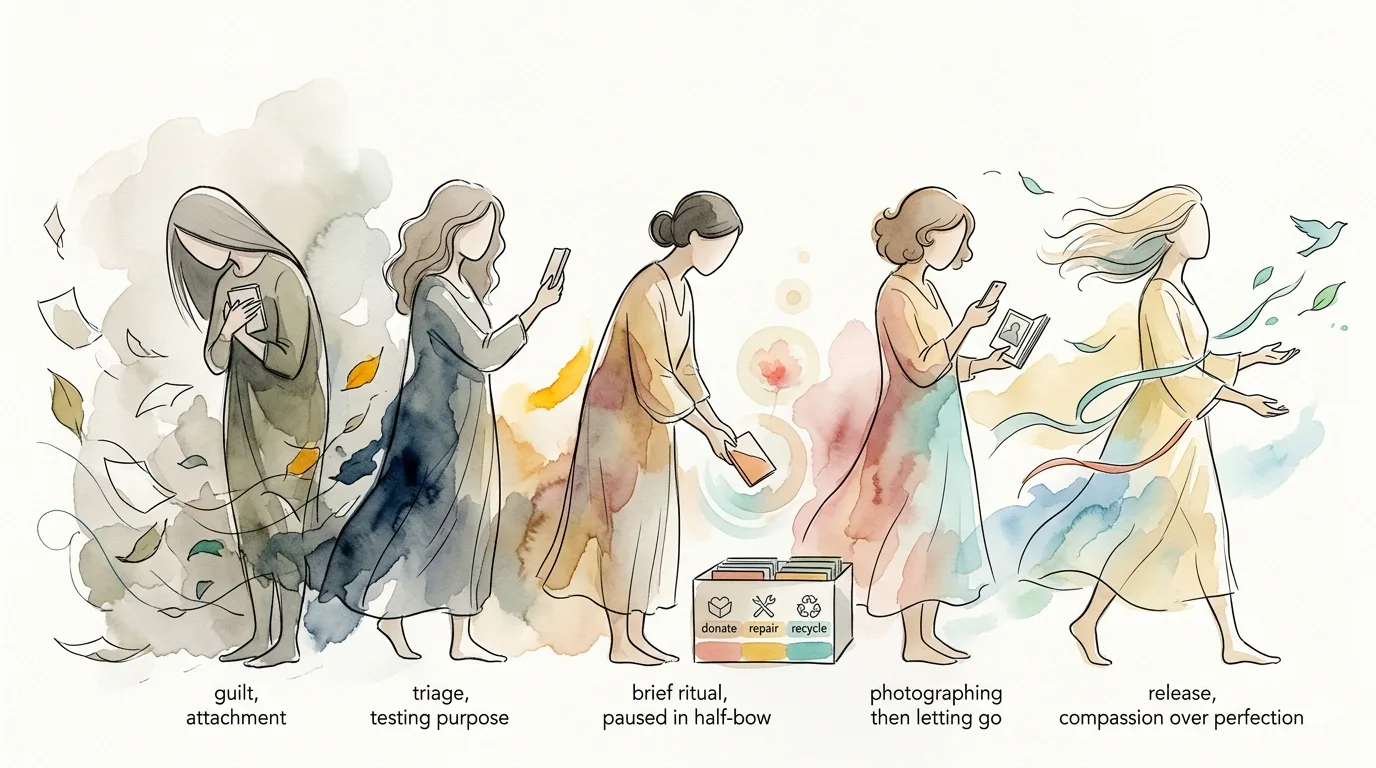
Sentimental clutter is where minimalism feels hardest. Use a three-step method:
- Display what truly sparks joy—rotate items if you need variety.
- Photograph the rest and create a small digital album.
- Store selectively—limit the number of boxes or containers you allow.
If you’re unsure, use a 30-day box: put items in a sealed box, mark the date, and if you don’t miss them in 30 days, donate or archive.
Maintaining momentum after 30 days
A single month changes your environment and habits—but maintenance keeps the benefit.
- Keep the 10-minute daily declutter and weekly reset. Small habits prevent big relapses.
- Review your goals monthly and adjust. If a rule feels too strict, tweak it rather than abandoning minimalism.
- Schedule quarterly mini-declutters for categories that accumulate (seasonal clothes, gifts, hobby gear).
Remember: minimalism is a practice, not a one-time project. The aim is less friction, not perfection.
Common pitfalls and how to avoid them
- Trying to do everything at once. Break tasks into micro-steps.
- Letting guilt drive decisions. Keep to your rules and your purpose.
- Trading one clutter for another (e.g., digital purchases replacing physical). Apply the same rules to digital items.
- Public comparison—minimalism is personal. Your capacity and goals will look different from someone else’s.
Quick 30-day checklist (printable in your notebook)
- Day 1: Intention written
- Day 2: Two specific goals
- Days 3–9: Surfaces cleared
- Days 10–16: 10-minute habit started + wardrobe & digital audit
- Days 17–23: Category purges + 3 decision rules
- Days 24–30: Systems created + monthly purge scheduled
- After 30 days: 90-day check-in date set
Final thought
A 30-day transition is less about ruthless minimalism and more about aligning your home with your values. By pairing clear intention with small, consistent habits and simple rules, you’ll create more space, less stress, and a routine that keeps things simple. Start today, and let the momentum build—one small decision at a time.