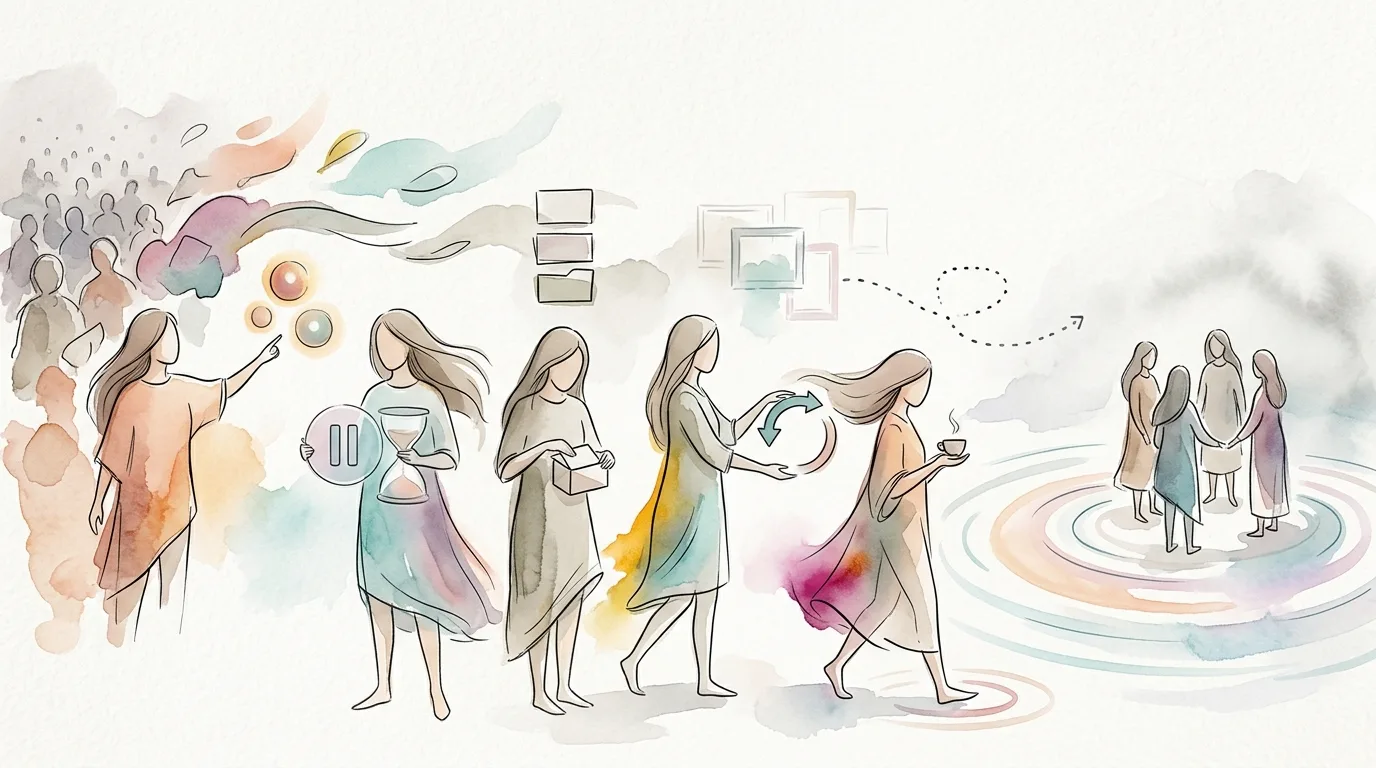
How to Shift Your Mindset from Consumerism to Presence
A step-by-step mindset guide to replace impulse buying and endless accumulation with attention, enoughness, and small daily habits that cultivate presence.

Why presence beats consumerism
Consumerism promises happiness through acquisition. It whispers that the next purchase, upgrade, or trend will finally fill a gap. For many of us, that promise is seductive because it’s immediate: new things trigger short bursts of pleasure, social approval, and a sense of control. But the pleasure is fleeting. The next email, ad, or scroll nudges us toward another purchase, and before long we’re chasing feelings instead of cultivating them.
Presence is different. It’s not about denying comfort or possessions; it’s about aligning what you own and how you spend your time with what actually brings meaning. Presence slows the loop between impulse and satisfaction and replaces the automatic “buy now” reflex with a quieter question: Will this help me be here, now?
Shifting from consumerism to presence is less about austere rules and more about mental rewiring. It’s building habits that value experience, attention, and enoughness over accumulation.
Four mindset shifts that change everything
- From More to Enough
What feels like scarcity (I need more) often masks a fear of missing out. The antidote is a clear definition of “enough.” Decide in a few key areas—wardrobe, gadgets, books—what constitutes enough for you. Experiment with a temporary cap: wear the same ten items for a month or limit device upgrades to every two years. Defining limits frees your attention.
- From Identity through Things to Identity through Values
We use possessions to signal who we are. But identity built on stuff is fragile. Reframe: what do you want people (and yourself) to feel about you? Curiosity, kindness, craftsmanship? When choices are guided by values instead of shopping lists, purchases become rare expressions, not identity scaffolding.
- From Reaction to Intention
Consumerism thrives on triggers—notifications, targeted ads, peer envy. Insert a pause between trigger and action. Use a short rule: wait 48 hours before any nonessential purchase, or apply the one-month rule for bigger buys. If you want a template to implement this consistently, see how to use a pause rule habit to avoid regret purchases: pause rule habit template.
- From Future-Perfect to Present-Rich
We defer living until conditions are “perfect.” The trick is learning to experience richness in small moments. Build micro-practices that pull attention back into now: a three-breath gratitude check-in before meals, a two-minute walk without a phone, or ten minutes of focused reading. These tiny acts accumulate into a life that feels lived, not postponed.
Tiny habits that anchor presence
Small, repeatable actions beat big, heroic efforts. Here are habits you can start today—each takes under five minutes but nudges your brain away from consumer reflexes.
- The 2-minute noticing ritual: Pause once a day and name five sensory details around you. It quiets craving and strengthens attention.
- The one-out rule for impulse items: For every nonessential in, one similar item leaves. This keeps possessions aligned with intent.
- The “why-buy” notebook: When you feel an urge to buy, jot down three reasons you want it and one reason not to. Revisit after a week.
- A weekly reflection question list: Spend five minutes on Sunday answering a few focused prompts—What felt meaningful this week? Where did I spend money to avoid feeling something? For structure, see daily reflection questions to clarify what truly matters and stop overconsumption: reflection prompts.
These habits are tiny but cumulative. They rewire reward pathways from acquisition to attention.
Design your environment for presence
Your habits are shaped by your environment. Changing cues often beats sheer willpower.
- Remove shopping apps from your home screen and unsubscribe from promotional emails. Out of sight reduces cravings.
- Create a “presence corner” in your home: a chair, a plant, a small tray with a journal. Use it for mindful moments, not scrolling.
- Simplify visual clutter. A quieter space reduces background anxiety and makes it easier to notice what you already have.
If you want to move further into a mindset that naturally favors fewer wants, the post on creating a minimalist mindset offers daily practices that make wanting less feel easier: create a minimalist mindset.
How to measure progress without obsessing
Presence isn’t a destination with a single metric, but a few signals show you’re shifting:
- Fewer impulse purchases and less buyer’s remorse.
- More time spent on experiences—walks, conversations, hobbies—versus shopping.
- A calmer home environment with fewer items you don’t use.
- A steady, short practice of attention (five breaths, ten minutes of reading) becoming habitual.
Track one or two simple metrics for a month: number of impulse buys (aim for lower), minutes of device-free time per day (aim for higher), or weekly gratitude entries. Small wins compound.
Common bumps and how to handle them
- Social pressure: Parties and peer groups can trigger consumer behavior. Set spending boundaries for social events and suggest experience-based gifts or group activities instead.
- Identity threats: If you’ve used purchases to define yourself, the adjustment feels like loss. Reinvest in small identity-building acts—volunteering, learning, finishing a project.
- Slow progress: Mindset work is slow because it reconfigures neural habits. Expect setbacks; treat them as data, not failure.
A simple 7-day experiment to start shifting
Day 1: Remove shopping apps and unsubscribe from three promotional emails. Day 2: Choose one category (clothes, gadgets, decor) and set an “enough” number for the month. Day 3: Practice the 2-minute noticing ritual twice. Day 4: Apply the 48-hour pause rule to any nonessential urge. Day 5: Create your presence corner for five minutes of daily quiet. Day 6: Perform a one-in-one-out swap if you bring something new into the home. Day 7: Review: list three moments when you felt more present, and one change you’ll keep.
This weeklong experiment creates momentum and proves presence feels better than the next purchase.
Final thought
Consumerism pulls attention outward; presence pulls it inward. The shift isn’t about deprivation—it’s about choosing what makes life rich on purpose. With a few tiny habits, environmental tweaks, and clearer definitions of enough, you can train your attention to live where it matters most: in the moments you already have.