How to Use Color and Light to Make Small Spaces Feel Calm
Design rules for using paint, textiles, and layered lighting to make compact rooms feel calm and more spacious, with week-long steps you can try.
Why color and light matter more in small spaces
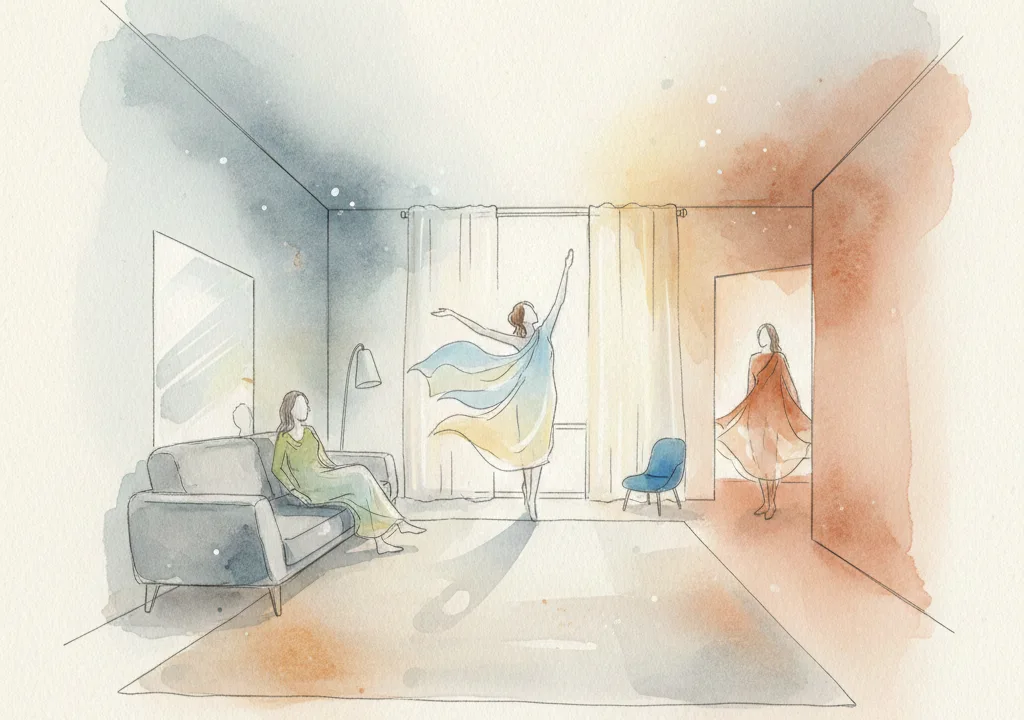
Small rooms aren’t just physically smaller—they feel smaller when the eye hits hard edges, busy patterns, or dark corners. Color and light change how we perceive depth, scale, and mood. With the right palette and layered lighting, a compact living room or studio can read as calm, airy, and more spacious than it actually is.
This post focuses on design moves that shift perception: reflectiveness, contrast, hue temperature, and where the eye is invited to rest. The goal is not to turn every room into white minimalism, but to create calm that fits your life and style.
How the brain reads color and light
- Lighter colors reflect more light and visually expand walls and ceilings. High-reflectance surfaces bounce daylight and make corners recede.
- Cool hues (soft blues, pale greens) tend to make surfaces feel farther away; warm hues (creams, muted terracotta) feel closer and cozier. Use this to control perceived distance.
- Sharp contrasts draw attention and break visual flow. In small spaces you want fewer competing focal points so the eye moves smoothly.
Understanding these basics helps you choose paint, textiles, and lighting that work together—rather than fighting each other—for calm.
Color strategies that open space and calm the mind
-
Use a dominant neutral base. Select one light neutral for walls and ceiling—off-white, warm gray, or a soft greige with a reflectance value (LRV) above 55. This creates a consistent backdrop that reduces visual noise.
-
Embrace a tonal palette. Instead of high-contrast black and white, choose 2–3 tones within the same family (e.g., pale gray walls, slate sofa, dove-gray rug). Tonal layers feel intentional and restful.
-
Keep accents small and meaningful. Introduce color through a single chair, a throw, or artwork. Limiting accent colors prevents the space from feeling cluttered.
-
Paint ceilings lighter than walls. A slightly lighter ceiling visually raises the room. For a cozier effect in micro-studios, use the same color but a lighter sheen.
-
Use continuity between rooms. In small homes, sightlines connect rooms. Repeating a single neutral or hue across adjoining spaces makes the whole home feel larger.
Light strategies that add depth and calm
-
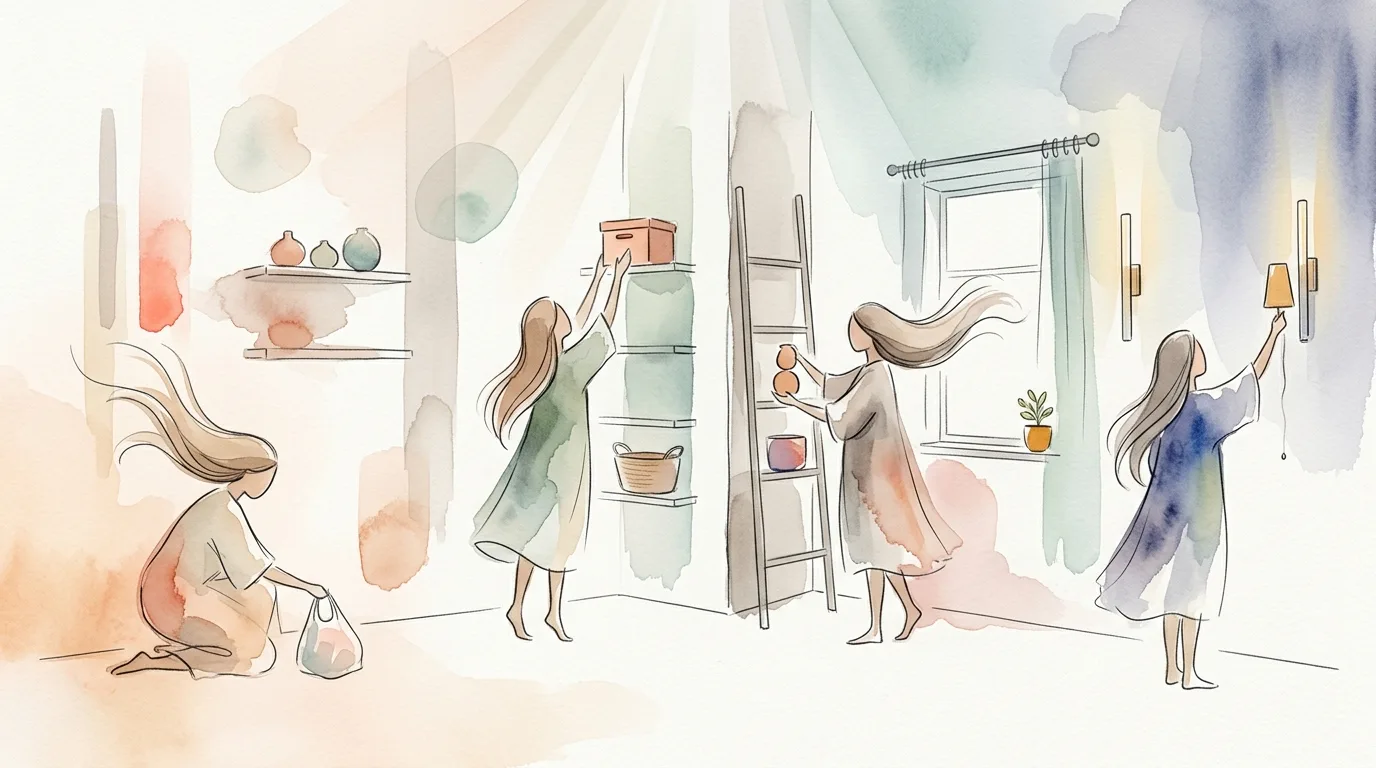
Maximize natural light first. Clear window sills, trim heavy curtains, and use sheer layers to let daylight in while keeping privacy. Even a small increase in daylight brightens the whole space.
-
Layer lighting. Combine ambient (overhead), task (reading, cooking), and accent (art, plants) lighting. Layering avoids flat, clinical light and enables you to change the mood easily.
-
Choose warm or neutral color temperatures. Bulbs in the 2700K–3000K range are flattering and cozy for living areas. For kitchens or work zones, 3000K–3500K keeps things crisp without being harsh.
-
Use directional lighting to create depth. Floor lamps and picture lights cast shadows that define planes and add scale, making a small room feel intentionally designed rather than cramped.
-
Reflect light with surfaces. Mirrors, glossy finishes, and light wood tones help bounce light into corners. Place a mirror opposite a window or hang a reflective art piece to double the daylight effect.
Combining color and light for specific effects
- To make ceilings feel higher: paint the ceiling a shade lighter than the walls and use upward-facing wall or floor lamps to wash light up the walls.
- To make narrow rooms feel wider: paint the far wall a slightly cooler or darker shade than the side walls to create perceived distance.
- To calm a busy space: mute the saturation of patterns and opt for texture instead—linen, wool, and matte ceramics absorb visual noise without adding weight.
Furnishings and textiles: keep scale and reflection in mind
- Choose furniture with exposed legs and lower profiles to reveal more floor and create a sense of openness.
- Use rugs to define zones with a limited color palette; oversized rugs that extend under furniture blur boundaries and make the room feel larger.
- Select fabrics with subtle textures rather than bold prints. Texture reads as depth and interest without competing with natural light.
Quick room-by-room moves you can do this weekend
- Living room: Swap heavy curtains for light sheers and add a floor lamp behind the sofa to wash the wall with light.
- Bedroom: Paint the ceiling one shade lighter than the walls and use bedside lamps with warm bulbs to create a layered glow.
- Kitchen: Add under-cabinet LED strips in a neutral white (3000K) to brighten work surfaces; keep cabinet colors light or consistent with the wall tone.
- Entryway: Hang a slim mirror opposite the door and paint trim the same color as the walls to reduce visual breaks.
A simple plan to test these ideas in one week
Day 1: Declutter visible surfaces and clean windows (light flows more easily through tidy spaces). Day 2: Swap window treatments for sheers or tiebacks and add a mirror across from the main window. Day 3: Test bulbs—replace one overhead or lamp bulb with a warm 2700K–3000K LED and note the difference. Day 4–5: Paint one accent wall or the ceiling a shade lighter and live with it. Observe how it changes the room’s feel. Day 6–7: Introduce one textured throw, one small piece of reflective décor, and step back. If the room feels calmer, replicate the approach in another space.
Where to go next
If you’re redesigning a bedroom specifically, see this guide to a calming minimalist bedroom for sleep-focused color and lighting ideas.
Small spaces respond quickly to thoughtful color and layered light. The changes don’t have to be dramatic: consistent neutrals, strategic accents, and a few well-placed light sources create breathing room for both the space and the mind.