How to Arrange Furniture for a Calmer Living Room
Step-by-step guidance for arranging furniture to create a calmer, more functional living room—covering purpose, traffic flow, seating groupings, scale, storage, lighting, and simple layouts to test.
Why furniture layout matters more than style
You can buy the perfect sofa, the trendiest lamp, and a dozen throw pillows and still walk into your living room feeling unsettled. The difference between a chaotic room and a calming one often comes down to how furniture is arranged, not how it looks. Good layout controls flow, reduces visual noise, and supports the activities you actually do—conversation, reading, playing with kids, or quiet evenings alone.
Below are clear steps and flexible layouts you can try today to turn a busy living room into a calmer, more useful space.
Start with purpose and pathways
- Define the room’s primary purpose. Is this mainly for conversation, TV, work, or a mix? Let that decide where seating faces and what becomes the focal point.
- Map traffic flow first. People should be able to move through or around the room comfortably. Aim for 30–36 inches (76–91 cm) of clear walkway in main paths.
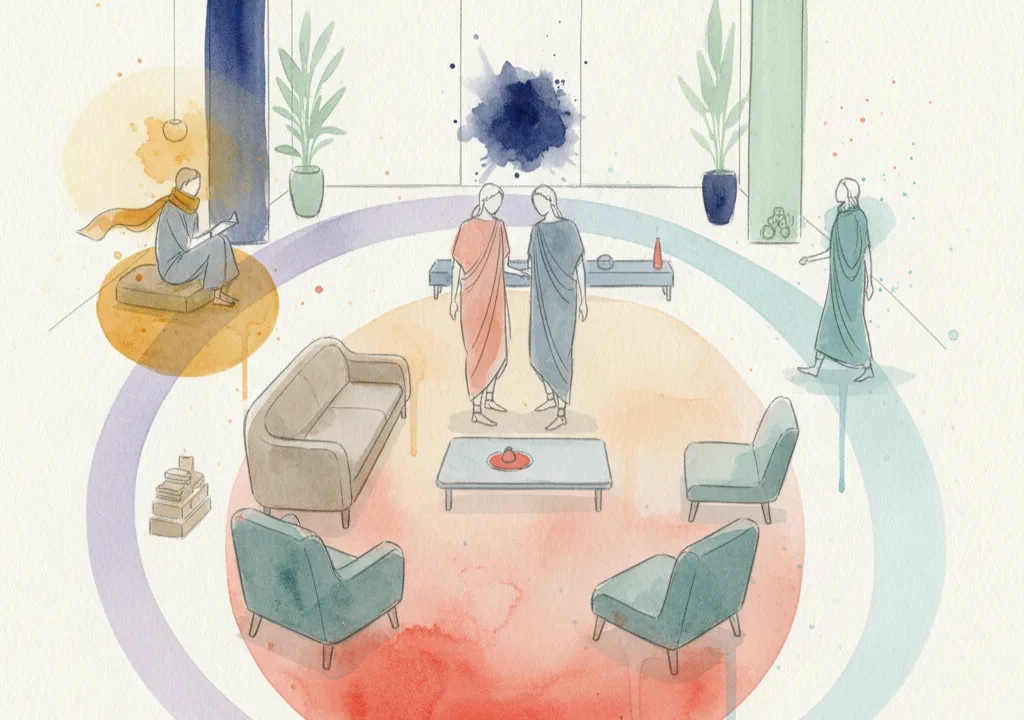
If the room has multiple uses, create distinct zones (a reading nook, a media area). Use a rug, lighting, or a small console to subtly divide space without closing it off.
Choose a focal point and anchor the layout
Every calm room has a center: a fireplace, the TV, a large window, or a statement piece of art. Arrange seating to honor that focal point, but don’t be a slave to it—sometimes angling a sofa slightly toward a window creates a more relaxed layout than lining everything up perfectly.
Anchor a seating group with a rug that is large enough for the front legs of the sofa and chairs to sit on it. If a full rug isn’t possible, aim for at least the front legs on the rug so pieces feel connected.
Seating: conversation over crowding
- Group seating into a conversational arrangement. Chairs and sofas should face each other or meet at a 30–60 degree angle.
- Keep the coffee table 12–18 inches (30–46 cm) from seating so it’s reachable but not cramped.
- Balance scale: a huge sectional in a small room will feel oppressive; a tiny chair in a large room will feel lost. If your furniture is out of scale, consider swapping one piece rather than trying to cram everything.
If your room is small, float the sofa away from the wall to create a more intimate center and allow circulation behind it. In larger rooms, create multiple pivots—one for conversation, one for TV, one for reading.
Use negative space intentionally
Negative space—the empty areas around furniture—creates calm. Resist the urge to fill every gap with a side table or pouf. Leave breathing room so eyes can rest.
Quick rules of thumb:
- Leave 6–12 inches (15–30 cm) between a rug edge and a wall for visual margin.
- Keep sightlines to windows and doors clear where possible. A cluttered sightline instantly increases stress.
Balance: symmetry with flexibility
Perfect symmetry can feel formal and stiff; asymmetry can feel dynamic but unbalanced. Mix both approaches: mirror a lamp and side table on either end of a sofa for a sense of order, then offset with an asymmetrical coffee table or art arrangement for warmth.
Think vertically and layer lighting
Calm rooms are evenly lit. Use layers: ambient (overhead), task (reading lamps), and accent (spotlights, wall washers). Taller bookcases, plants, or art draw the eye up and reduce horizontal clutter.
Avoid single harsh lighting sources that create high-contrast shadows. Soft, warm bulbs and dimmers make a room feel more relaxing.
Storage that disappears
Visual clutter overrides good layout. Choose furniture that hides items: ottomans with storage, media consoles with doors, or baskets under side tables. Keep surfaces mostly clear—one plant, one stack of books, and a small tray for keys and remotes is enough.
If you struggle to maintain order, two helpful reads are The Simple Home Organization Hacks That Actually Stick and a short habit you can adopt nightly like How to Build a Five-Minute Evening Reset Habit That Prevents Clutter. These will help the calm you create last.
Five layouts to try (fast experiments)
- The Conversation Circle: Sofa and two chairs form a U facing inward; ideal for social rooms. Keep coffee table central.
- The L-Shape: A sofa and sectional armchair form an L. Great when you want a clear TV view and still keep a conversation zone.
- Floating Sofa: Sofa centered away from a wall with a console behind. Opens up flow and creates a foyer-like balance.
- Dual Zones: Use a rug and lighting to create a media zone and a reading/work zone. Perfect for multi-use rooms.
- Minimalist Anchor: One sofa, one chair, and a slim console. Best for small spaces and for a minimalist aesthetic.
Try each arrangement for a weekend and notice which one consistently makes you feel calmer and more functional.
Small tweaks that make a big difference
- Angle one lamp or chair slightly to break the ‘furniture museum’ look.
- Reduce the number of small tables—one well-placed side table beats three scattered surfaces.
- Match the height of the console or table to the sofa back when placing behind it—this keeps lines clean.
- Keep textiles simple and layered: one patterned pillow, one textured throw, and a neutral rug.
For help using light to amplify your layout, this guide on How to Use Color and Light to Make Small Spaces Feel Calm is a useful companion.
Maintain calm with tiny habits
A calm layout won’t stay calm without small routines. Adopt two tiny habits:
- The five-minute tidy: put away miscellaneous items nightly (see evening reset link above).
- The one-surface rule: keep one surface—coffee table or console—mostly clear each day. These tiny habits maintain the visual simplicity your layout creates.
Final thought: edit like you would a sentence
Designing a calming living room is editing, not decorating. Remove what distracts, keep what supports how you live, and give the room room to breathe. Arrange with purpose, prioritize pathways, and let negative space carry weight. The result is a living room that doesn’t just look calm—it feels calm every time you step inside.