How to Stack Three Tiny Decluttering Habits into a Daily Flow
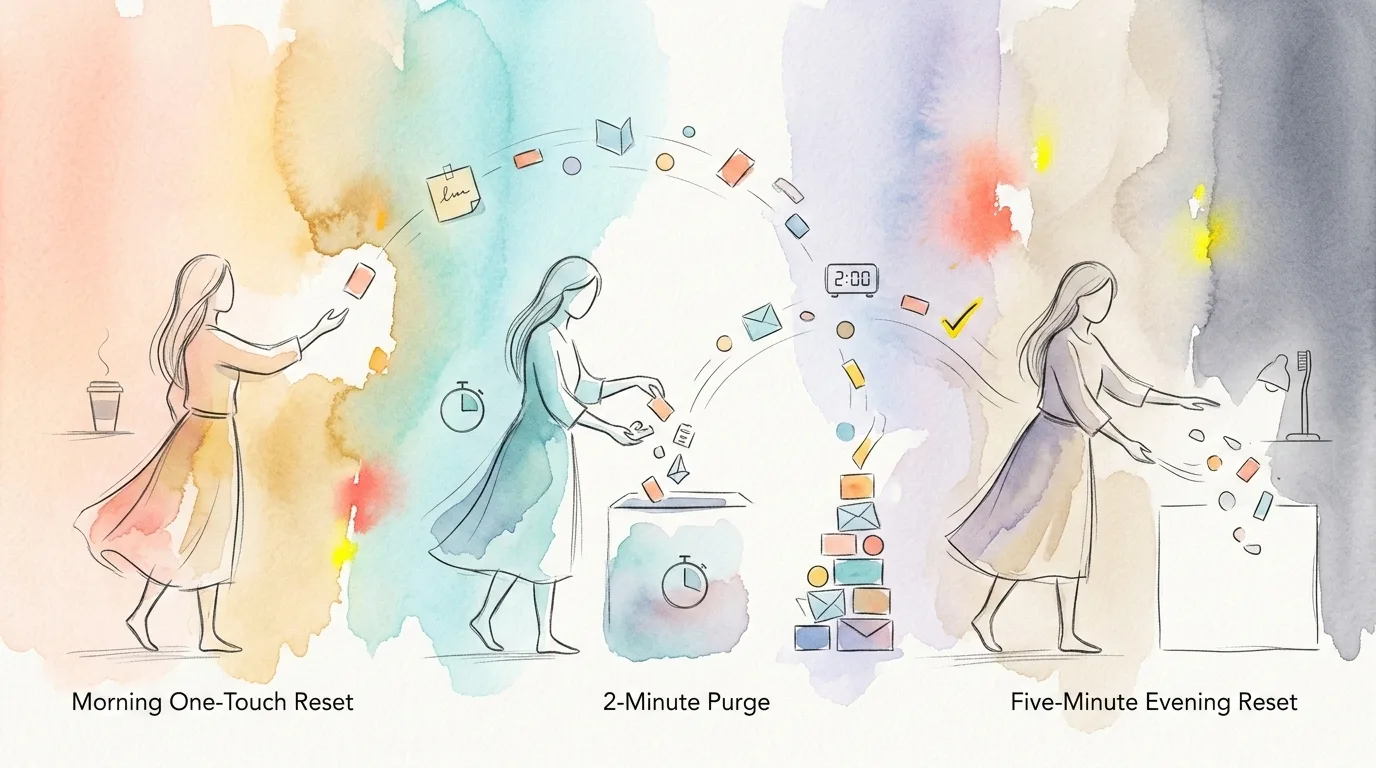
Three micro-decluttering habits—one-touch morning reset, a two-minute purge, and a five-minute evening reset—stacked into a daily flow to keep your home calm.
Why stacking tiny decluttering habits works
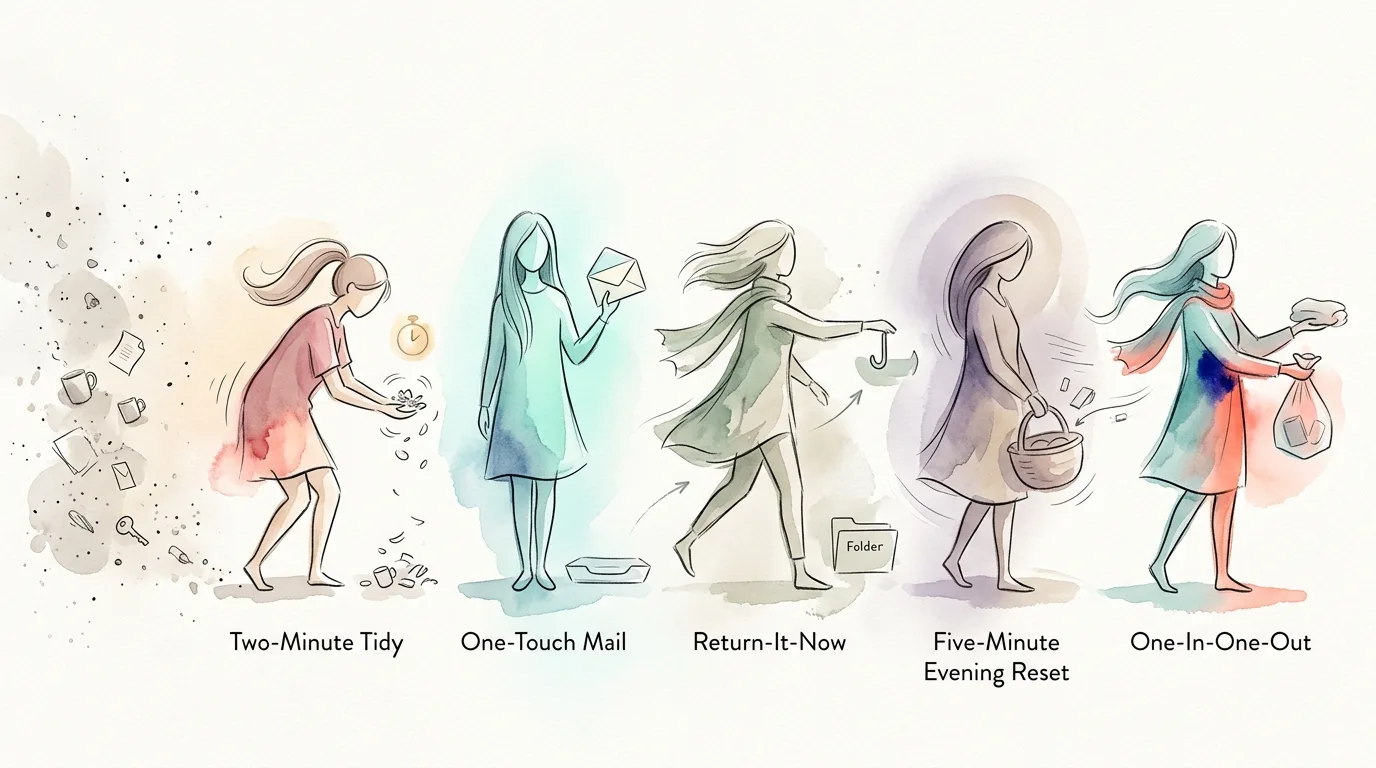
Clutter isn’t usually the result of one big failure—it’s the accumulation of small choices: a dish left on the counter, a pair of keys dropped on a table, a stack of mail that never left the entryway. The antidote is not a weekend marathon purge but a daily flow of tiny actions that remove friction and decisions. When you stack three micro-decluttering habits into your existing routine, they compound into a home that feels calmer without requiring willpower or time you don’t have.
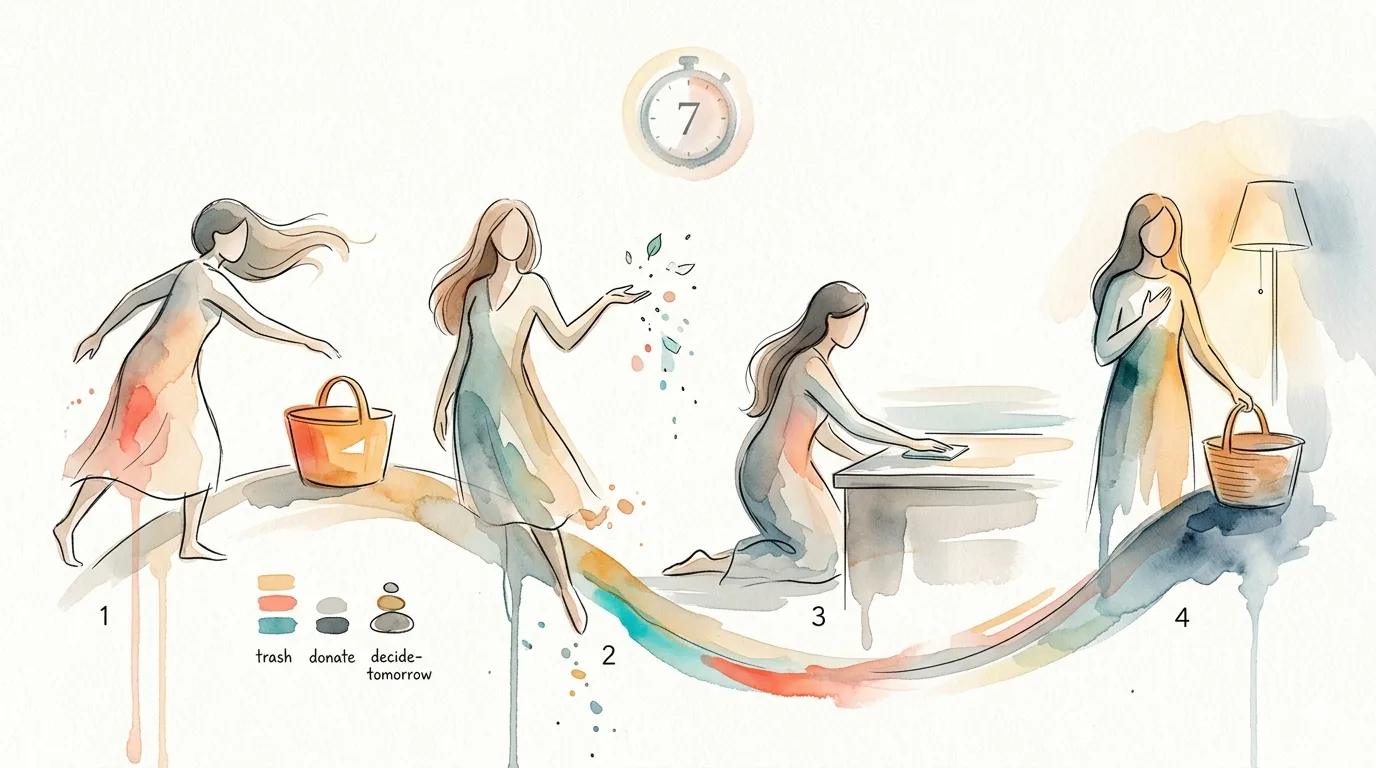
This post walks you through a simple stack—three habits you can do in under seven minutes total—how to anchor them to your day, and how to keep them from slipping away. Use the short scripts and troubleshooting tips to make the stack your new default.
The three tiny habits to stack
These are deliberately small so they actually happen. Each habit has an anchor (an existing routine), a tiny action, and a one-line script you can use today.
1) The Morning One-Touch Reset (30–60 seconds)
Anchor: Right after you start your morning routine (pouring coffee, turning on the kettle, or brushing your teeth).
Action: Put away any item that doesn’t belong on the surface you see first (counter, nightstand, entry table). Touch just one item, put it where it belongs.
Script: “After I [anchor], I will put one thing away.”
Why it works: It prevents yesterday’s small messes from setting the tone for the day. One purposeful movement reduces the mental weight of clutter.
2) The 2-Minute Purge (2 minutes)
Anchor: After lunch, after finishing work, or when you pick up your phone for a mid-day break.
Action: Choose one small area (mail pile, a single drawer, a shelf) and remove anything you no longer need. Toss, recycle, or move to a donate box.
Script: “After I [anchor], I will spend two minutes clearing one small zone.”
Tip: If you want to explore this idea in more depth, start with the simple rules in the 2-minute rule to tackle procrastination and keep a minimal home.
Why it works: Two minutes is short enough to avoid resistance but long enough to meaningfully reduce clutter over time.
3) The Five-Minute Evening Reset (5 minutes)
Anchor: Right before bed—after you brush your teeth or before you set your alarm.
Action: Walk through your main living spaces for five minutes. Put things away, stack magazines, clear kitchen surfaces, place shoes in a bin.
Script: “After I [anchor], I will spend five minutes resetting the main rooms.”
If you want a ready-made routine to follow, consider the method in the five-minute evening reset habit that prevents clutter.
Why it works: A short evening reset stops morning overwhelm and creates a clean slate for the next day. Done nightly, it prevents accumulation and makes decluttering habitual rather than militant.
How to assemble the stack into a daily flow
Stacking means linking a new habit to an existing behavior. You’re not adding friction; you’re piggybacking on routines you already do. Here’s a simple plan to build the flow in one week.
Day 1–2: Pick your anchors. Say your anchors out loud and write the scripts on a sticky note. Keep the note where you’ll see it.
Day 3–4: Practice the Morning One-Touch Reset and the 2-Minute Purge. Keep the tasks literal—one touch, two minutes—no expansions. Celebrate silently when you do them.
Day 5–7: Add the Five-Minute Evening Reset. If five minutes feels long, set a timer for three minutes and increase it by one minute every two days.
Why this pacing works: Beginners often fail by doing too much. Starting with two tiny actions builds belief. Adding the evening reset solidifies results.
Anchoring examples (scripts you can copy)
- Morning: “After I pour my coffee, I will put one thing away.”
- Midday: “After I finish lunch, I will clear the mail for two minutes.”
- Evening: “After I brush my teeth, I will spend five minutes resetting the living room and kitchen.”
Say the script out loud the first three mornings. Repetition makes the anchor-action link automatic.
Make it sticky: cues, rewards, and friction removal
- Use visible cues. Keep a small donation box or bag in a closet. When the 2-minute purge yields items to donate, drop them in the box immediately.
- Reduce decisions. Create three bins or labels: Keep, Donate, Recycle. Decisions are the enemy of tiny habits—make them binary when possible.
- Add a tiny reward. A checkmark on a habit tracker, a satisfied breath, or a five-second pause to enjoy the cleared space are enough. The reward doesn’t have to be elaborate—consistency beats intensity.
- Eliminate friction. Put trash bags or a small recycling bin where you can quickly discard items. If systems are awkward, you’ll skip the habit.
Troubleshooting: What if the stack falls apart?
- If you miss a day, don’t escalate guilt. Reset the next morning. Habit formation is about momentum, not perfection.
- If the morning reset becomes invisible, change the anchor (e.g., from pouring coffee to turning on a lamp). A new cue can rewire the habit loop.
- If two minutes consistently becomes six, better—only if it still feels easy. Otherwise, scale back to maintain habit consistency.
Common failure: trying to do too much during the 5-minute reset. Focus on horizontal sweep—touch every visible surface—rather than deep organizing. Save deeper decluttering for an occasional weekend session.
Variations for households, kids, and small spaces
- Families: Turn the evening reset into a five-minute team tidy. Give each person a zone. Make it a game with a playlist and a short countdown.
- Kids: Replace the 2-minute purge with a 2-minute toy pickup after screen time. Use a visual timer or a fun chime.
- Small apartments: Reduce movement by keeping drop zones. Make the morning one-touch habit specifically about clearing the entry or kitchen counter, whichever affects your daily stress most.
When this stack becomes maintenance
After a month, these micro-habits will do most of the upkeep. You’ll notice fewer weekend marathons, fewer lost items, and a calmer home on rainy mornings. Once you’re steady, consider adding a monthly purge habit to catch items the daily flow misses—this keeps the system lightweight and long-term.
Quick checklist to start tonight
- Choose anchors for morning, midday, and evening.
- Print or write the three scripts and place them where you’ll see them.
- Prepare a donation box and a small recycling bag.
- Set a timer for two minutes and five minutes to make the actions literal.
- Do the stack tonight and notice how the home feels in the morning.
Final takeaway
Decluttering doesn’t need to be dramatic. By stacking three tiny habits—a one-touch morning reset, a two-minute purge during the day, and a five-minute evening reset—you create a daily flow that prevents accumulation, reduces decisions, and preserves calm. The power is in the repeatable, bite-sized actions linked to routines you already do. Start with simplicity, protect the system from friction, and let small wins compound into a clutter-free life.