How to Use a 2-Minute Rule to Tackle Procrastination and Keep a Minimal Home
A focused guide to using the 2-minute rule to stop procrastination and maintain a minimal home—why it works, examples room-by-room, systems to make it stick, and a seven-day experiment to build the habit.

Why two minutes is more powerful than you think
Clutter and unfinished tasks quietly erode a calm home. We tell ourselves we’ll deal with the pile “later,” then later never comes. The 2-minute rule is a tiny behavioral shift that interrupts that cycle: if a task takes two minutes or less, do it immediately. That simple threshold shrinks decision fatigue, lowers activation energy, and stops small messes from growing into overwhelming projects.
This isn’t about frantically tidying every second of the day. It’s about using a short, repeatable habit to keep your environment minimal and your momentum steady.
The psychology behind the 2-minute rule
Two minutes works because it’s short enough to beat procrastination but long enough to accomplish a meaningful action. A few reasons it works:
- Activation energy: Large tasks feel distant; the first step is the hardest. Two minutes turns a vague promise into a specific action you can start now.
- Habit friction: Small tasks reduce friction. When an action is easy to start, the brain is more likely to follow through.
- Compounding momentum: Repeated small wins build confidence. Starting often leads to continuing — the two-minute gateway frequently becomes a 10- or 20-minute session once momentum kicks in.
Applied consistently, this rule trains attention: you begin to notice small decisions and deal with them instead of deferring.
Use cases around the home
The best part about the 2-minute rule is how many everyday household tasks fit it. Here are concrete ways to use it in each area of your home.
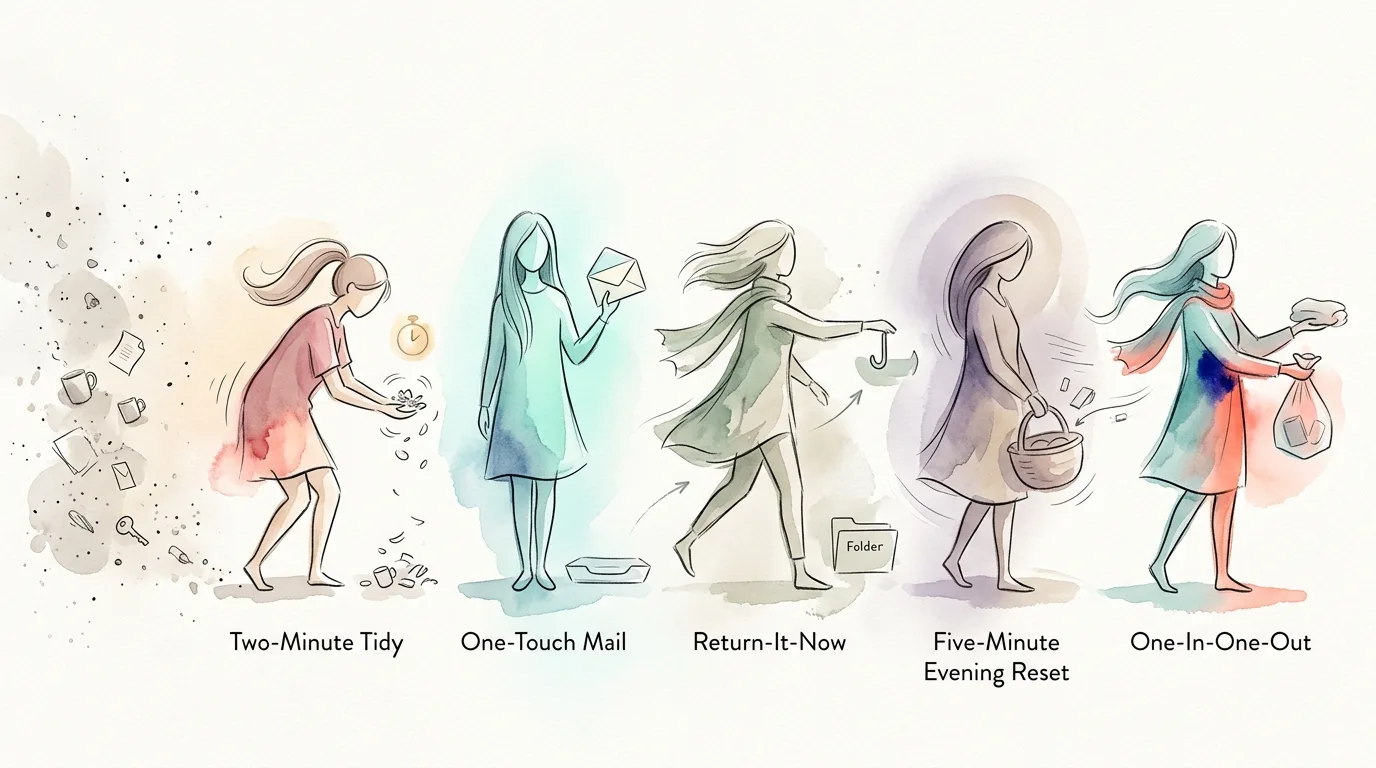
- Entryway: Hang coats, put shoes on shoe rack, toss mail that’s junk, donate a stray flyer. These actions keep the threshold clear so clutter doesn’t pile up when you walk in.
- Kitchen: Put dishes in the dishwasher, wipe a counter, throw away an empty jar, empty the sink strainer. Small daily maintenance prevents weekend catch-up.
- Living room: Fold a blanket, return a mug to the kitchen, put a book back on the shelf, clear a coaster. Tiny gestures preserve a calm living space.
- Bedroom: Make your bed (under two minutes if you keep bedding simple), fold clothes from a chair into the laundry basket, hang one outfit back in the closet.
- Paper and mail: Open and sort incoming mail immediately — recycle junk, shred sensitive items, file or add to a short action pile. Stopping paper at the door prevents a future sorting mountain.
- Laundry: Start a load or transfer clothes to the dryer. The two-minute nudge reduces the gap between full hampers and clean clothes.
- Digital clutter: Delete or archive one email, unsubscribe from a mailing list, clear one notification. Digital housekeeping keeps your mind clearer.
If you’re looking for more short habit ideas that transform your day, see this post on tiny habits.
How to decide what counts as “two minutes”
Not every small task should be automated by the rule — choose items that genuinely improve your home and align with your minimalism goals. Use this filter:
- High impact: Will doing it now save you time or stress later? (Yes: file the bill. No: think about a new organizing project.)
- Low setup: Does the action require no special tools or deep thinking? If so, it’s a two-minute candidate.
- Reversible: Can you undo it quickly if you change your mind? Quick reversibility lowers decision resistance.
When in doubt, start the timer. If you easily finish, the task belongs to the rule. If not, break it into two-minute chunks.
Turn two minutes into a sustainable habit
Use these small systems to make the rule stick:
- Keep supplies handy: A small trash bag in the entryway, a container by the couch for remotes, or a mail sorter near the door reduces friction.
- Habit-stacking: Attach the 2-minute action to an existing routine (after coffee, after brushing teeth, when you come home). This anchors new behavior to established cues.
- Visual cues: Label bins, leave a clear surface for keys, or keep one visible basket for items that need attention.
- Time-box with a timer: Use a phone timer to protect the two-minute promise. The countdown creates playful urgency and keeps focus.
- Weekly review: Spend 10–20 minutes once per week on tasks that consistently exceed two minutes. This prevents slow creep.
For organization methods that last, pair the 2-minute rule with better systems — for instance, simple zones and drop points that make it obvious where things belong. If you want quick organizing boosts, check these home organization hacks.
Common pitfalls and how to avoid them
- Everything feels urgent: If every small task becomes mandatory, you’ll burn out. Use your filter (impact, setup, reversibility) to prioritize.
- Perfectionism: Two minutes isn’t a deep-clean. Accept “good enough” for small tasks and schedule more thorough sessions when needed.
- Ignoring the follow-up: Some two-minute actions create a second task (e.g., opening mail may reveal a bill). Tag follow-ups on a short list rather than letting them languish.
- Over-applying to projects: Complex projects need planning. Use two-minute starts to create traction (e.g., sort one drawer) but then schedule a focused block for the rest.
A seven-day experiment to build momentum
Try this one-week plan to turn the 2-minute rule into a habit that keeps your home minimal:
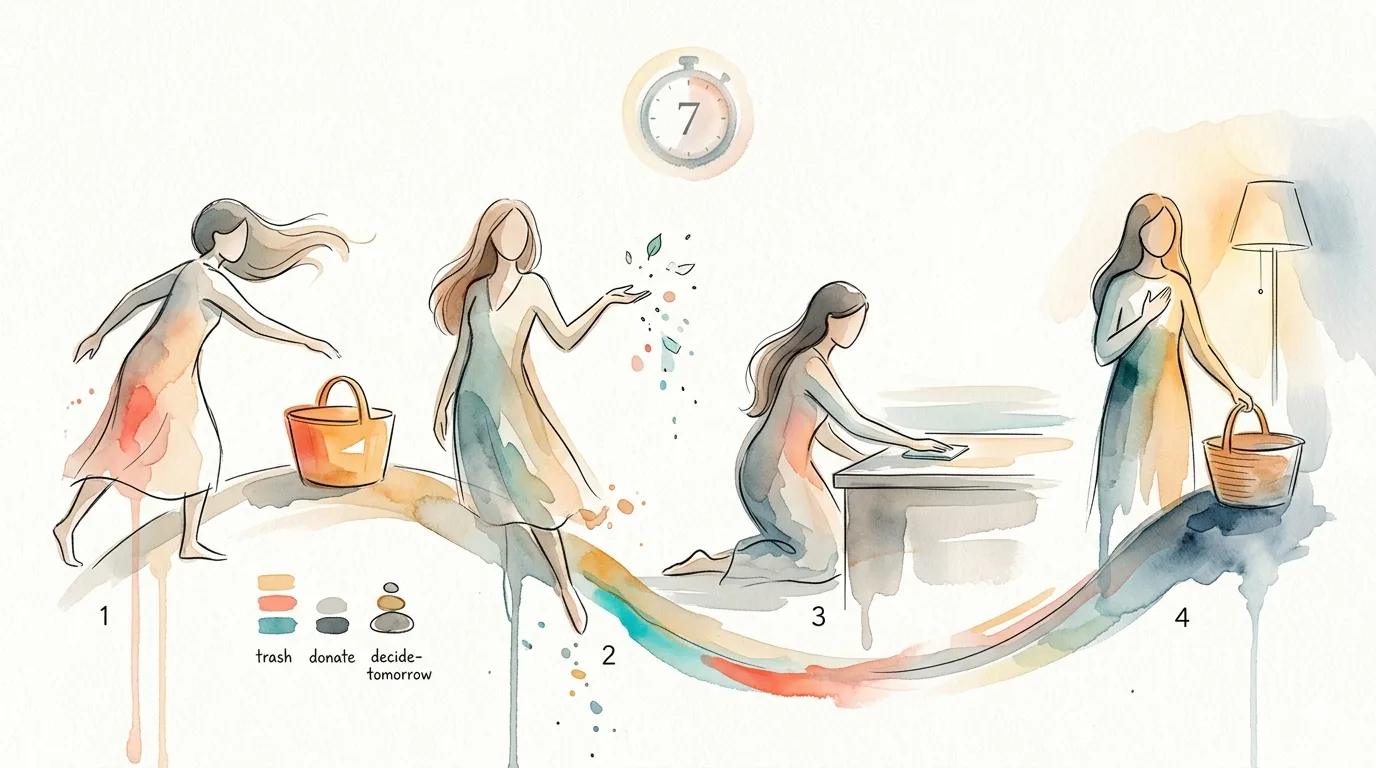
Day 1: Identify three two-minute actions you can do as soon as you arrive home. Do them every time this week. Day 2: Add two digital two-minute actions (inbox sweep, unsubscribe). Do them before bed. Day 3: Choose one room and clear five visible things in two-minute bursts throughout the day. Day 4: Stack a two-minute action to an existing ritual (after morning coffee, make the bed). Repeat. Day 5: Set up a visual cue or bin that supports your actions (mail sorter, donation bag). Day 6: Notice what still nags you. Break that task into two-minute pieces and do one piece. Day 7: Reflect for 10 minutes on what changed — fewer piles? faster mornings? — and pick three actions to keep.
Why this helps you live with less
Minimalism isn’t just about owning fewer things; it’s about reducing the friction between you and a life you value. The 2-minute rule prevents accumulation, creates a rhythm of small maintenance, and trains you to notice what truly matters. Over time, small actions compound into a simpler, calmer home and a steadier mindset.
Apply the two-minute threshold consistently and you’ll find small chores shrink, procrastination loosens its grip, and your space stays intentionally minimal without marathon cleaning sessions.