Ultimate Guide to Habit Stacking for Simple Living Routines You Keep
Learn how to use habit stacking to build tiny, reliable routines that keep your home tidy, reduce decision fatigue, and support simple living.

Why habit stacking beats willpower for simple living
Willpower is overrated. When your day is full and your energy dips, the good intentions you had at breakfast can disappear by lunch. Habit stacking flips the script: instead of relying on motivation to start new behaviors, you attach small, obvious actions to routines you already do. The result is simple living routines that actually stick — because they happen automatically, not because you grit your teeth and force them.
This guide walks through how to build habit stacks that reduce decision fatigue, keep your home uncluttered, and protect your time and attention. You’ll get templates, examples, and troubleshooting tips so these routines become part of the background of your life.
The fundamentals of habit stacking
Habit stacking is straightforward: pick a reliable trigger (an existing habit or event), then attach a tiny new action right after it. The trigger is the cue; the tiny action becomes the habit. Over time that tiny action grows into a dependable routine without requiring dramatic effort.
Key principles:
- Keep it tiny. Small wins compound. A 30–60 second action is easier to repeat than a 20-minute one.
- Make the cue obvious. The stronger the trigger, the more automatic the stack.
- Reduce friction. Prepare the tools or environment so the habit is effortless.
- Limit the number of new stacks. Focus on 1–3 at a time to avoid overwhelm.
A short script you can use
- Trigger: After I [existing habit],
- New habit: I will [tiny behavior].
Example: After I brew my morning coffee, I will set the kettle on the back burner to reheat for tea the next day. Tiny, specific, and tied to something you already do.
Simple habit stacks for everyday living
Below are stacks designed around simple living goals: fewer possessions, less mess, and calmer mornings.
Morning stacks
- After I turn off my alarm, I will open the blinds and drink one full glass of water.
- After I finish breakfast, I will place one item I don’t use on the donate pile (a small step toward regular decluttering).
Evening stacks
- After I hang my coat, I will empty my pockets into a designated tray so keys and receipts don’t scatter.
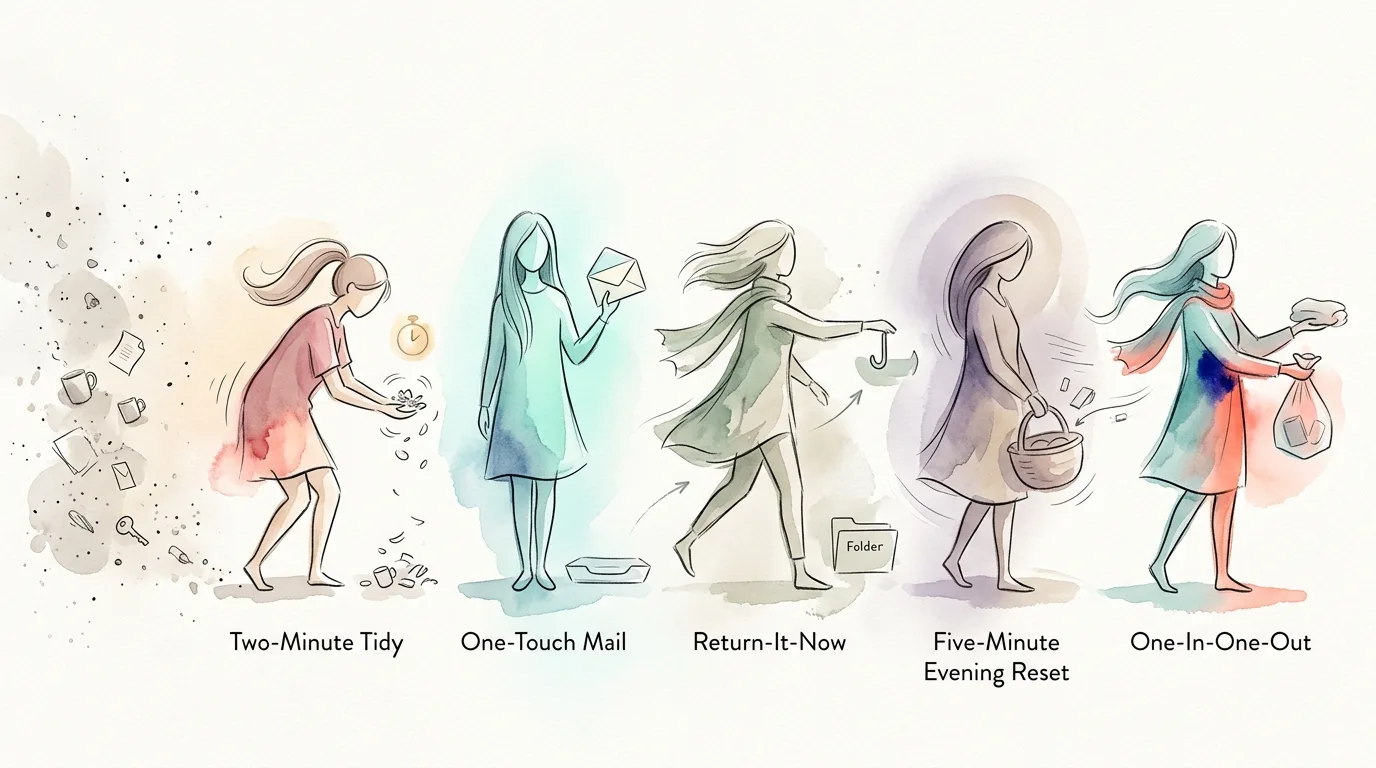
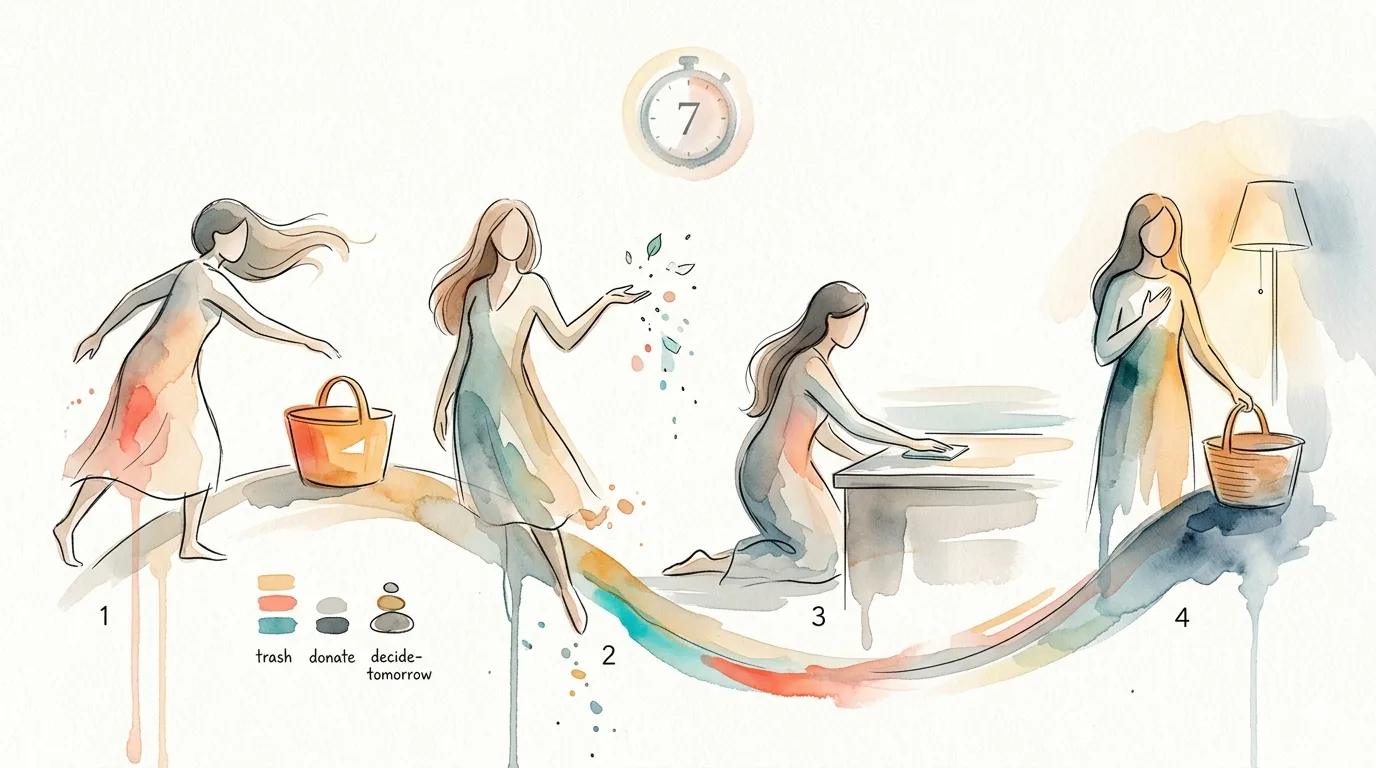
- After I finish dinner dishes, I will set a 5-minute timer to do a quick surface tidy. If you want a deeper template for an evening reset, see this five-minute evening reset habit.
Quick home upkeep
- After I take off my shoes, I will put them on a shelf or in the closet — no leaving them in the hallway.
- After I fold laundry, I will put one folded item away immediately.
Paper and inbox control
- After I read a piece of mail, I will either file it, shred it, or add it to the action pile — and never leave it on the table.
- After I finish my workday, I will clear three items from my inbox. Start with tiny units so it feels doable.
Wardrobe minimalism
- After I try on an outfit, I will decide immediately: keep, repair, or donate. Tiny decisions prevent future pileups.
Start micro: why two minutes wins
If starting small feels too small, trust the process. The magic is consistency, not intensity. A two-minute action removes the friction of getting started. If you want a methodical way to shrink a habit to its barest element, explore the guide on the 2-minute rule. Begin with two minutes and scale up only after the habit is automatic.
How to design a habit stack that lasts
- Pick one area to focus on for 30 days. Too many changes at once fragment attention.
- Choose a strong anchor. Mealtimes, waking, and arriving home are reliable cues.
- Make the action tiny and specific. Vague goals fail. “Tidy the living room” is less effective than “put two items in the donate box.”
- Habit-proof the environment. Place the donate box near where clutter accumulates, or keep a small basket by the door for dropped items.
- Track the streak. A simple calendar or habit app turns repetition into momentum.
Progression: when and how to scale
Once a stack feels automatic (typically several weeks), you can either increase its frequency or link a second tiny behavior to the same anchor. For example:
- Phase 1: After dinner, clear one kitchen surface (2 minutes).
- Phase 2: After dinner, clear one surface and wipe the table (5 minutes).
But don’t scale by adding complexity to the habit — scale by adding consistency first.
Troubleshooting common failures
- Nothing sticks: Your anchor might not be reliable. Pick a stronger cue (e.g., finishing the toothbrush rather than finishing coffee).
- Too many stacks: You overloaded your mental bandwidth. Drop all but one and try again.
- I skipped yesterday: Focus on the next opportunity. What matters more is the sequence of actions than flawless streaks.
- It feels pointless: Re-evaluate the why. Habit stacks survive when they clearly reduce friction or stress in daily life.
A quick habit-stack template you can copy
- Anchor (existing habit/event): __________________
- Tiny action (15–120 seconds): __________________
- Where to keep tools (out of sight until needed): __________________
- When to review (weekly or monthly): __________________
Use this template to experiment for a month. Keep the action tiny; the goal is repetition, not heroics.
Why habit stacking supports simple living long-term
Simple living isn’t about dramatic purges; it’s about small, consistent adjustments that change the shape of your day. Habit stacking removes decision friction, drains fewer willpower calories, and builds a rhythm that protects your space and time. When a routine is tiny and linked to something you already do, it becomes invisible effort with visible results.
Final note: pick one anchor and start today
Choose one anchor you do every day — waking up, brewing coffee, commuting, or brushing your teeth. Attach a 30–90 second action to it, and repeat for a month. Small, consistent changes compound into fewer decisions, less clutter, and more time for what matters.