How to Build a 10-Minute Decluttering Habit That Actually Lasts
A step-by-step blueprint to start and sustain a 10-minute daily decluttering habit, with scripts, cues, troubleshooting, and ways to scale without burnout.
Why a 10-minute decluttering habit works
Ten minutes is short enough to beat resistance and long enough to move the needle. It’s small so you start it; it’s meaningful so you finish with visible progress. That combination is the secret to habits that last: low friction + noticeable payoff.
This post gives a compact blueprint for creating a 10-minute decluttering habit you can keep for months—plus exact scripts, cues, and troubleshooting so you won’t fall back into the “I’ll do it someday” trap.
The three small rules that make it stick
1. Make the habit ridiculously specific
Vague goals fail. Instead of “declutter the house,” pick a micro-goal: “10 minutes on the kitchen counter,” or “10 minutes of clothes on the bedroom chair.” Specificity removes decision-making and lowers the start-up cost.
Example prompts you can use:
- “When I finish dinner, I will spend 10 minutes clearing the kitchen counter.”
- “After my morning coffee, I will spend 10 minutes putting away clothes.”
2. Anchor it to a reliable cue
Attach the 10-minute session to something you already do. This is habit stacking: piggybacking on an existing routine makes the new habit automatic. If you want patterns and examples for stacking tiny habits, this post on tiny habits that improve your day explains the idea and gives quick stacks you can borrow.
Good anchors: finishing a meal, brushing your teeth, getting home, putting on pajamas, or ending a workday.
3. Make starting frictionless—and finish with a win
Reduce barriers: keep a donation box, trash bag, and a small basket nearby. Use a 10-minute timer and a simple rule: you must stop when the timer ends. That forced finish line creates a sense of completion and prevents the task from ballooning into a chore.
End each session with a quick visual check. If a surface looks better, that positive evidence reinforces the habit.
A simple 10-minute routine you can start tonight
Here are two adaptable scripts—one for evenings, one for mornings. Pick one, stick with it for 21 days, then add the other.
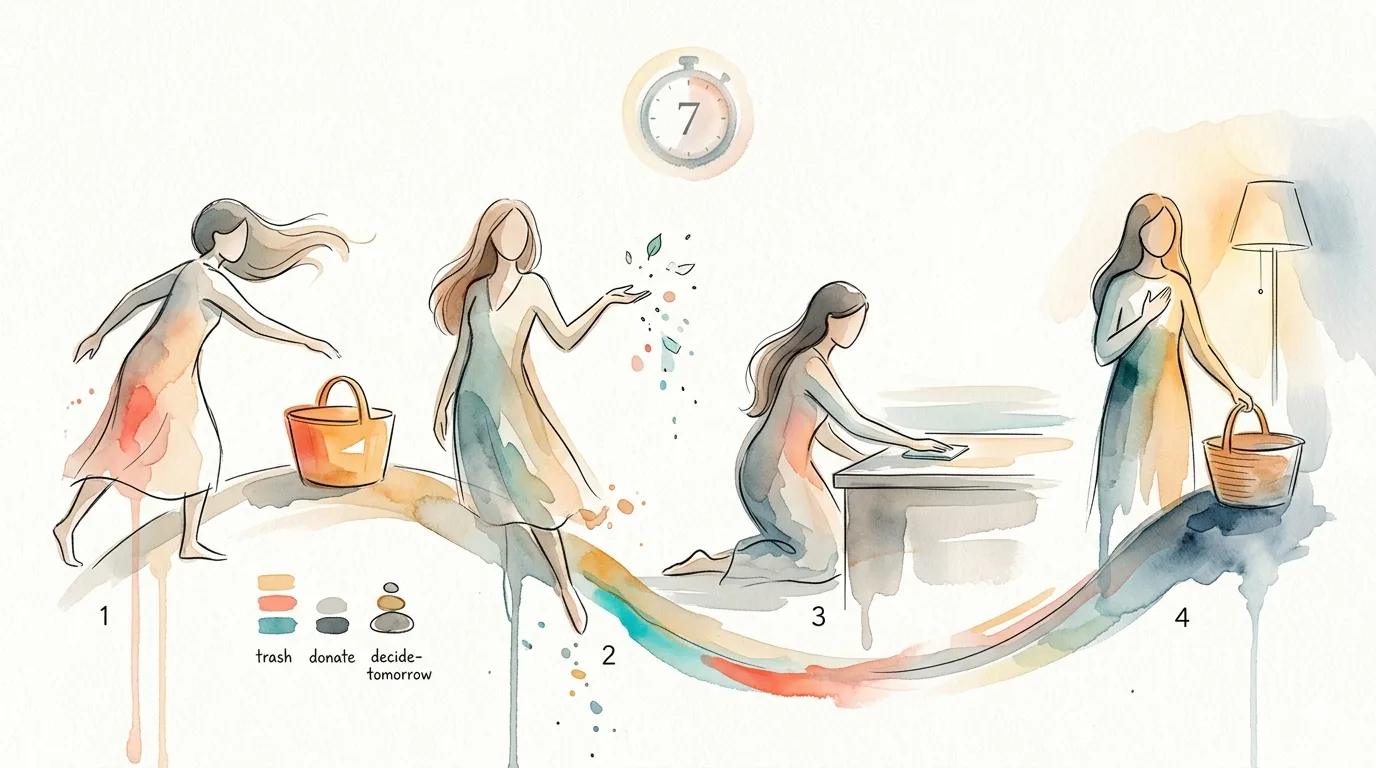
Evening 10-minute reset
- Set a 10-minute timer.
- Walk room to room with a basket for items that belong elsewhere.
- Toss obvious trash; put dishes in the dishwasher or sink.
- Place misplaced items in the basket and return them to their homes on the way back.
- Wipe one high-traffic surface (counter, console table, or coffee table) with a cloth.
Morning 10-minute lift
- Set a 10-minute timer.
- Make your bed (this small act makes spaces look tidier instantly).
- Pick up clothes from the floor; put them in hamper or hang them.
- Clear one visual hotspot (desk, dresser top, or entryway).
- Open a window for two minutes of fresh air to make the improvement feel bigger.
Why the timer matters: it contains the task and keeps you from overthinking. Ten focused minutes create momentum without feeling like a commitment.
How to make the habit attractive and keep momentum
- Gamify: treat each 10-minute session like a level cleared. Track streaks on a calendar or habit app.
- Pair it with something you enjoy: listen to a favorite podcast episode or playlist while you work.
- Use micro-rewards: a cup of tea, five minutes of scrolling, or a short stretch after you finish.
If ten minutes ever feels too ambitious, scale down temporarily. For a faster reset routine, try a shorter version like a five-minute evening reset to keep consistency—you can explore a concise five-minute method in this post on the five-minute evening reset habit.
Troubleshooting: common obstacles and fixes
-
“I miss a day.” Missing one day breaks the streak but not the habit. Reaffirm the cue and do the habit the next time the cue appears. Don’t overreact—consistency beats perfection.
-
“I don’t know where to start.” Use the basket method: collect everything that doesn’t belong in the room and return items to their homes as you go. The bowl/basket is a visible prompt that reduces indecision.
-
“It turns into an hour-long project.” Stop when the timer rings. Move anything that requires longer to a labeled “later” pile and schedule a weekend time if needed. The key is preserving the small daily win.
-
“I feel guilty about not doing more.” Guilt kills habits. Celebrate the 10-minute improvement and remember that frequent small efforts beat rare big ones.
Scale without losing momentum
After 21–30 days, your 10-minute habit will likely feel normal. Then:
- Increase difficulty slowly: add a 2-minute task (like sweeping) to the end of the session.
- Introduce a weekly 30–60 minute purge for problem areas; keep the daily 10 minutes as your maintenance anchor.
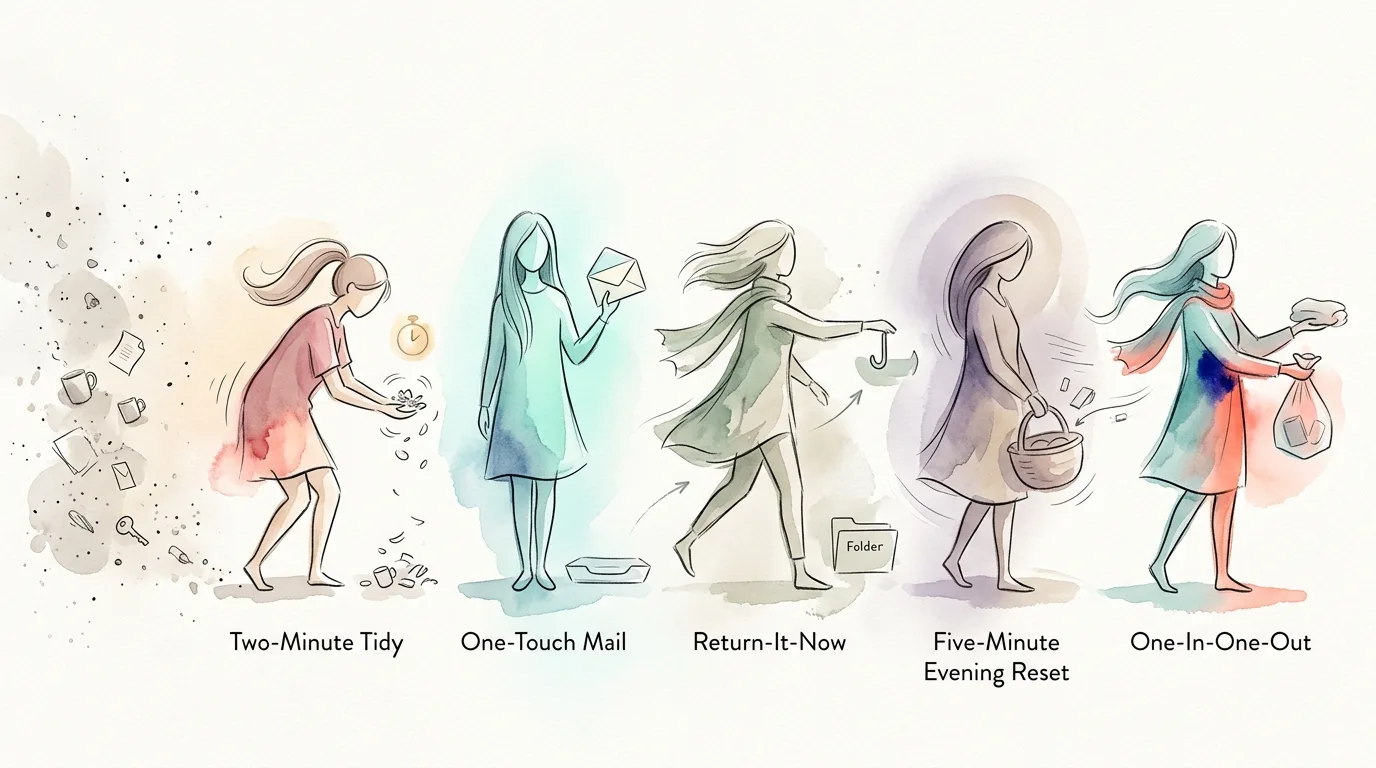
- Adopt the one-in-one-out rule for new items to prevent re-accumulation.
Stay mindful about scaling. The moment you make the daily habit feel onerous is the moment it stops.
The subtle power of tiny consistency
A 10-minute decluttering habit isn’t about transforming your home in one session—it’s about altering the environment of your days. Ten minutes daily compounds into a calmer kitchen, fewer decisions, and less friction around the things you own. That reduced friction frees time, space, and attention for what actually matters.
Start tonight: pick a specific 10-minute target, attach it to an existing routine, set a timer, and celebrate the visible improvement. Small wins add up faster than you expect.