How to Design a Calm Minimalist Kitchen That Works Daily
A step-by-step guide to design a calm, minimalist kitchen that functions daily—edit tools, plan zones, choose storage, and build tiny habits to keep it that way.
A kitchen that feels calm and actually works
When your kitchen is calm, everything about daily life feels lighter: cooking takes less effort, mornings move faster, and the space invites you to stay instead of being a battleground of clutter. Designing a calm minimalist kitchen isn’t about stripping it to nothing — it’s about removing friction and choosing intentionally so the room supports your daily routines.
Below is a step-by-step guide that combines layout, editing, storage, and simple habits so your kitchen stays beautiful and functional day after day.
Start with function: edit what you own
A minimalist kitchen is a working kitchen. Start by asking: what do I actually use this week? The goal is to keep everything that earns its place through regular use.
The frequency rule
Sort tools and appliances by how often you use them: daily, weekly, monthly, rarely. Keep daily items within reach, store weekly items a little higher or deeper, and consider donating or storing off-site the rarely used items.
This is where a clear inventory helps. If you haven’t yet created one, a focused guide on building a minimal kitchen inventory can help you decide what to keep and why.
One function, one tool
Aim for tools that do one job well instead of many mediocre ones. A high-quality chef’s knife, a versatile pan, a reliable cutting board and a simple set of measuring tools will serve most meals. Less gear means less visual noise and fewer decisions.
Design choices that create calm
Layout and material decisions are quiet power moves. They shape how you move and what you notice each day.
Clear work zones
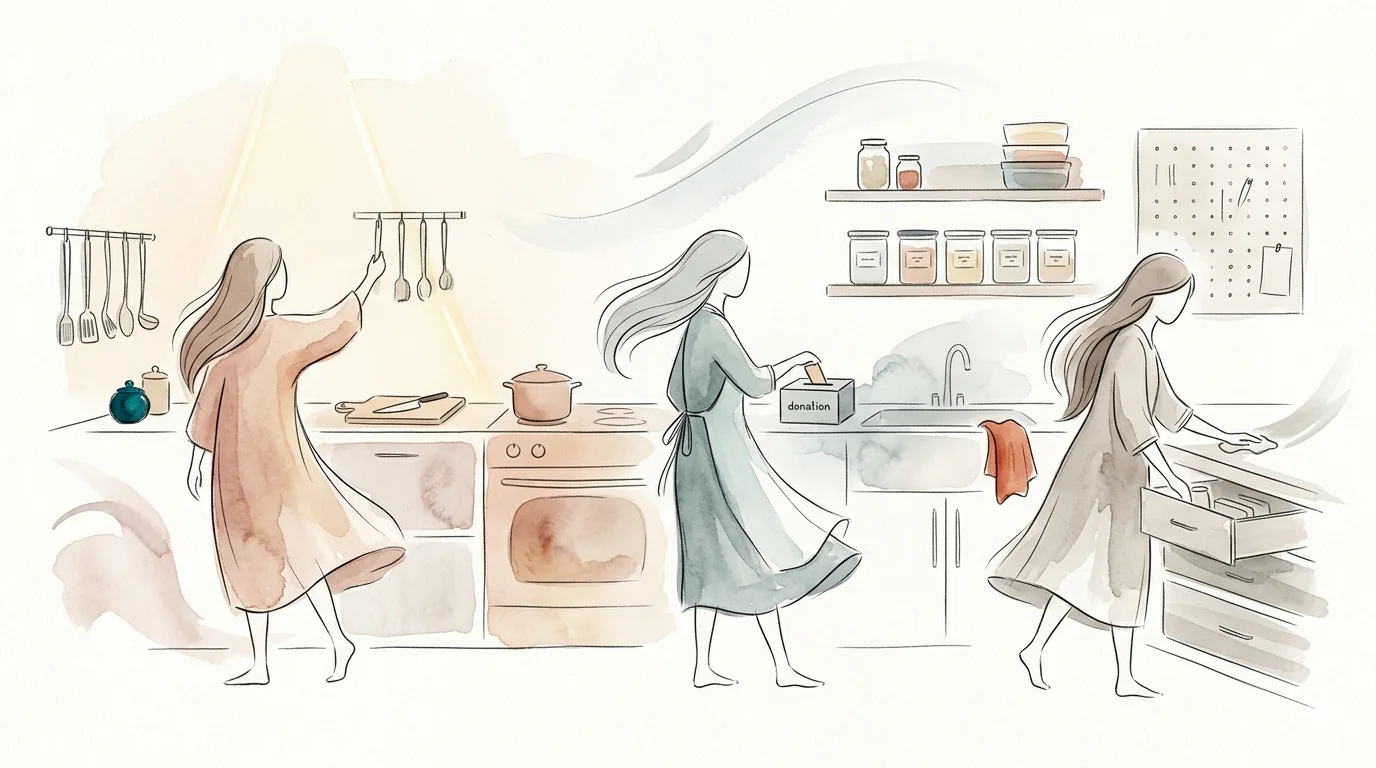
Define zones: prep, cooking, plating, and cleaning. Keep related items in their zone — knives and cutting boards near the prep area, pots and lids next to the stove, dish towels and garbage near the sink. Zone-based storage reduces decision fatigue and speeds up tasks.
Surfaces and color
Choose materials that are easy to clean and forgiving. Matte or low-reflective surfaces hide fingerprints and make the kitchen feel softer. A limited palette — one or two neutral tones with a single accent — reduces visual clutter. Color restraint equals calm.
Open shelves vs closed cabinets
Open shelves can feel airy but demand discipline: only display a handful of items that are both useful and attractive. Closed cabinets hide the rest, giving the room a calmer backdrop. A mix of the two often works best: open where you use, closed where you store.
Appliances and scales
Keep countertop appliances to a minimum. If a toaster or blender is only used once a week, store it. Invest in a few quiet, compact appliances that match your routine rather than collecting every new gadget.
Smart storage that simplifies daily use
Storage is less about squeezing in more and more about making what’s there effortless.
Pull-out and drawer organization
Deep drawers with trays for pots, lids, and utensils keep things accessible and tidy. Use dividers so every item has a home — the eye tolerates order. A place for everything reduces the urge to clutter countertops.
Vertical storage and wall rails
Hang frequently used utensils on a rail or pegboard above the prep area. Vertical space is often underused and keeps essentials off counters while staying reachable.
Clear containers and labels
Store dry goods in uniform, clear containers. Labels on the front instead of the top mean you can see what’s in the jar without pulling it down. Consistency in containers makes the pantry feel intentional.
Small-kitchen strategies
If you have limited space, follow a focused decluttering method to maximize function. For a fast room-by-room approach tailored to small kitchens, see the guide to declutter small kitchens. Prioritize multi-use items and vertical solutions.
Habits that keep your kitchen calm every day
Design without habits will drift back toward chaos. Build small, repeatable routines that take minutes but compound into lasting calm.
The five-minute evening reset
Spend five minutes after dinner putting things back where they belong, wiping counters, and loading the dishwasher. This tiny habit prevents the mess from growing and makes mornings calmer. If you already follow short reset habits, treat the kitchen reset like the evening habit you never skip.
Weekly maintenance session
Once a week, do a quick inventory sweep of pantry staples, toss expired items, and wipe down shelves. A short weekly check keeps larger purges from being necessary later.
One-in-one-out rule
Adopt a simple rule: for every new item that comes in, an old one leaves. This protects your space from slow accumulation and keeps choices meaningful. It’s one of the easiest ways to keep a minimalist kitchen functioning.
Decision rules for future purchases
Before buying a new tool or gadget, run it through three quick questions: Will I use it at least once a week? Does it replace something I already own? Will it fit in my system without adding clutter?
If you hesitate, wait 30 days. Most impulse gadgets don’t survive that pause.
Lighting and small finishes that change the feel
Good lighting makes a minimalist kitchen feel welcoming. Layer task lighting over prep and cooking areas and softer ambient lighting for the rest of the room. Add small tactile details — a wooden spoon, matte ceramics — to introduce warmth without visual noise. Thoughtful finishes make minimalism feel human, not sterile.
Keep it sustainable and flexible
Minimalism isn’t permanence — it’s intention. Seasonal swaps and rotating serving pieces let you enjoy variety without keeping everything out. Maintain a donate box in or near the kitchen so items you no longer need leave quickly.
A simple plan to start this weekend
- Empty one cabinet or drawer and sort by frequency (daily/weekly/monthly/rare). Keep only what you use regularly.
- Create zones and move items to their logical place. Use labels if needed.
- Clear all countertops except two essential items you use every day.
- Implement the five-minute evening reset tonight.
- Schedule a 20-minute pantry sweep for later this week.
These small steps anchor design decisions in daily life; that’s where real calm lives.
Final thought
A calm minimalist kitchen is less about style and more about reducing friction. When the space is edited thoughtfully, organized by function, and supported by tiny daily habits, it becomes a room that quietly improves every day. The design choices you make should always answer one question: does this decision make cooking and living easier? If yes, keep it. If no, let it go.