How to Use Vertical Storage to Make Small Rooms Feel Airy
Use vertical storage to free floor space, draw the eye up, and make small rooms feel taller and airier—practical solutions and tiny habits to keep them tidy.
Why vertical storage changes how a room feels
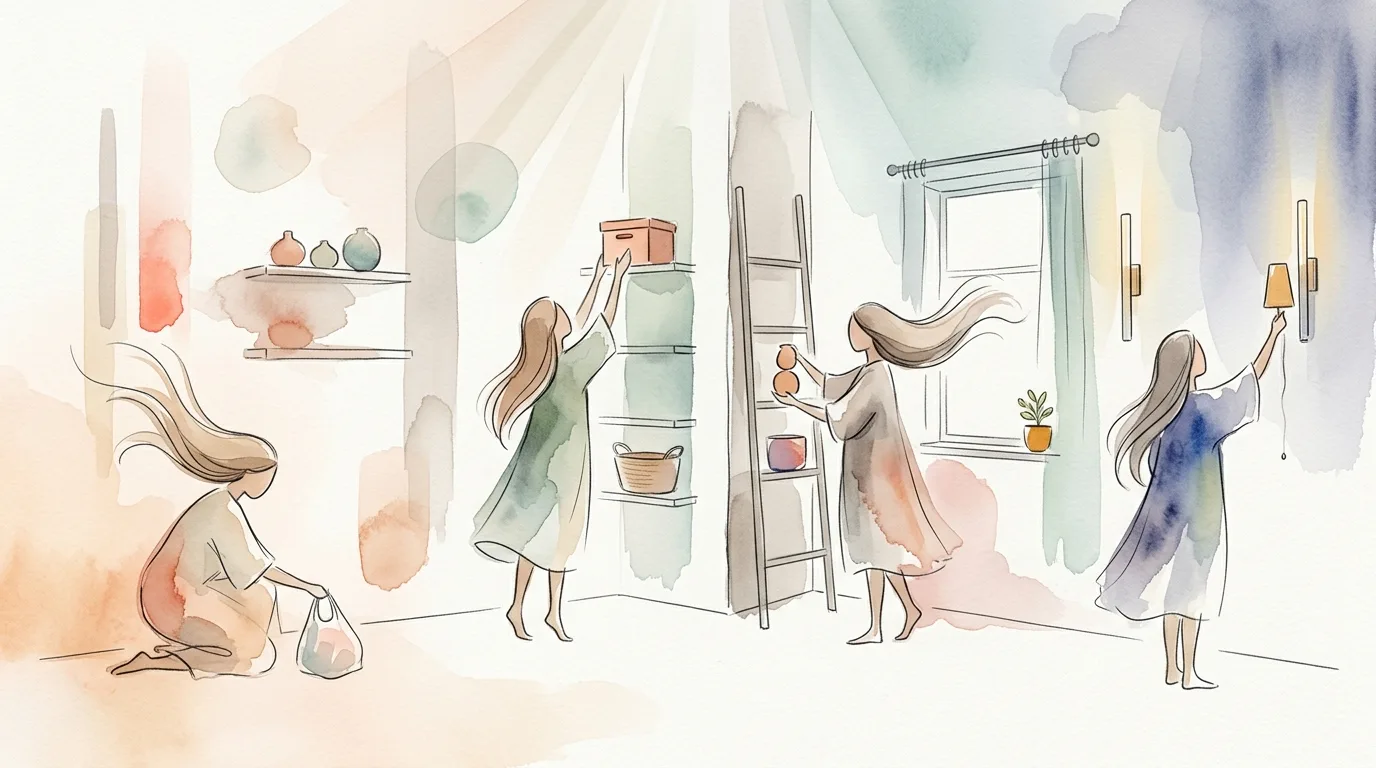
Small rooms often feel heavy not because they lack square footage but because our stuff lives at eye level and below. When every surface is occupied, the room reads as cluttered and closed-in. Vertical storage redirects attention upward, frees floor space, and lets natural light and sightlines travel. The result: a small room that feels airy, taller, and calmer.
This post walks through the mindset and steps to use vertical storage well—what to keep, what to elevate, and how to build habits that keep the space feeling intentional.
Start with a quick decision routine
Before buying shelves or hooks, the most important move is to decide what belongs in the room. Vertical storage amplifies what’s stored high, so use a short clearing routine to avoid creating visual clutter up high.
A 10-minute clearing habit that actually works
Spend 10 minutes and one bag. Walk the room and remove anything you don’t use or love that would otherwise go on a shelf or peg. If you want a repeatable method, try a focused micro-habit like the 10-minute decluttering habit—it’s fast, repeatable, and prevents vertical spaces from becoming catch-alls. If you already use a regular purge routine, this becomes easy to maintain.
Design principles for vertical storage that feels airy
Think of vertical storage as architecture, not furniture. When done well, it becomes part of the room’s lines rather than an added layer of stuff.
- Keep a low visual baseline. Reserve floor-level and mid-wall areas for clear space or minimal, low-profile furniture. This creates the impression of openness even if upper walls hold storage.
- Use negative space intentionally. Don’t cover every inch of the wall. Allow gaps between shelves and grouped items so the eye can rest.
- Favor open and light materials. Floating shelves, wire grids, and slim metal frames weigh less visually than chunky cabinets.
- Prioritize vertical rhythm. Repeating vertical elements—like a tall bookcase, a slim plant stand, and stacked baskets—helps the wall read as cohesive rather than cluttered.
Practical vertical storage solutions (and where to use them)
Below are specific solutions arranged by common problem areas in small homes.
Walls: floating shelves and staggered groupings
Floating shelves are the classic vertical trick because they keep the wall surface visible beneath them. Stagger shelves in groups of three to create visual movement. Use the top shelf for items you rarely touch—decorative boxes, framed art, or a curated vase—and reserve the lower shelf for everyday items.
- Tip: Keep shelf contents to a single color palette or material to avoid a noisy look.
Corners: tall, narrow shelving
Corners are underused vertical real estate. Choose a narrow, tall shelving unit or a ladder shelf that leans into the corner. These units take up minimal floor space while providing multiple tiers vertically.
Over doors and windows: shallow ledges and rails
The space above doors and windows is a subtle place to add storage without changing the room’s footprint. A shallow ledge can hold books or framed photos; a rail system above a window can hold lightweight baskets or plants.
Closets and wardrobes: add shelves, hooks, and a second rod
Inside closets, go tall. Install an extra shelf near the top for seasonal items and a second hanging rod to double your usable vertical hanging space. Hooks on the inside of the door are ideal for bags and scarves.
Kitchens and bathrooms: pegboards and rails
Pegboards and rail systems translate horizontally-heavy kitchens into vertical powerhouses. Hang frequently used tools and mugs on a pegboard—this makes them accessible and keeps counters empty. Above the toilet, add a slim cabinet or two floating shelves for towels and toiletries.
Behind-the-door and hallway solutions
Slim, wall-mounted shelving or hooks behind doors store shoes, accessories, or cleaning supplies. In hallways, a series of high hooks or narrow floating shelves near eye level provides storage without crowding the walkway.
Styling for airiness: what to store where
How you place objects matters as much as the storage you build. Use these styling rules to keep vertical storage feeling light.
- Heavy items low, light items high. Put dense, chunky objects like boxes and baskets on lower shelves; use delicate décor and plants higher up.
- Group in odd numbers. Displaying three objects together reads more natural than two or four.
- Use baskets and boxes for hidden storage. Closed containers keep the visual field calm—label them so you don’t lose function for the sake of style.
- Limit colors and materials. Stick to two or three complementary tones to avoid visual clutter.
Lighting and vertical storage
Lighting is the unsung partner of vertical storage. Upward or layered light extends height visually.
- Install wall sconces higher on the wall to draw the eye up.
- Use slim, tall lamps to accent vertical shelves without taking much floor space.
- Add LED strips under floating shelves to create depth and shadow play—this emphasizes vertical layers rather than weight.
Built-ins vs. freestanding: choose what fits your situation
Built-ins give a seamless, space-saving result—they make storage feel like part of the room’s bones. If you rent, choose reversible, freestanding options that mimic built-ins: tall, narrow cabinets, stacking cubes, or modular shelving.
- Renters: lean on wall-mounted rails, floating shelves anchored to studs, and over-door organizers that don’t require construction.
- Owners: consider custom built-ins around a window or bed to maximize every vertical inch.
Maintenance: tiny habits that keep vertical storage useful
A bit of daily or weekly upkeep prevents vertical shelves from turning into clutter towers.
- The 5-minute evening reset. Each night, put three things back in their spots on high shelves. This tiny habit keeps surfaces tidy without big effort.
- Monthly shelf review. Once a month, scan high shelves for items that no longer belong. If you want a method, pair this with your regular 10-minute declutter window so it’s fast and consistent.
- Adopt an in-and-out rule. When something new goes up high, remove something else. This keeps vertical space curated.
If you need a reliable way to make those micro-habits stick, the broader approach to building short, repeatable routines can help you keep vertical storage functional long-term.
Common mistakes and how to avoid them
- Filling every vertical inch. Resist the urge to install shelves wall-to-wall. Gaps make the room breathe.
- Storing daily use items too high. Don’t place things you need frequently on the topmost shelves—use mid-level for daily access.
- Ignoring scale. A tiny shelf laden with large objects looks cluttered. Match shelf width to the items you plan to show.
- Skipping measurement. Before buying, measure height and clearance. Shelves or cabinets that skim the ceiling can feel oppressive rather than spacious.
A quick plan you can follow this weekend
- Spend 10 minutes clearing the room with a focused decluttering routine—donate or relocate anything that doesn’t belong.
- Map the vertical opportunities: mark walls, the space over doors, and corners you can use.
- Choose 2–3 vertical solutions (floating shelf, tall narrow bookcase, rail) that fit your aesthetic and needs.
- Install or place them, styling with baskets and a consistent palette.
- Start a 5-minute evening reset and a monthly shelf review to keep the system working.
Final takeaway
Vertical storage is less about stacking things higher and more about rearranging attention. When you lift the eye and free the floor, even the smallest room can feel spacious. Combine simple habits—quick decluttering, intentional styling, and tiny maintenance routines—with the right vertical pieces, and your small room will feel airy, purposeful, and surprisingly roomy.
For more ideas that work particularly well in tight spaces, see these small-space storage ideas that make rooms feel airy and this guide on a 10-minute decluttering habit if you want a repeatable clearing routine to keep vertical shelves from becoming cluttered.