Top 8 Small Space Decluttering Tricks That Make Rooms Breathe
Eight targeted decluttering tricks for small spaces—habits, storage choices, and design shifts that make rooms feel larger and calm without drastic purges.
Why small spaces feel suffocated—and why decluttering changes everything
If your apartment or tiny house feels smaller than the floor plan suggests, clutter is probably doing the heavy lifting. Objects collect visual weight: piles of mail, a coffee table lined with things, or a wardrobe that refuses to close. The good news? Small space decluttering isn’t about ruthless purging—it’s about strategic choices that give rooms room to breathe.
This post walks through eight clear, repeatable tricks that work in apartments, tiny homes, and any cozy room where every inch counts. Each tactic is focused on decision speed, daily habits, and small design changes that produce an outsized sense of spaciousness.
The eight tricks that make rooms breathe
1. Start with the “one-surface” rule
Pick one visible surface in a room (a console, coffee table, or kitchen counter) and commit to keeping it clear. When you rescue that single surface from permanent deposits, the whole room instantly looks cleaner.
How to implement:
- Set a gentle timer for 5 minutes and remove everything from the surface.
- Sort into three piles: keep, relocate, donate/toss.
- Build a tiny habit: every evening, return one item that belongs there and discard the rest.
Why it works: our brains read the first visible plane of a room as a summary. Clear that plane and the space appears calmer.
2. Use vertical space (intentionally)
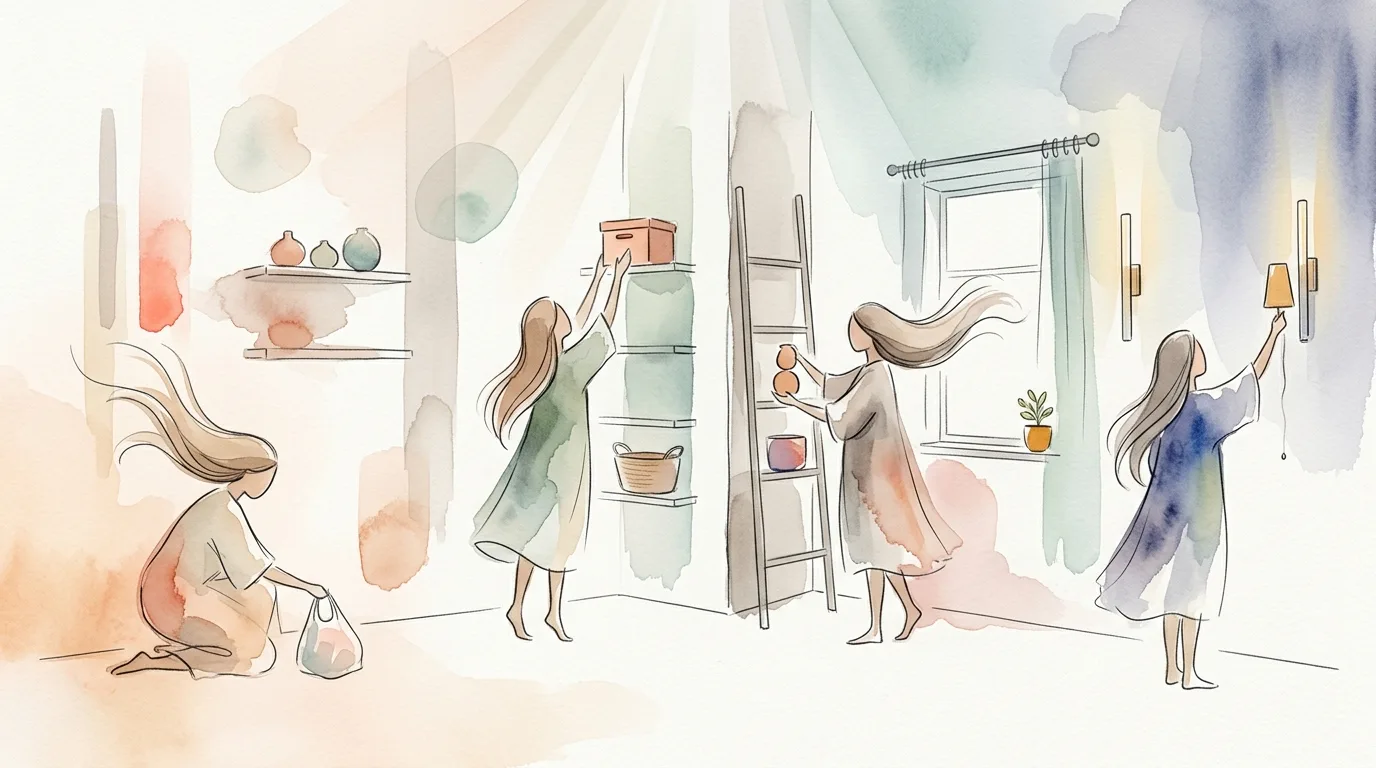
If floor space is sacred, look up. Vertical storage frees up usable floor area and creates visual order. Add tall shelving, wall hooks, or hanging organizers to shift clutter to the walls.
Pro tip: anchor tall units to the wall for safety and choose open shelves for items you use daily.
Learn more about maximizing vertical solutions in this guide: How to Use Vertical Storage to Make Small Rooms Feel Airy.
3. Curate what’s on display
Small rooms tolerate fewer visual patterns. Limit what’s displayed to a few favorites. Think of display surfaces as a rotating gallery: less, but loved.
A quick method:
- Choose three display items per shelf/ledge.
- Rotate seasonally—store extras in labeled bins under the bed or in a closet.
Result: fewer objects competing for attention, and each item feels intentional.
4. Create clear “landing zones” for daily items
Keys, mail, sunglasses—they arrive every day. If they land wherever, clutter multiplies. Designate single-purpose landing zones with baskets or trays so daily items have a home.
Tiny habit to adopt: when you walk in, put items in that landing zone before doing anything else. It takes 15 seconds and prevents an evening of sorting.
5. Apply the 2-minute and 10-minute combo
Two simple rules keep mess from becoming a mountain: the 2-minute rule for small tasks (put that cup in the dishwasher now) and the 10-minute sprint for slightly bigger zones (tidy the counter).
If you want a structured way to turn this into a daily habit, see How to Build a 10-Minute Decluttering Habit That Actually Lasts. These micro-wins keep clutter from bonding into permanence.
6. Pick multipurpose furniture
When furniture earns its keep in more than one way, you remove the need for extra pieces. Look for ottomans with storage, beds with drawers, and nesting tables.
Checklist for choosing multipurpose pieces:
- Does it offer hidden storage?
- Can it be moved to serve different roles?
- Will it maintain a slim visual profile (light legs, neutral color)?
Choosing pieces that do double duty reduces overall volume while keeping functionality intact.
7. Anchor decisions with simple decluttering rules
Decision fatigue kills progress. Adopt a short set of rules you can apply instantly—this reduces second-guessing.
Examples of effective micro-rules:
- If you haven’t used it in 12 months, donate it.
- If it’s broken and cheap to replace, toss it.
- If two items serve the same purpose, keep the better one.
These rules turn hours of indecision into minutes of action and make it easier to maintain the tidy state.
8. Use color, light, and negative space deliberately
Decluttering isn’t only about removing items; it’s also about how things relate visually. Strategic color, good light, and visible negative space amplify the perception of roominess.
Simple shifts that help immediately:
- Choose lighter paint or textiles on large surfaces.
- Add one additional light source to brighten dark corners.
- Arrange furniture to create clear walking paths and breathing space.
When negative space becomes part of the design, the room feels purposeful, not sparse.
Turn tricks into lifelong habits (three sticking strategies)
The real challenge is maintenance. Here are three short systems to make these tricks last.
-
Habit stack the 2-minute action: attach a micro-declutter to an existing routine—after you brush your teeth, drop yesterday’s mail in the bin. This technique borrows momentum from routines you already do.
-
Schedule a weekly mini-audit: 10 minutes on Sunday to scan the one-surface, landing zones, and storage bins. Small consistent effort beats occasional overhaul.
-
Use the one-in-one-out rule selectively: for categories that inflate (books, hobby gear), every new item means one leaves. This keeps collections from creeping beyond the shelf.
These strategies rely on consistency over intensity—tiny, repeatable actions that prevent clutter accumulation.
A simple 30-day plan to see change fast
Week 1: Choose two rooms and apply the one-surface rule + landing zones.
Week 2: Add vertical storage and curate displays; apply the 2-minute rule daily.
Week 3: Swap in one multipurpose piece or reorganize a storage area.
Week 4: Lock in habits—habit stack two micro-actions and schedule the weekly audit.
After a month, your rooms should feel noticeably calmer. Small changes compound quickly when maintained.
Final note: fewer decisions, more space
Small-space decluttering is less about perfection and more about decision-making speed. When you reduce the number of choices a room requires—where things live, what can be displayed, how daily items return to their homes—you create breathing room without giving up the things you love.
If you struggle to start, remember: tiny consistent actions beat dramatic one-time efforts. For a straightforward daily momentum-builder, consider pairing these tricks with a short timed habit that turns decluttering into a repeatable part of your day.