Ultimate Guide to Minimalism Transitions Without Emotional Clutter
A gentle, step-by-step guide to transitioning to minimalism without getting stuck in emotional attachment—mindset shifts, tiny habits, and a 30-day plan.
Emotional clutter: the hidden barrier to calm minimalism
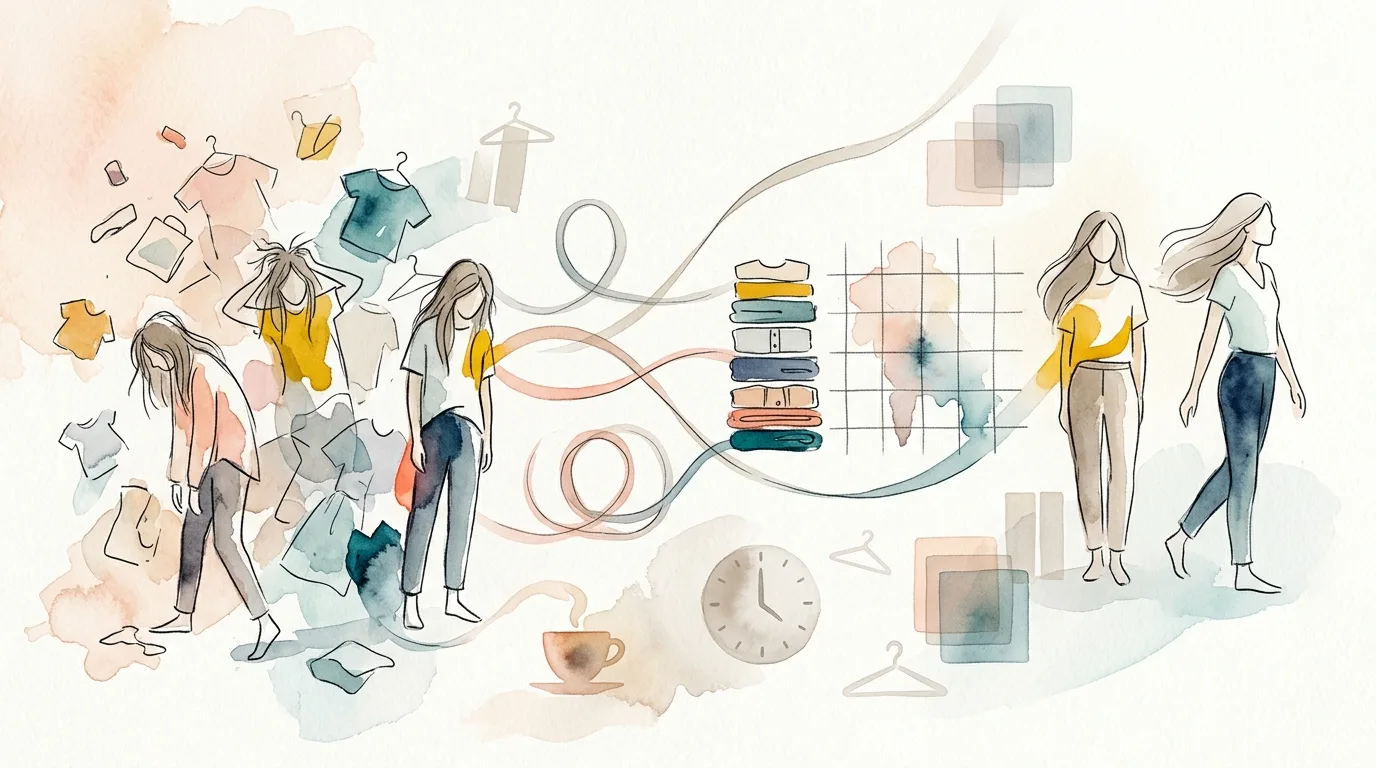
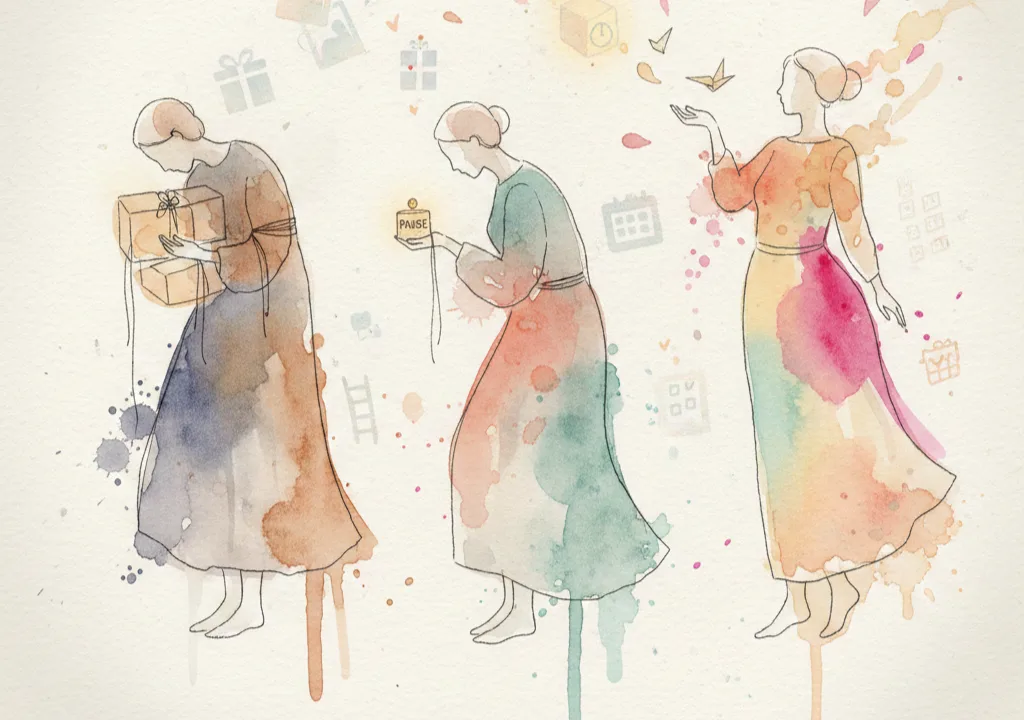
Most guides to minimalism start with what to throw away: clothing, kitchen gadgets, books you never read. They miss the quieter, heavier stuff—the emotions tied to those objects. That invisible weight is emotional clutter, and it’s the reason many people start a minimalism transition and stop halfway, feeling guilty, anxious, or like they’ve lost part of themselves.
This guide walks through how to move toward a simpler home and life without a constant tug-of-war with your feelings. You’ll get a mindset framework, tiny habits that keep you steady, and a 30-day micro-plan you can actually finish. The goal isn’t to be ruthless—it’s to be gentle and consistent.
What emotional clutter looks like
Emotional clutter shows up in familiar ways:
- Boxes of items saved “just in case” because of fear or nostalgia.
- Gifts you never used but feel bad donating.
- Clothes you didn’t wear last season because they represent a version of you you miss.
- Projects you’ve started that live forever in half-complete piles.
These items aren’t useless because of function—their meaning is what keeps them. When you understand that attachment, you can work with it instead of trying to muscle through it.
Why traditional decluttering fails when feelings are involved
Most decluttering tactics focus on rules, speed, or aesthetics. Rules help, but when you hit an item tied to identity or memory, rules alone can feel like denial. You end up either holding onto everything or abandoning the whole effort because the emotional cost feels too high.
A better approach pairs structure with compassionate practices for processing attachment. That combination prevents emotional backlash and keeps progress consistent.
A six-step framework for transitions without emotional overload
Use these steps as a scaffolding—apply the ones that fit your life and adapt the rest.
1) Clarify your deeper why (not just “less stuff”)
Ask: What will be different when I carry less? Better sleep? Less stress when guests come over? More time? Write two clear, emotional reasons and put them where you’ll see them. Specificity helps you decide when sentiment clouds good judgment.
If you want help designing a transition that respects what you love, this guide shows how to keep favorite things while simplifying: transition without giving up favorites.
2) Create simple decision rules that reduce friction
Emotional moments are easier when choices are small and fast. Create three short rules that fit your life, for example:
- If I haven’t used it in 12 months, it goes into a donate box (you can have exceptions).
- If something triggers anxiety about storing it, take a photo and let it go.
- One sentimental item per year per person in the household.
Rules translate emotional decisions into tiny habits—less exhaustion, more consistency.
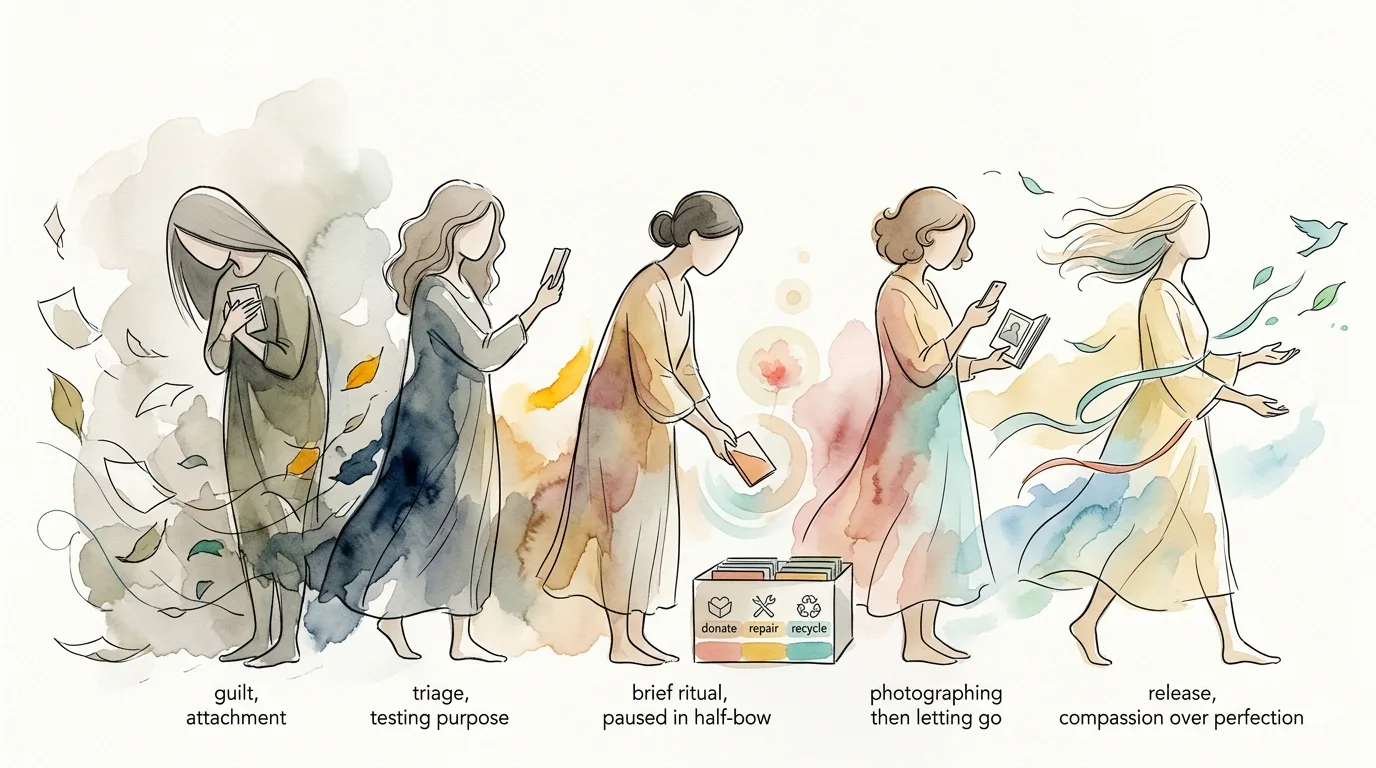
3) Practice compassionate triage: keep, release, pause
When you pick up an item, use three gentle options:
- Keep (clear reason and place)
- Release (donate, recycle, sell)
- Pause (put in a labeled box for 30/60 days)
The pause box solves the “what if” fear. If you don’t miss the paused items after the period, release them. This removes pressure and gives your emotions time to settle.
4) Use a letting-go ritual to honor memories
Attachment usually stems from memory. A short ritual gives those memories a chance to be acknowledged and released. Try this:
- Name it: hold the item and say aloud one memory it represents.
- Thank it: speak one sentence of gratitude for how it served you.
- Release it: photograph, then place it in the release pile.
Rituals create closure. If the item is tied to a person, consider writing a short note to include with donations (optional). This is about respect, not about creating extra work.
If that process feels like starting over emotionally, you’re not alone—many people describe this exact sensation. For more on why letting go can feel like a fresh start and how to move through it, see letting go feels like starting over.
5) Build tiny daily habits to keep momentum
Big decluttering sessions burn out quickly. Instead, stack tiny habits into your routine. Examples:
- Morning: spend 3 minutes clearing a single surface.
- Evening: a 5-minute reset—return three items to their homes.
- Weekly: 15-minute triage session for a single drawer.
Tiny habits win because they’re low friction and compound. Pick one you can do even on your worst day.
6) Protect relationships and sentimental boundaries
Minimalism affects others—partners, family, roommates. Use these practices to stay connected:
- Explain your why briefly and invite input on shared spaces.
- Agree on sentimental rules for shared items (e.g., consult on family heirlooms).
- Make gift-giving intentional: suggest consumable gifts or shared experiences.
Transitioning without alienating loved ones preserves the non-physical benefits of minimalism: calm and connection.
Common emotional roadblocks and how to handle them
- Fear of regret: Use the pause box and photos as an emotional safety net.
- Guilt about gifts: Shift the meaning—gifts were about the giver’s intention. Keep one item that feels essential and let the rest go with gratitude.
- Identity loss: Instead of focusing on what you’re removing, ask what values you want your space to express and add a small ritual to reinforce that identity daily.
- Overwhelm: Break tasks into 10-minute increments or commit to a single shelf.
A 30-day micro-plan (built for consistency)
Day 1–3: Clarify your why and set three decision rules.
Day 4–10: Do a 10-minute daily declutter—start with high-traffic zones (entryway, kitchen counter).
Day 11–15: Create a 30/60-day pause box and fill it with items you’re uncertain about.
Day 16–20: Rituals week—practice the letting-go ritual on 4–6 items.
Day 21–25: Tackle one sentimental corner (photobooks, keepsakes) using photos and a single-rule filter: keep what sparks ongoing joy.
Day 26–30: Review pause box items. Donate what you don’t miss. Celebrate with a small reward that aligns with your new values (a favorite tea, a walk in a place you love).
This plan prioritizes steady progress and emotional safety. Adjust the timeline to your pace—consistency matters more than speed.
Keeping it going: maintenance habits that stick
- Monthly 15-minute sweep: remove obvious items that crept back.
- One-in-one-out for replacements.
- Quarterly reflection: revisit your why and update rules.
- Habit stack: attach a 2–3 minute tidy to an existing routine (e.g., after breakfast).
These small maintenance choices keep emotional clutter from returning without requiring large efforts.
Final note: minimalism is a relationship with fewer things, not with your feelings
The aim isn’t to eliminate memories or flatten your life. It’s to create a home where objects serve you, not the other way around. When you pair clear rules with compassionate rituals and tiny habits, transitions become manageable. You keep what matters, let go of what holds you back, and live in a space that reflects who you are now—not who you were or who you fear becoming.
Start small. Be kind to yourself. And remember: calm homes are built one thoughtful choice at a time.