Simple Living Routines That Reduce Stress and Save Time
Practical simple living routines that reduce daily stress, eliminate decision fatigue, and create calm structure—without rigid schedules or overwhelm.

When Life Feels Busy, It’s Often the Routines That Are Loud
Stress rarely comes from one big problem. It usually builds quietly through dozens of small decisions made every day—what to wear, what to eat, where to put things, what needs attention first. When everything feels urgent, time disappears, and mental energy drains faster than expected.
Simple living routines work because they reduce friction. They remove unnecessary choices, clarify priorities, and create gentle structure without rigidity. The goal isn’t to control every minute of the day, but to design a rhythm that supports calm focus instead of constant reaction.
Below are practical, sustainable routines that reduce stress and save time—not by doing more, but by doing less with intention.
Why Simpler Routines Work Better Than Perfect Systems
Complex systems look good on paper. Color-coded planners, detailed schedules, and long habit lists promise control, but often create more pressure. Simple routines succeed because they are easy to repeat, even on low-energy days.
Consistency matters more than intensity. A routine that takes five minutes and happens daily is more powerful than one that takes thirty minutes and happens occasionally. This idea aligns closely with the principles behind tiny habits and minimalist thinking: reduce effort, increase follow-through.
When routines are simple, they become invisible. And when something becomes invisible, it stops draining mental energy.
Morning Routines That Set a Calm Pace
Start the Day Without Input
One of the most effective simple living routines is delaying information. Checking messages, news, or social feeds immediately pulls attention outward and creates urgency before the day has even started.
A simple alternative:
- Wake up
- Drink water
- Make the bed or tidy one small surface
- Sit quietly or stretch for two minutes
This small buffer helps the nervous system transition gradually instead of reacting instantly. Even five minutes of quiet can change how the rest of the day feels.
If you struggle with consistency, the approach in The 5-minute Habit That Gives Long-Term Results shows how short routines compound over time without requiring motivation.
Decide Once, Not Every Morning
Decision fatigue is a hidden stressor. Choosing outfits, breakfast, or priorities each morning drains energy that could be used elsewhere.
Simple solutions include:
- Rotating a small set of outfits
- Repeating the same breakfast on weekdays
- Writing a short priority list the night before
These choices don’t limit freedom—they protect it.
Daily Routines That Keep Life From Piling Up
The Reset Habit
Instead of letting tasks accumulate, build one daily reset into your routine. This could be:
- A 10-minute evening tidy
- Clearing your desk before shutting down work
- Resetting the kitchen after dinner
The goal is not deep cleaning or perfection. It’s returning your space to neutral.
This idea connects closely with practical home systems discussed in The Simple Home Organization Hacks That Actually Stick. When your environment resets daily, stress doesn’t get a chance to compound.
One-List Living
Multiple to-do lists create mental noise. A simple living approach favors one short, realistic list per day.
Try this structure:
- One must-do task
- Two supportive tasks
- Everything else is optional
Completing the must-do creates momentum. Finishing the supportive tasks feels like progress. Anything beyond that is a bonus, not a failure.
Home Routines That Reduce Visual Stress
Everything Needs a Default Place
Clutter often comes from indecision, not excess. When items don’t have a clear home, they end up on visible surfaces, increasing visual stress.
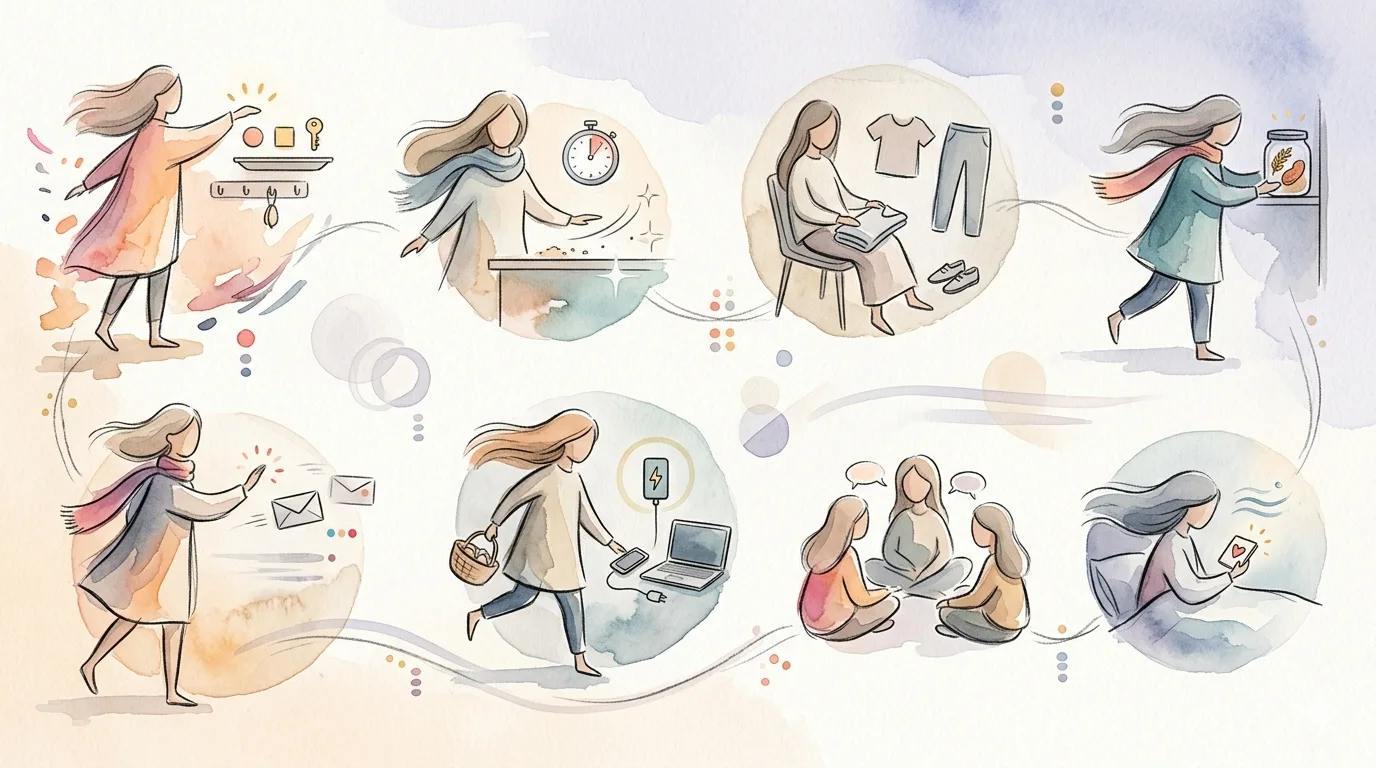
A simple rule: if you touch something daily, its storage should be easy and obvious. Hooks, trays, and open bins often work better than closed containers.
If letting go feels difficult, the mindset shift explored in Why Letting Go Feels Like Starting Over can help reframe decluttering as progress rather than loss.
Maintain, Don’t Overhaul
Large organizing projects are stressful and rarely sustained. Simple living favors maintenance over transformation.
Examples:
- Declutter one drawer, not the entire room
- Remove one unused item each day
- Revisit storage only when friction appears
Small adjustments prevent overwhelm and keep your home functional instead of performative.
Mental Routines That Save Invisible Time
Build a Pause Into Decisions
Not all routines are physical. Mental routines can reduce stress just as effectively.
A simple pause rule before decisions—especially purchases or commitments—prevents regret and overextension. Waiting even 24 hours filters impulse from intention.
This approach aligns with intentional living principles and helps protect both time and energy.
End the Day With Closure
Unfinished mental loops are exhausting. A short evening routine that creates closure can dramatically improve sleep and next-day focus.
Try this:
- Write down anything still on your mind
- Choose one priority for tomorrow
- Acknowledge what you did complete
This routine signals safety and completion to the brain, making rest easier.
Weekly Routines That Create Space
A Weekly Review Without Pressure
Once a week, take 15 minutes to check in:
- What felt rushed?
- What felt easy?
- What needs adjustment?
This is not self-criticism. It’s observation.
Simple living is iterative. Small changes compound faster than dramatic ones.
Protect One Unstructured Block
Not every hour needs a purpose. Scheduling at least one unstructured block per week prevents burnout and restores creativity.
This time is intentionally unspecific. Rest, wandering, or doing nothing is not wasted—it’s restorative.
How These Routines Actually Save Time
Simple living routines save time by:
- Reducing decision-making
- Preventing buildup and backlog
- Creating predictable rhythms
- Lowering emotional resistance to starting
More importantly, they save attention. When routines handle the basics, mental space becomes available for meaningful work, relationships, and rest.
The goal is not a perfectly optimized life, but a life that feels manageable.
Living Simply Is About Supporting Yourself
Simple living routines are not rules to follow perfectly. They are supports—structures that hold you steady when energy is low and days are full.
When routines reduce stress and save time, life feels less like something to keep up with and more like something to participate in.
Start small. Keep what works. Adjust what doesn’t. Over time, simplicity becomes not something you practice—but something you live.