Top 8 Tiny Habits to Reduce Household Clutter in Two Weeks
Eight tiny, daily habits to reduce household clutter in two weeks, with a simple schedule, habit-stack tips, and troubleshooting to make them stick.
Two weeks of tiny habits that actually reduce clutter
Clutter isn’t a single mountain to climb — it’s hundreds of tiny choices we make every day. The good news: you can change those choices with tiny, repeatable habits. This post gives eight bite-sized habits you can start today and complete a simple two-week plan to see real change. No marathon purge, no guilt — just manageable routines that add up.
Why tiny habits beat big weekend purges
Big decluttering sessions leave you exhausted and — often — back where you started. Tiny habits create reliable momentum. They reduce decision fatigue, make progress visible, and help your environment slowly reshape around the life you actually live. Over two weeks, consistent micro-actions reset patterns and make clutter decisions automatic.
The 8 tiny habits (doable in minutes each)
Each habit includes: what to do, where to stack it in your day, and a quick troubleshooting tip.
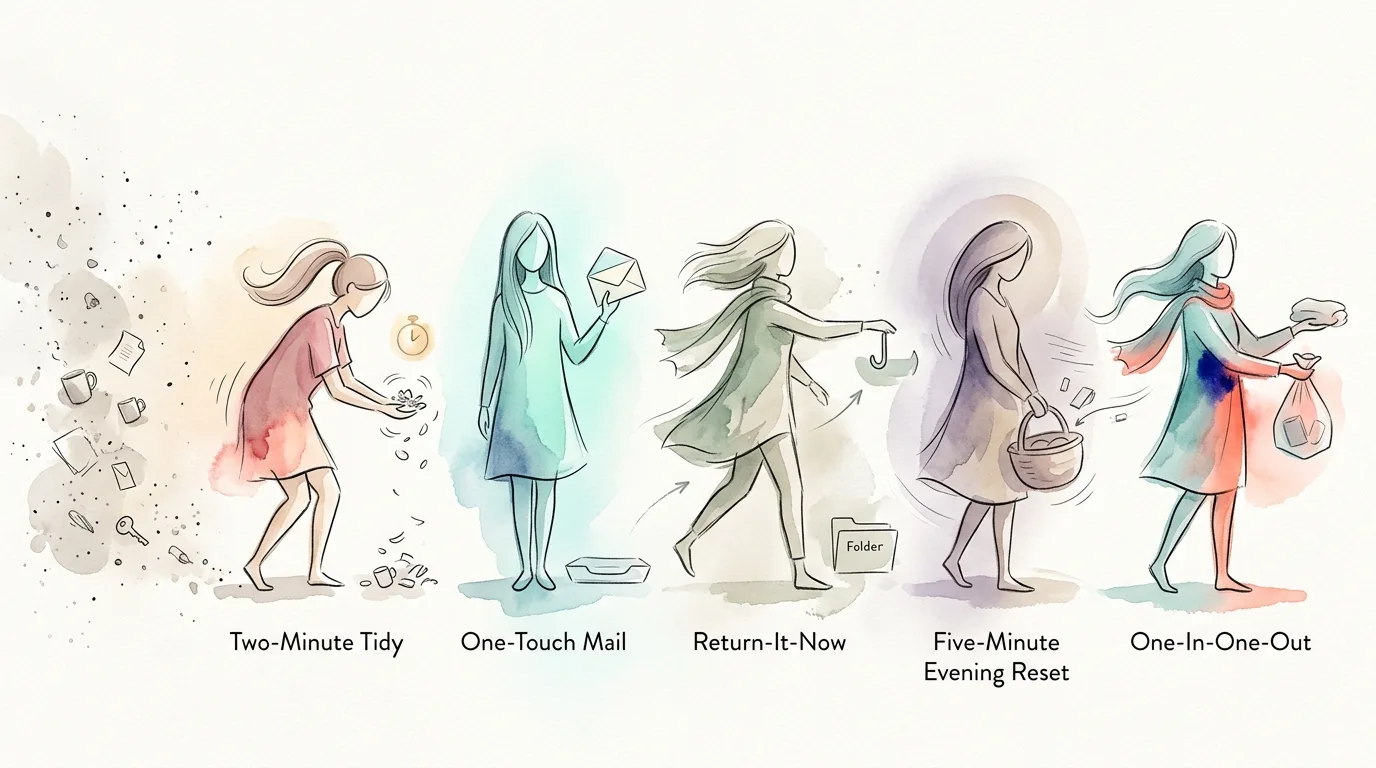
1) The 2-minute tidy
- What: When you see one small mess (a pair of shoes, a stack of mail, a rogue cup), spend 2 minutes fixing it immediately.
- When to stack: After you walk in the door or before you sit down to relax.
- Why it works: 2 minutes is short enough to avoid resistance but long enough to stop the mess from growing.
- Troubleshoot: If you keep delaying, set a timer on your phone to make the commitment feel concrete.
2) Entry-zone one-touch rule
- What: Create a dedicated drop spot for keys, mail, and bags. Touch each item once: put keys on the hook, mail in the inbox, bag on its hanger.
- When to stack: Right by the front door — make the action part of your arrival ritual.
- Why it works: Reduces the pile-up that forms from repeated small items.
- Troubleshoot: If the zone gets messy, spend 60 seconds sorting it at the end of the day.
3) Five-minute evening reset
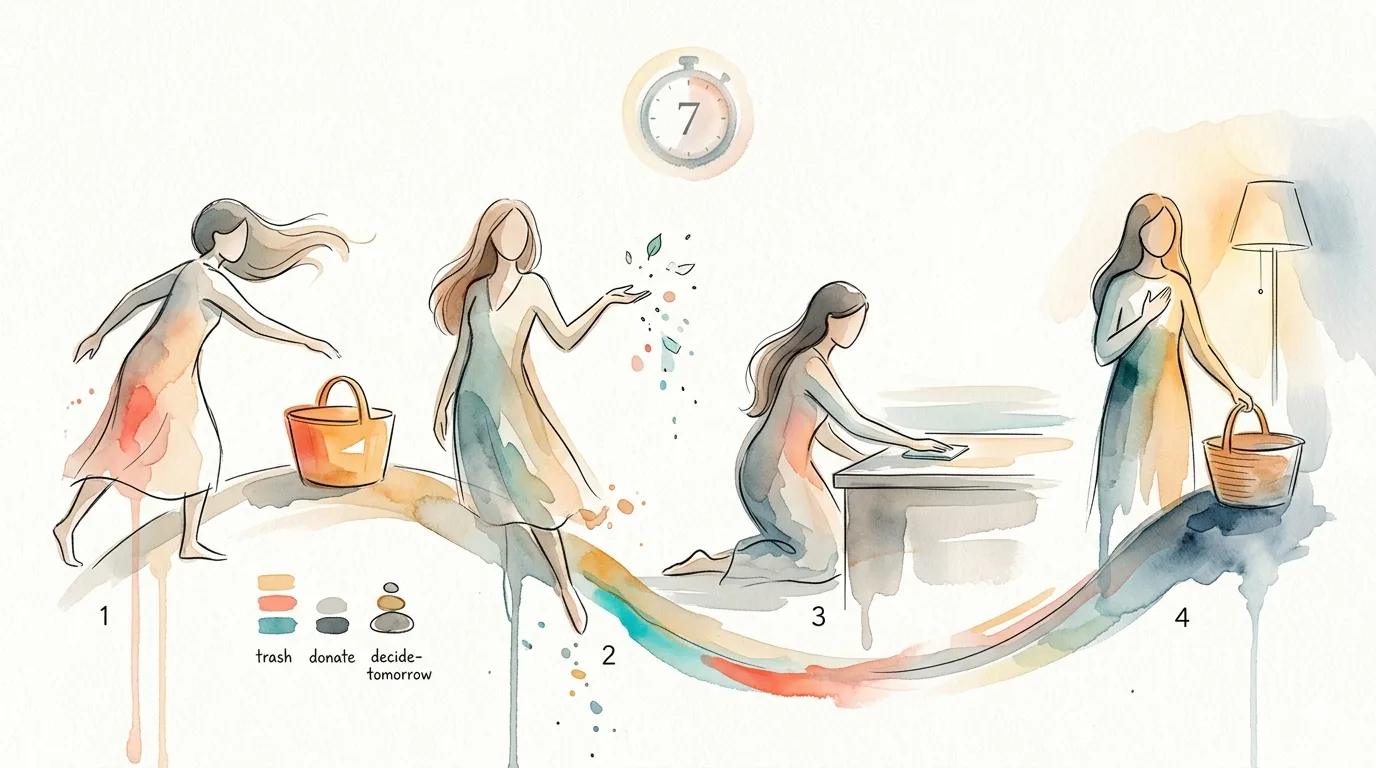
- What: Spend five minutes each night returning items to their homes, clearing one surface (counter, dining table), and sorting any outgoing items.
- When to stack: Before brushing your teeth or right after dinner.
- Why it works: A nightly reset prevents morning clutter and recharges your home daily.
- Troubleshoot: If five minutes feels like nothing, try the trick of counting down from 5 to make it feel urgent.
(If you want a ready routine to follow, this is the habit explored in the five-minute evening reset habit.)
4) One-in-one-out for non-essentials
- What: For every new non-essential item you bring home (decor, gadgets, clothes), choose one similar item to donate or discard.
- When to stack: Apply as you bring an item inside or right before you store it.
- Why it works: Keeps volume stable so your home doesn’t slowly fill up.
- Troubleshoot: Define “non-essential” ahead of time (e.g., duplicates, unused extras) so decisions are faster.
5) The daily donation drop
- What: Keep a small box or bag in a closet. Each day, add one item you no longer need (a T-shirt, a book, a kitchen tool).
- When to stack: Put it beside laundry or a coat rack so adding is effortless.
- Why it works: Small, daily culls compound into substantial change without overwhelm.
- Troubleshoot: If you find yourself hesitating, give the item a 30-day rule: if you haven’t used it in 30 days, it goes in the box.
6) One-shelf-or-drawer focus
- What: Pick a single shelf or drawer and fully tidy it in 10 minutes. Organize what stays, what goes, and where each item lives.
- When to stack: During a coffee break or while a meal cooks.
- Why it works: Focused wins build confidence and create visible progress.
- Troubleshoot: Set a timer. If it takes longer than 10 minutes, stop and schedule a follow-up 10-minute session.
7) Visible-surface rule: two things max
- What: Limit visible surfaces (countertops, coffee tables, nightstands) to two items each — one functional and one decorative, for example.
- When to stack: After the five-minute evening reset or while making your bed.
- Why it works: Fewer surfaces with stuff instantly make a room feel calmer.
- Troubleshoot: Use a small tray or bowl to corral everyday items so they still look tidy.
8) The 24-hour pause-before-buy habit
- What: Wait 24 hours before buying non-urgent items. Write them on a short “want” list; revisit the list weekly and buy only if something still matters.
- When to stack: Put the rule into your online shopping routine or when you see something you want in a store.
- Why it works: Reduces impulse additions that undo your decluttering work.
- Troubleshoot: If you keep forgetting, make the list digital and add items there instead of buying immediately. The habit is similar to the pause rule habit.
A simple two-week plan
Use this schedule to layer the habits without overwhelm. Each day is 5–15 minutes. Do the 2-minute tidy and entry-zone one-touch every day as anchors.
Week 1 — build momentum
- Day 1: Set up your entry zone and commit to the one-touch rule.
- Day 2: Start the 2-minute tidy practice after each arrival home.
- Day 3: Begin the five-minute evening reset each night.
- Day 4: Add a donation box; add one item today.
- Day 5: Tackle one shelf or drawer for 10 minutes.
- Day 6: Apply the visible-surface rule to the living room.
- Day 7: Implement the 24-hour pause-before-buy habit; add any current wants to a list.
Week 2 — reinforce and expand
- Day 8: Repeat the one-shelf focus on a different shelf or drawer.
- Day 9: Do the five-minute evening reset and combine it with a 2-minute tidy on every surface.
- Day 10: Make a donation run — drop off the box you’ve been filling.
- Day 11: Apply the visible-surface rule to the bedroom.
- Day 12: Revisit your entry zone and clear anything that accumulated.
- Day 13: Do a 10-minute kitchen counter clear and set rules for what stays.
- Day 14: Review your wants list and remove anything you no longer care about.
After two weeks you’ll notice clearer surfaces, fewer random piles, and a steadier rhythm for keeping clutter away. If you want to add a slightly longer, reliable clean-up habit once these are solid, try a structured 10-minute routine as a next step — see the ten-minute decluttering habit.
How to make the habits stick
- Habit stack: Attach each tiny habit to something you already do (coffee, keys, brushing teeth). The built-in cue makes repetition easy.
- Measure progress visually: Take a before photo of a trouble spot and compare after two weeks. Visual proof beats vague feelings.
- Keep decisions simple: Use filters like ‘use it in 30 days?’ or ‘does it earn its space?’ so choices are faster.
- Celebrate small wins: A tidy entryway or a clear countertop is legit progress — notice it.
Troubleshooting common problems
- “I keep falling back into old patterns.” Slow down. Reduce to one core habit (entry-zone + 2-minute tidy) until it’s automatic, then layer others.
- “I don’t have time.” These habits are designed for 2–10 minutes each. Treat them like brushing your teeth: non-negotiable and quick.
- “My family doesn’t help.” Invite them to pick one tiny habit they’ll own (the donation box, entry-zone, or evening reset). Shared responsibility turns maintenance into teamwork.
Why this actually changes your home
Small actions repeated daily change the systems that create clutter. Instead of waiting for a cleanout day, you build pathways that prevent clutter from forming. In two weeks, you’ll have created new routines, cleared visual stress, and set a default that favors order. That shift is what keeps homes calmer for the long term.
Final note
Start with one habit tonight — make it the 2-minute tidy or the entry-zone one-touch. Two weeks is long enough to notice a difference and short enough to commit. Keep the momentum small, consistent, and kind to yourself.