How to Create a Calm Small Living Room: Layouts and Habits
Layout tips and simple daily habits to make a small living room feel calm and spacious—furniture scale, storage, color and lighting, and quick routines.
Calm starts with intention — and layout
A small living room can feel heavy or airy depending on two things: how the space is arranged and the tiny routines you keep. This post gives clear layout choices and easy habits that make a compact living room feel calm, spacious, and welcoming—without a full renovation.
Choose a layout that supports flow
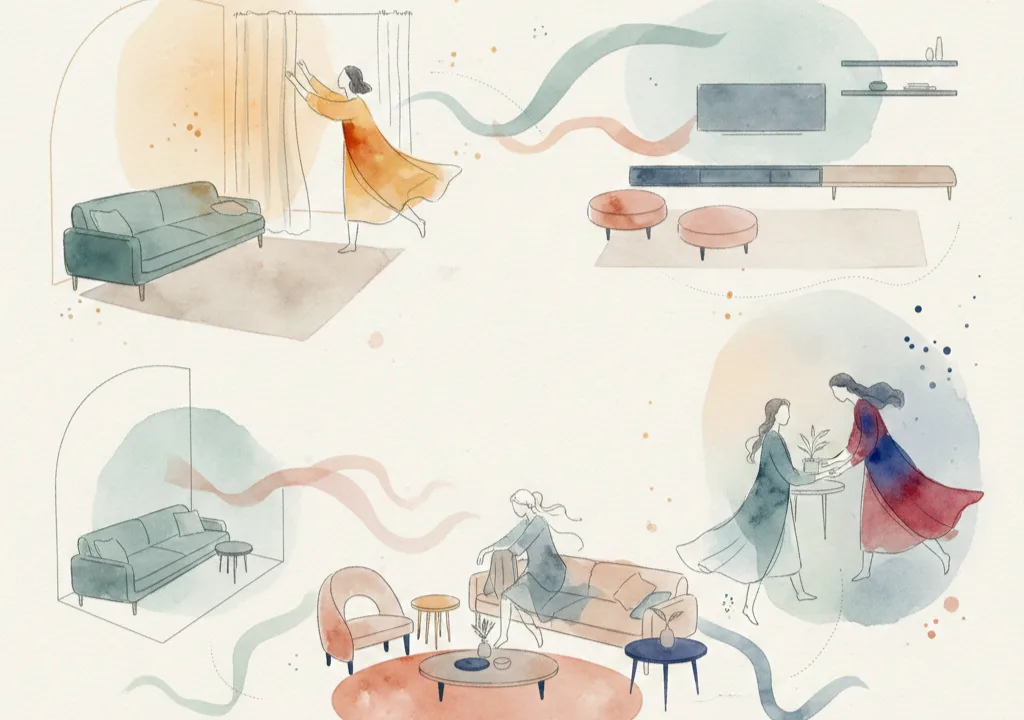
Small rooms are forgiving when furniture supports movement and conversation rather than crowding both. Start by deciding the primary purpose: TV and lounging, reading and relaxing, or socializing. Then pick one of these layouts and adapt it to your room’s proportions.
1) Anchored sofa (best for one wall)
- Place the sofa against the longest wall to open floor space. Use a narrow coffee table or a couple of slim nesting tables to avoid visual clutter.
- Float a single chair or pouf at an angle to create a conversational triangle without blocking traffic.
- Keep a clear path of at least 24–30 inches from the main entrance to the sofa—this small clearance makes the room feel breathable.
2) Corner L-shape (best for cozy corners)
- Use an L-shaped sofa or place a loveseat perpendicular to a single sofa to create a corner zone.
- Anchor the zone with a rug that’s large enough for front legs of furniture to sit on it; this visually expands the area.
- Use a slim, floating shelf or wall-mounted lamp to save floor space.
3) Centered conversation circle (best when you want balance)
- Float a compact sofa or loveseat centered on a rug, with two small chairs opposite or at slight angles.
- Keep the coffee surface low and minimal—avoid a large rectangular table that chops the room into pieces.
- Ensure at least one unobstructed path to exits so the layout doesn’t feel claustrophobic.
4) Media wall and cleared floor (best for minimalist tech-focused rooms)
- Mount the TV and hide equipment in a slim wall cabinet or behind sliding panels.
- Choose wall-mounted lighting and skip bulky side tables. A bench or narrow console under the TV provides storage without eating floor space.
If you want deeper guidance on arranging pieces to feel calmer in small rooms, this short guide to furniture arrangement is a helpful next read: furniture arrangement.
Scale, sightlines, and negative space
- Favor furniture with slimmer arms, exposed legs, and low profiles. Visual weight matters more than actual size; a low, streamlined sofa reads smaller.
- Preserve sightlines. Keep the center of the room open—your eyes should move across the space without hitting a wall of furniture.
- Embrace negative space. Leaving empty areas intentionally helps the room breathe. You don’t have to fill every inch.
Storage that disappears
Clutter kills calm. Choose storage that tucks items away invisibly:
- Use multi-functional pieces: ottomans with storage, benches with lift seats, nesting tables, and slim consoles.
- Go vertical: floating shelves, narrow tall cabinets, or a slim bookcase make use of height without encroaching on floor area.
- Create a drop zone: a small basket or tray near the entrance for keys, mail, and remotes keeps surfaces tidy.
Color, light, and texture (make small feel spacious)
Light and color drastically change perception. Lighter tones reflect light and make walls recede; contrast with texture to avoid a sterile feel.
- Keep a calm palette: warm neutrals, soft grays, or muted pastels expand perceived space.
- Layer light: a mix of ambient, task, and accent lighting softens shadows. Sheer curtains let daylight diffuse in while preserving privacy.
- Add texture: a woven rug, linen pillows, or a few natural wood accents give depth without visual clutter.
For a deeper look at color and lighting strategies tailored to small spaces, see this guide to color and light.
Habits that keep calm lasting
A peaceful living room is as much about maintenance habits as it is about design. Small, consistent actions beat occasional deep cleans.
Daily micro-routines (5 minutes)
- Surface sweep: each evening, do a 3–5 minute sweep of visible surfaces—fold a throw, tuck magazines into a tray, and put stray items in the basket.
- Reset a single focal point: clear the coffee table or the entry console. A single tidy surface makes the whole room read calmer.
Weekly maintenance (15–30 minutes)
- Quick purge: open cabinets and remove items that don’t belong. Return anything that has wandered out into its home.
- Rotate textiles: shaking out rugs, fluffing cushions, and airing pillows keeps the room feeling fresh without heavy cleaning.
Buying and keeping decisions
- One-in, one-out (informal): when a new decorative object or book comes in, consider removing one item you no longer love.
- Delay purchases: give new decor items a short waiting period. Often the impulse fades and you keep the room simpler.
Small rituals that change how you use the room
- Morning light ritual: open curtains or blinds first thing to let in natural light; the room instantly feels larger and more alive.
- Evening calm ritual: dim lights, fold a throw, and place a small plant or a single object on the coffee table—simple cues that tell your brain the room is for rest.
A short checklist to get started tonight
- Remove three items that don’t belong in the living room.
- Clear one surface (coffee table or console).
- Move one piece of furniture to improve a walking path.
- Swap one heavy decor item for a lighter-textured piece.
A small living room is an advantage: it’s easier to change, to maintain, and to make feel intentional. With thoughtful layout choices, storage that disappears, and tiny daily habits, you can turn a compact space into a calm retreat that welcomes you home.