How to Maintain a Low-Clutter Home When You Live with Kids or Pets
Practical, kid- and pet-friendly systems to keep your home low on clutter: zones, toy rotation, pet stations, tiny habits, and maintenance routines that actually stick.
Why “low-clutter” is more useful than “perfect”
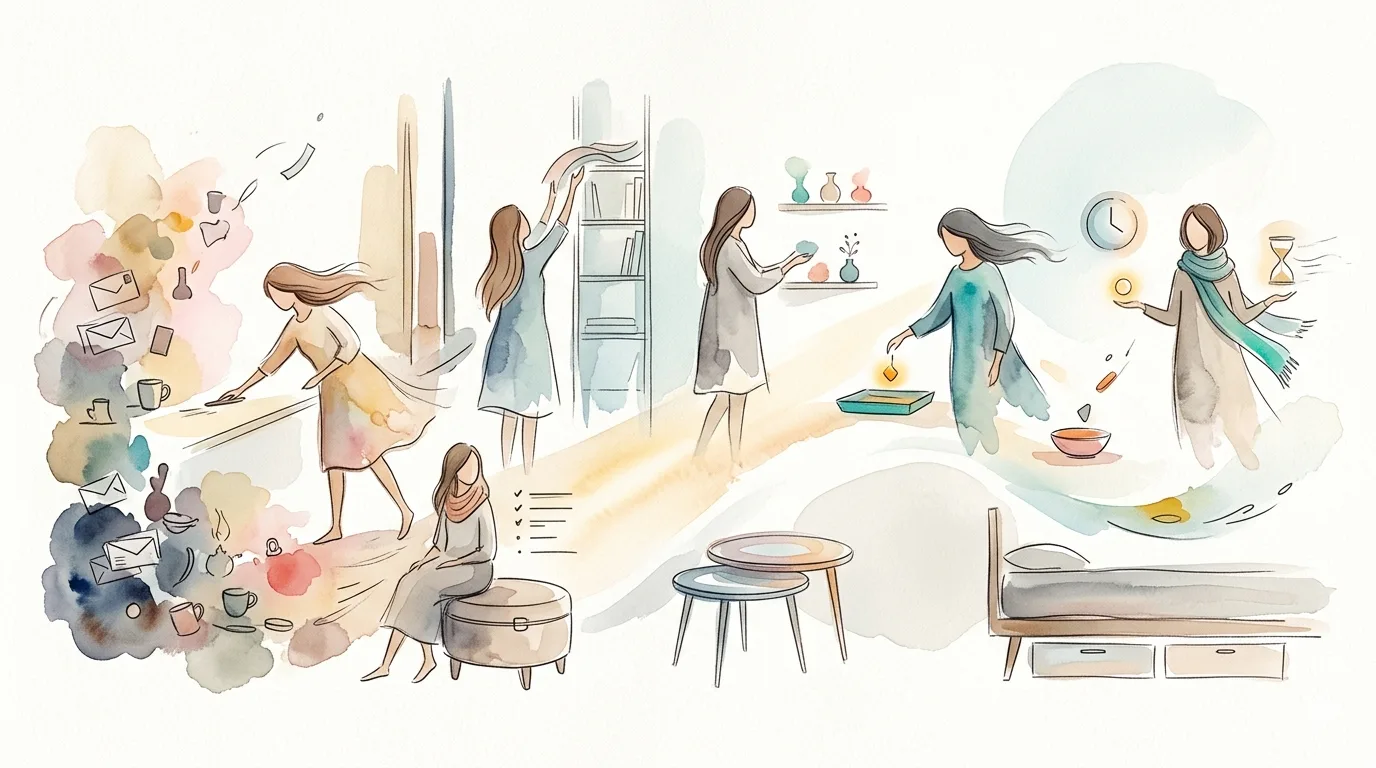
A low-clutter home with kids and pets isn’t about keeping every surface pristine. It’s about designing simple systems that reduce friction, prevent clutter from building up, and let the people (and animals) who live there be themselves without turning the house into a storage unit.
Clutter happens because no one has a clear, easy next action. If a toy has no home, it becomes floor art. If dog leashes have no hook, they end up in a pile. The aim here is to create clear homes, tiny habits, and forgiving routines so mess is temporary — not permanent.
Start with three principles that make systems last
- Make it easy: the easier a habit or system is, the more likely everyone will use it. Low lift > perfect design.
- Contain it: keep collections corralled so clutter doesn’t migrate across rooms.
- Normalize maintenance: small, regular resets beat rare marathons.
These principles let you design practical solutions that fit real life — sticky, repeatable, and kid/pet friendly.
Practical systems that actually work
1. Give everything a visible, reachable home
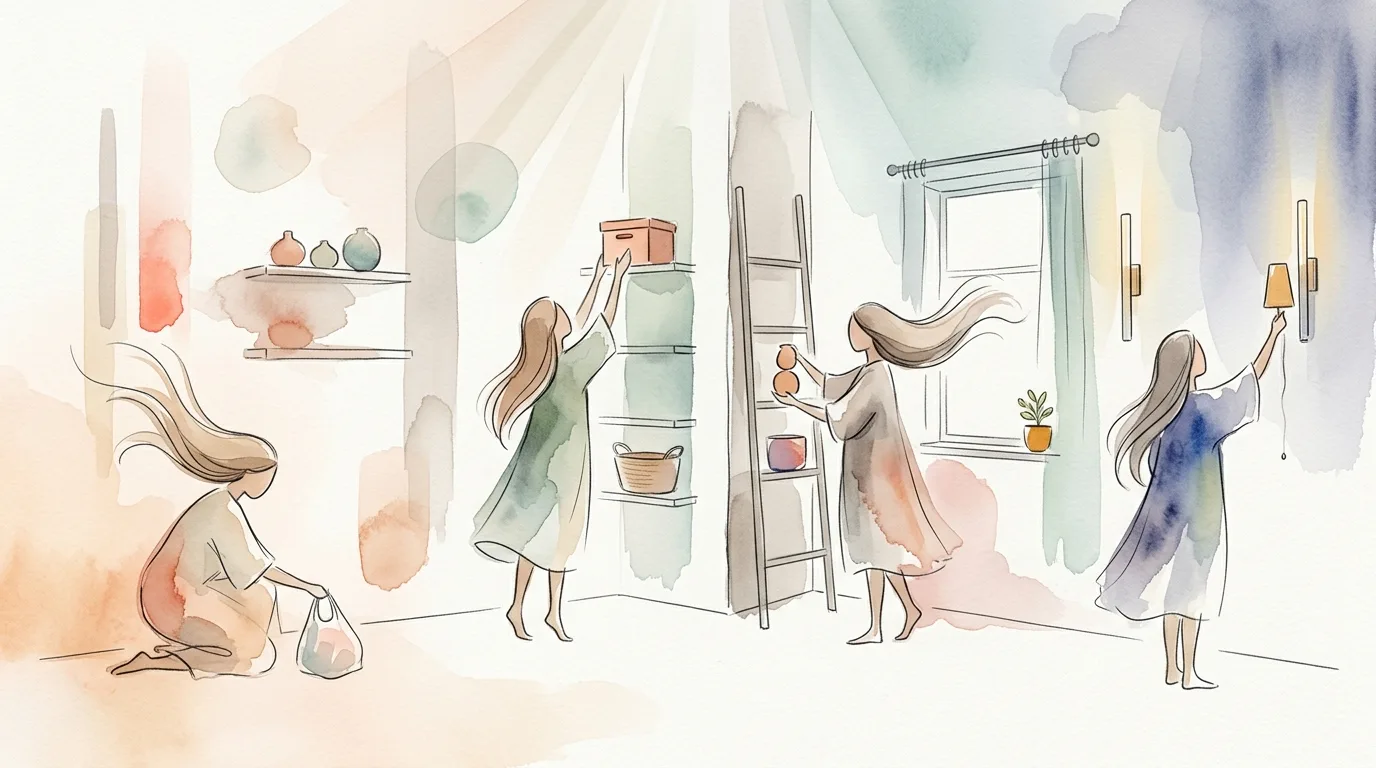
Kids and pets need homes for their things the same way adults do. Use low shelves, open bins, and labeled baskets. When every toy, blanket, leash, and shoe has a clear place that’s easy to access, returning items becomes faster and more natural.
- Place baskets at child height for stuffed animals and books.
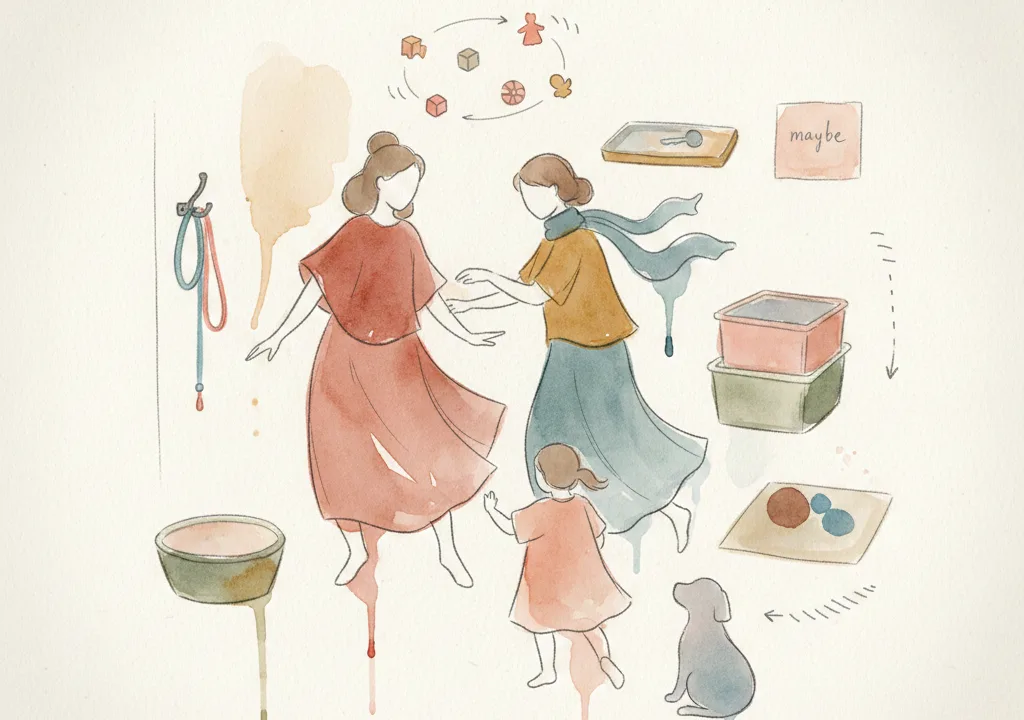
- Install a sturdy hook by the door for leashes and dog coats.
- Use open bins in the living room for active-play toys and a closed box for special pieces.
Containment reduces drift: a single misplaced action won’t turn into a whole-room problem.
2. Rotate toys and pet items intentionally
Kids and pets play more with fewer things. Adopt a toy rotation: keep a fraction of toys out and store the rest. Every 2–4 weeks swap bins. This refreshes interest and reduces the number of items you need to tidy daily.
For pets, rotate toys and hide treats in a labeled bin. Less visible chaos = easier cleanups and fewer chewed shoes.
3. Build easy drop zones
Create a one-stop landing area near main entrances: baskets for backpacks, hooks for jackets and leashes, and a tray for keys. Train the whole family to drop items there first. Fewer “drop piles” across the house saves time later.
A simple tray for mail and a donation box in the entryway also keeps incoming clutter from spreading.
4. Make cleanup a family routine, not a lecture
Set short, consistent tidy windows: 5–10 minutes after dinner, 3 minutes before screen time, and a quick sweep before bedtime. Use a timer and make it a game with kids — music, a countdown, or a reward chart helps.
Micro-routines like these become habits faster than long, infrequent cleanups. If you want a method to make short habits stick, see the 5-minute habit that gives long-term results.
5. Use the 1-in–1-out rule with exceptions
A simple buying rule helps keep accumulation in check: for every new toy or pet item, one goes out. Make exceptions for sentimental items, consumables, or obvious replacements, but keep the rule visible (a note on the pantry door or an app reminder) so it’s followed.
If you struggle with impulse buys, the pause rule habit is a practical template for avoiding regrettable additions.
6. Make cleaning tools accessible and kid-friendly
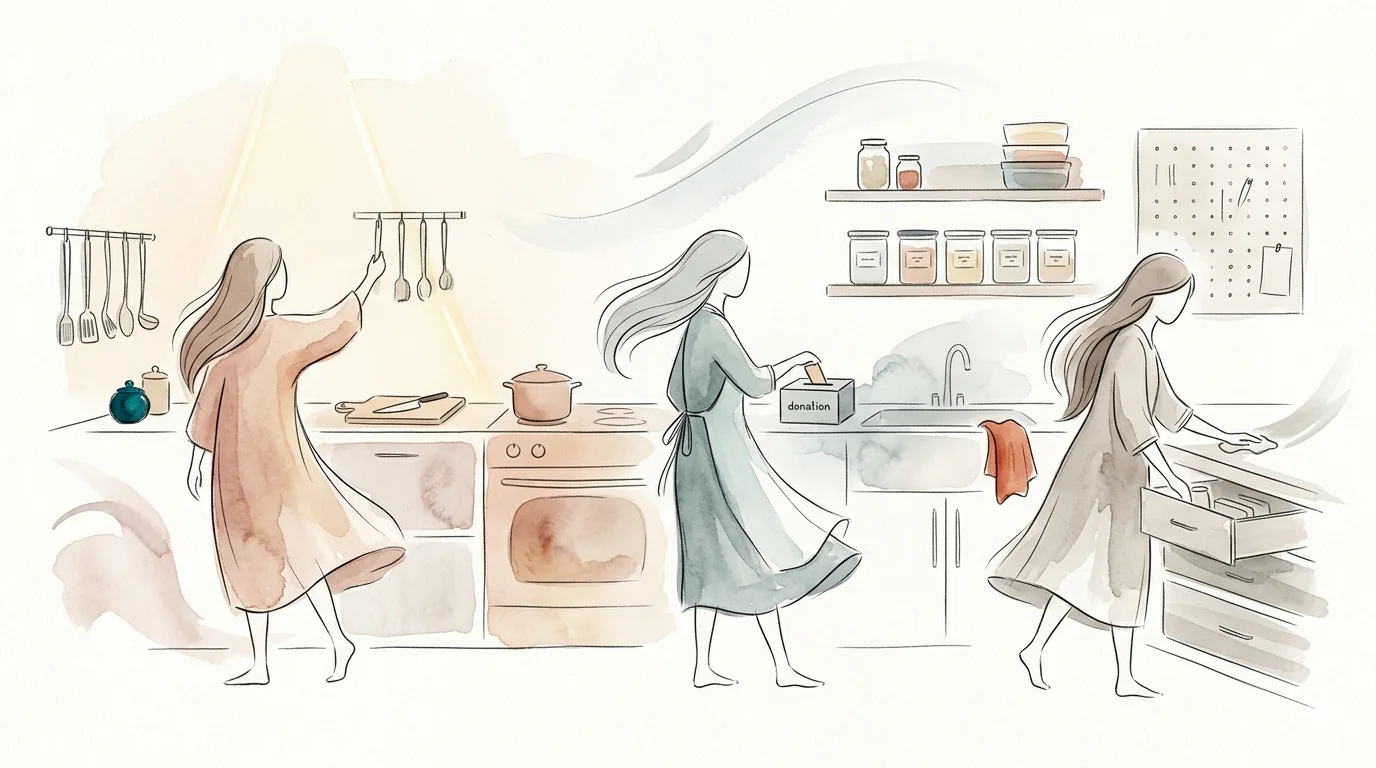
A small broom, a hand vacuum, and toy bins at child height turn cleanup into a shared job. Pets benefit when grooming tools and towels are stored near their usual spots, so cleanup after outdoor play is fast.
7. Corral pet paraphernalia into a single station
Designate a pet station with feeding mats, bowls, treats, collars, and grooming supplies. A single drawer or crate with compartments keeps pet stuff from scattering into the living room. A mat under food bowls catches spills and is much easier to wipe than a carpet.
Decluttering that lasts (not the one-time purge)
Big decluttering events feel satisfying but don’t prevent future buildup. Combine a quarterly edit with monthly micro-declutters:
- Keep a “maybe” bin for items you’re unsure about; revisit it in 30 days and donate if unused.
- After birthdays and holidays, immediately decide what stays and what goes; avoid “someday” piles that attract clutter.
- Rotate seasonal items out of sight so you only deal with what’s in active use.
If letting go feels hard, revisit the mindset behind it — understanding why items hang on can make decisions easier. For that, this post on why letting go feels like starting over can help reframe the process.
Habits that make maintenance automatic
Turn small actions into habits by pairing them with daily triggers:
- After breakfast: three-minute sweep of the main gathering space.
- After outdoor play: everyone puts shoes in the shoe caddy and hangs jackets.
- Before bedtime: 10-minute family tidy with music and a small reward.
Tiny, consistent habits beat occasional deep cleans. To build them, keep expectations low and wins visible — a cleared table or an empty toy basket is reinforcement.
Systems for busy seasons and visitors
Have a quick-reset plan: a single basket for “stuff that needs sorting” and a 15-minute sweep with two focused people can make your space guest-ready fast. During busy seasons (holidays, vacations), be proactive: reduce on-surface items, stash out-of-season things, and accept that some clutter is temporary.
When to call it ‘good enough’
A home that feels low-clutter doesn’t need to be spotless. If daily functions run smoothly, items are easy to find, and clutter is contained to predictable times, you’re succeeding. The goal is livability with dignity — not a perfect magazine spread.
Next steps
Pick one system and try it for 30 days: establish a drop zone, start a toy rotation, or adopt a five-minute nightly tidy. Small experiments reveal what sticks and what needs adjusting. For more practical organization techniques that last, check out Simple Home Organization Hacks.
Low-clutter living with kids and pets is a series of tiny, human-friendly decisions — not a one-time overhaul. Design systems that match your life, teach your family to use them, and let the little rituals protect your calm.